


Taylor 12 String Guitars Buying guide
Taylor 12 String Guitars: A Complete Buyer's Guide
A practical guide to choosing a Taylor 12-string guitar. Learn about 12-string configuration, sound characteristics, physical considerations and how to select the right model.
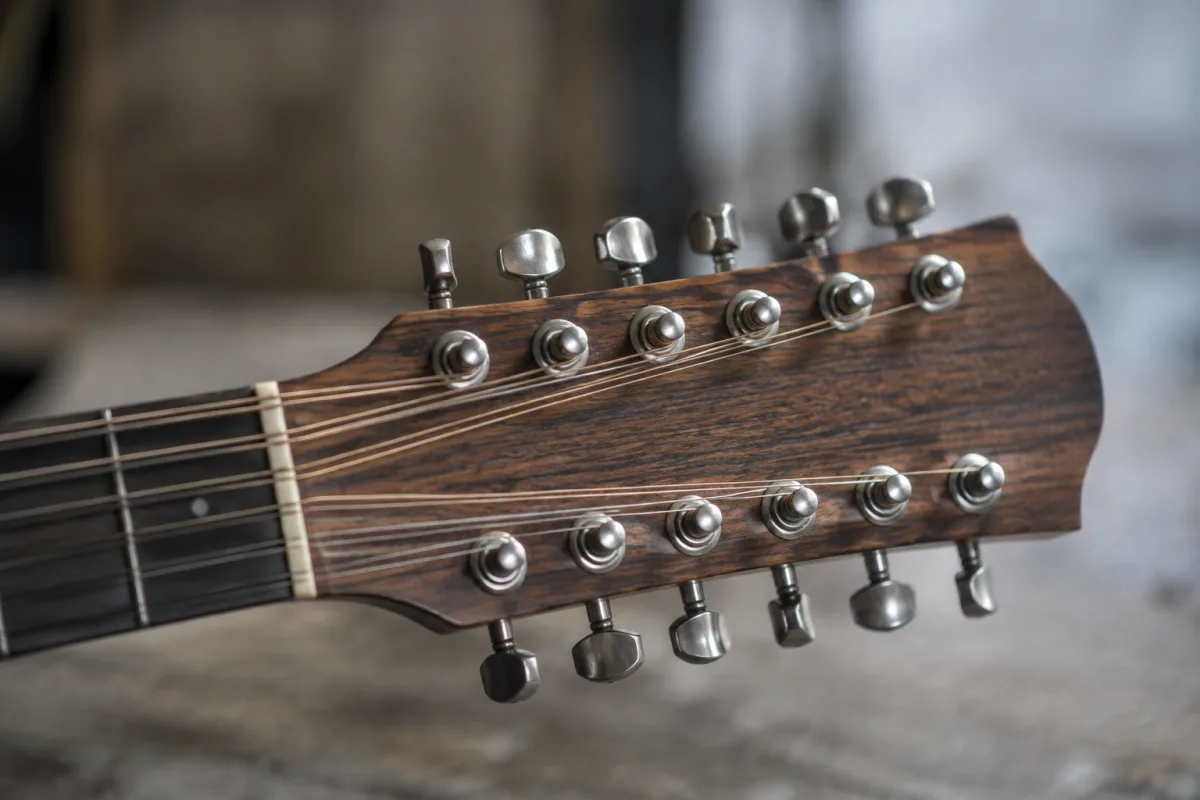
Buying a Taylor 12-string guitar requires understanding how the added strings affect playing experience, durability, and sound. A Taylor 12-string guitar produces a fuller, more resonant tone than a standard six-string—the classic shimmering sound that defines entire genres. But this richness comes with real considerations: greater string tension, heavier physical demands on the player, and different maintenance needs. If you're serious about adding a 12-string to your collection, knowing what a Taylor 12-string guitar genuinely offers helps you make a choice that suits your playing style and commitment.
Why Taylor 12-String Guitars Stand Apart
Taylor 12-string guitars are built specifically to handle the increased tension and stress that twelve strings create. Standard guitar construction can't reliably support twelve strings—the neck bends, the body warps, and the instrument becomes unplayable within months. Taylor's engineering—neck reinforcement, braced body design, quality hardware—addresses these issues directly. A Taylor 12-string guitar is designed from first principles to be a stable, reliable 12-string instrument, not a standard guitar awkwardly adapted for extra strings.
The sound of a Taylor 12-string guitar is distinctive. The doubled strings (each pair tuned in octaves) create a shimmering, bell-like resonance that a six-string can't replicate. This tone carries emotional weight and presence that draws listeners in. For songwriting, recording, and live performance, a Taylor 12-string guitar's sound is genuinely special.
String Configuration and What It Means
A Taylor 12-string guitar arranges its strings in six courses (pairs). The lowest four courses are tuned in octaves—the paired strings are one octave apart. The highest two courses (B and E strings) are tuned in unison—the paired strings are at the same pitch. This configuration creates the characteristic shimmer: the octave pairs add fullness and depth; the unison pairs keep the top end clear and cutting.
Understanding this configuration matters because it affects how a Taylor 12-string guitar plays. The octave pairs require a different touch than you'd use on a standard six-string—you need to balance two strings simultaneously. Most players adapt quickly, but awareness prevents initial frustration. Unison pairs play more like standard strings, which provides familiarity.
Physical Demands and Playability
A Taylor 12-string guitar is heavier than a standard acoustic. Twelve strings create increased tension pulling on the body and neck, requiring more mass and bracing to remain stable. This weight is noticeable when standing and playing for extended sessions. If you're sensitive to instrument weight or play four-hour sets, factor this in.
Neck width on a Taylor 12-string guitar is wider than standard six-strings, accommodating the paired strings. Some players find this wider neck tiring initially; others appreciate the additional space for finger positioning. If you have smaller hands, test a Taylor 12-string before purchasing—playability differs significantly from six-string instruments.
String tension on a Taylor 12-string guitar is substantially higher than standard acoustic guitars. Your fingers will build calluses faster and may ache during initial playing sessions. This subsides—your hands adapt—but recognise that a Taylor 12-string guitar demands slightly more physical conditioning than a six-string.
Taylor 12-String Guitar Price Tiers
| Price Range | Typical Features | Best For |
|---|---|---|
| £300–£600 | Entry-level 12-string, laminate or basic solid wood, adequate construction, limited finishing options | Beginners exploring 12-string, budget-conscious players |
| £600–£1,200 | Mid-range Taylor 12-string, solid wood body, quality hardware, improved bracing, better sound | Serious amateurs, gigging musicians, recording enthusiasts |
| £1,200–£2,500 | Professional Taylor 12-string, premium woods, master-level bracing, excellent hardware, refined tone | Professional musicians, recording artists, dedicated players |
| £2,500+ | Custom Taylor 12-string, high-grade woods, bespoke bracing, hand-finished, lifetime-quality instruments | Touring professionals, collectors, specialists |
Taylor 12-String Guitar Wood Selection and Tone
Wood choice dramatically affects Taylor 12-string guitar tone. Sitka spruce tops (standard on Taylor guitars) offer bright, articulate sound with good projection. Walnut back and sides produce warm, woody character. Indian rosewood (on higher-end Taylor 12-string guitars) adds depth and complexity. Cedar tops (available on some models) provide softer, more mellow tone. Understanding wood combinations helps you predict the Taylor 12-string guitar's sonic character before playing.
Bracing design inside a Taylor 12-string guitar determines how the instrument responds to the increased string tension. Better bracing distributes stress more efficiently, allowing the top to vibrate freely while remaining stable. This is invisible to the player but audibly improves tone quality and sustain. Comparing entry-level and professional Taylor 12-string guitars reveals this difference clearly.
Hardware and Durability
A Taylor 12-string guitar must have quality tuning machines and bridge to handle twelve strings' tension. Cheap hardware fails under load—tuning machines slip, bridges crack, or the neck bends irreversibly. Taylor's hardware standards ensure reliability across all price tiers. Premium models upgrade to top-grade tuning machines with better mechanical advantage, making fine-tuning easier.
The nut and saddle on a Taylor 12-string guitar take tremendous stress from string tension. Bone construction (standard on quality instruments) distributes pressure better than plastic. Verify that your Taylor 12-string guitar uses bone nut and saddle if durability matters to you.
Common Pitfalls in Taylor 12-String Guitar Buying
The biggest mistake is buying a cheap, non-specialised 12-string. Budget guitars adapted for twelve strings fail quickly. Necks bow, bridges crack, and the instrument becomes unplayable within a year. Invest in a Taylor 12-string guitar specifically engineered for twelve strings—it costs more upfront but provides years of reliable use.
Underestimating physical demands leads many players to abandon 12-string guitars after a few weeks. If you have weak hands, pain issues, or small hand size, play a Taylor 12-string guitar extensively before purchasing. This instrument isn't for everyone, and discovering it doesn't suit you after investing money is frustrating.
Neglecting maintenance specific to 12-string guitars is common. Twelve strings create greater stress on the neck, requiring more frequent truss rod adjustments in some cases. Budget for professional setup and maintenance when purchasing a Taylor 12-string guitar.
Recording and Performance Applications
A Taylor 12-string guitar shines in recording and live performance contexts where the shimmering tone adds presence and fullness. Singer-songwriters often prefer 12-string guitars for how they fill space without requiring additional instrumentation. The tone reads well through microphones and amplification.
For classical or fingerstyle playing, a 12-string guitar requires significant technique adjustment. The paired strings demand controlled touch and awareness. Jazz players sometimes find 12-strings too resonant for tight articulation. Match the Taylor 12-string guitar to your playing style—it's genuinely specialised.
For deeper context on Taylor guitars and 12-string instruments generally, read the complete guide to Taylor 12-string guitars, which covers the brand's approach to 12-string design and their full range.
Investing in a quality Taylor 12-string guitar opens sonic possibilities that standard six-strings can't match. Choose based on your playing style, verify physical comfort, and recognise that owning a 12-string is genuinely different from six-string guitar ownership. A well-chosen Taylor 12-string guitar becomes a beloved instrument you reach for repeatedly, and that's the real measure of a worthwhile purchase.


Comments