


12 String Martin Buying guide
12 String Martin: A Complete Buyer's Guide
Choosing the right 12-string Martin requires understanding what you're paying for and what different price points offer. This buyer's guide covers everything.
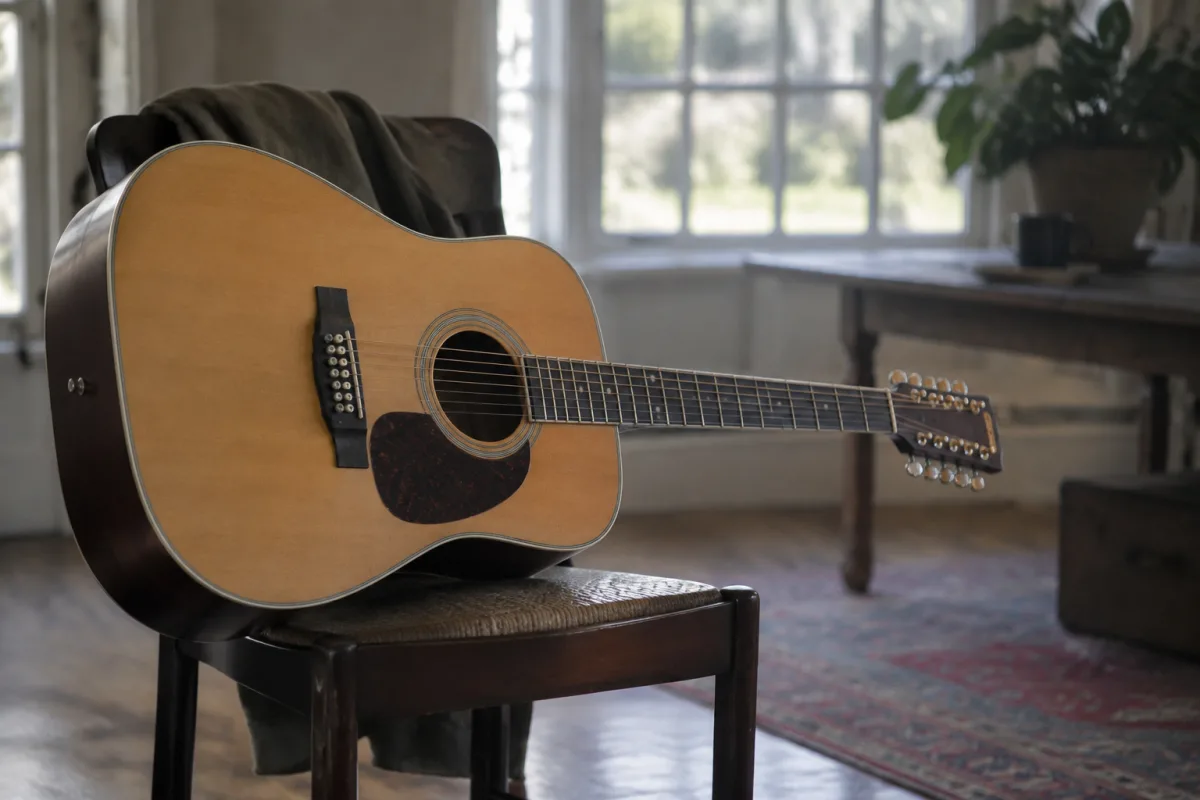
Buying a 12-string Martin is a significant investment, and choosing the right model requires understanding what you're paying for and what different price points offer. This buyer's guide covers the key specifications, model differences, and pitfalls to help you make an informed decision.
Why Buy a 12-String Martin?
Martin is the gold standard for acoustic guitars. A 12-string Martin carries that reputation into the 12-string market, where it's considered by many to be the best value for money. You're paying for a legacy of craftsmanship, consistent quality, and a guitar that will hold its value. Whether it's justified depends on your budget and expectations, but Martin's 12-string range offers genuine tonal and structural advantages over cheaper alternatives.
Understanding 12-String Martin Specifications
Before shopping, know what separates 12-string Martin models. Here's what to compare:
| Specification | What It Affects | Buying Tip |
|---|---|---|
| Wood type (top) | Tonal character and durability | Spruce is brightest; cedar is warmer. Martin primarily uses Sitka spruce. Solid top is essential; laminate is budget-level only. |
| Wood type (back/sides) | Tonal resonance and aesthetics | Rosewood (richest tone) is premium; mahogany is warm and affordable. Back-sides wood matters more for sound than you'd expect. |
| Body size | Volume and comfort | Dreadnought (largest) is loudest; OM is more balanced; 000 is compact. 12-strings add weight; consider playing comfort seriously. |
| Bracing pattern | Structural integrity and sustain | X-bracing is standard; advanced patterns (scalloped) offer more response. Not visible without opening the guitar, but reputable dealers will explain. |
| Neck angle and action | Playability and longevity | Higher action (string height) is tiring to play; too low causes buzz. Most Martins ship playable; check before buying used. |
| Fretboard and headstock wood | Durability and appearance | Ebony is standard for quality Martins; pau ferro is acceptable. Avoid laminate fretboards. |
12-String Martin Price Tiers: What to Expect
Martin offers 12-string guitars across multiple price ranges. Understanding the tiers helps you know what you're buying:
- Budget tier (£300–500): Entry-level Martins (sometimes labelled as Authentic Series). These offer the Martin name and decent quality but use laminate backs/sides. Playable for beginners, but the sound and resale value are limited. Skip these if you can afford the next tier.
- Mid-range tier (£600–1,200): Solid-top models with laminate backs and sides (like the D-X1E series). This is where 12-string Martins become genuinely worthwhile. Solid spruce tops deliver excellent tone, and prices are more forgiving than premium tiers. Best value for intermediate players.
- Premium tier (£1,200–2,500): Solid top and solid back-sides (like the D-18 or D-25). This is the "classic Martin" tier. You're paying for handcraft, premium wood and resale value. If you keep a Martin this long, it's a solid investment.
- Collector tier (£2,500+): Limited editions, rare woods, high-end models with premium appointments. Only buy if you're a serious collector or professional touring player.
For most buyers, the mid-range tier (£600–1,200) represents the sweet spot. You get genuine Martin quality and a solid 12-string sound without the premium prices.
Key 12-String Martin Models to Consider
- D-X1E (entry 12-string): Laminate back/sides, solid spruce top. Budget option with decent tone. Good starter 12-string if price is your priority.
- D-35 (12-string): Legendary dreadnought with rosewood back and sides. Deep, rich tone. Premium tier but the standard for professionals. Expensive but holds value.
- D-28 (12-string): Mahogany back and sides, spruce top. Warmer than D-35, slightly less volume. A classic choice. Premium pricing but iconic status.
- HD-28 (12-string): Limited edition with herringbone binding (decorative wood pattern around the rim). Cosmetically gorgeous, tonally similar to D-28. Higher price for aesthetics.
- OM-28 (12-string, smaller body): Easier to play than dreadnoughts, balanced tone. Excellent for fingerpicking. Specialist choice but worth trying if you like smaller guitars.
Visit a dealer and try as many as your budget allows. Tone preference is subjective; the best 12-string Martin for you is the one you enjoy playing.
Buying New vs. Used: Which Makes Sense
12-string Martins hold value exceptionally well. Here's the trade-off:
| New | Used (1–5 years old) | Used (5+ years old) | |
|---|---|---|---|
| Price | Full retail (£600–2,500+) | 20–30% discount if well-maintained | 30–40% discount; collectors pay more if rare |
| Warranty | Martin's standard warranty (typically 2 years) | No warranty; seller's discretion | No warranty; inspection essential |
| Condition | Guaranteed new; no hidden damage | Usually excellent if well-kept; ask for photos | Check for neck issues, cracks, fret wear |
| Tone | Bright initially; mellows over time | May already be nicely broken in | Full aged tone; unique character |
A used 12-string Martin in good condition is often a smart buy, especially at 1–3 years old. You get reliability and a discount. However, only buy used from reputable sellers or after professional inspection. Never buy without trying or getting a detailed assessment.
Critical Buying Checks: Don't Miss These
Before pulling the trigger on a 12-string Martin, check these red flags:
- Neck angle: Sight down the neck from headstock to body. It should be straight. A bowed or twisted neck is a serious problem. Martins rarely have this issue new, but used guitars need checking.
- Action (string height): High action is tiring; too low causes fret buzz. Standard is around 2.4 mm at the 12th fret. If uncomfortable when you try it, walk away unless you're willing to pay for a setup adjustment.
- Cracks or repairs: Inspect the top, back and sides in good light. Small surface cracks happen; structural cracks are serious. A large top crack means the guitar has experienced major stress.
- Fret condition: Run your finger along each fret. Worn frets feel uneven. Slight wear is normal; heavy wear requires expensive refrets.
- Humidity history (used only): Ask if the guitar was stored properly. Extreme dryness or humidity causes warping and cracking. A guitar stored in a heated room for years may have latent damage.
- Serial number verification: On expensive used Martins, verify authenticity by checking Martin's database. Counterfeits exist at high price points.
Price vs. Tone: Is Expensive Always Better?
A £1,500 12-string Martin sounds noticeably better than a £600 Martin—richer, more resonant, better sustain. But the difference between a £1,500 and £2,500 12-string Martin is subtle. Most players can't hear a dramatic improvement; they're paying for rarity, wood aesthetics or collector status.
Buying advice: Get the best 12-string Martin you can afford in the £600–1,200 range. You'll get genuine quality and a guitar you won't regret. If budget allows, stretch to £1,500 for a D-35 or D-28; it's worth it. Anything beyond £1,500 is for specialists and collectors.
Playing Comfort: A Practical Consideration
12-string guitars are heavier and wider than 6-strings. When buying, consider:
- Your hand size: Wider necks suit larger hands. Smaller players find 12-strings tiring. Try different body sizes (dreadnought vs. OM) to find what feels right.
- Shoulder and strap comfort: A 12-string will rest heavily on your shoulder when sitting or standing. If you're slight of build, a lighter body size (OM or smaller dreadnought) helps.
- Action height: Higher action on a 12-string is significantly harder on the fingers. Confirm the action is reasonable before committing. A professionally set-up 12-string plays easier than a poorly set-up one.
The best 12-string Martin is one you'll actually want to play, not one that sits in a case because it's uncomfortable.
Negotiation and Haggling: What to Expect
Retail prices are often negotiable, especially if buying from a local dealer:
- New guitars: Dealers often have 5–10% flexibility on Martins. Ask politely; most will offer something. "What's your best price?" often works.
- Used guitars: Negotiation is expected. Start at 10–15% below the asking price; meet somewhere in between.
- Bundles: Asking for a strap, case or stand often works better than asking for money off. Dealers have margin on accessories.
Never feel pressured. If the price doesn't feel right or the guitar doesn't click, walk away. Another Martin will come along.
For more detailed comparisons, setup guidance, and advanced topics like vintage Martin values and care instructions, see our complete guide to 12-string Martin guitars.
FAQ
Q: Is a 12-string Martin worth the premium price over a cheaper 12-string?
A: Yes, if you play regularly. A quality 12-string Martin holds its tone, holds its value, and will last a lifetime. A budget 12-string might need replacing in 5 years. Over time, the Martin is cheaper per year of use.
Q: Should I buy a new or used 12-string Martin?
A: Used is often smarter if you find one in good condition. You get a discount and a guitar that's past the "finish wear" stage. New is better if you value warranty and guaranteed condition. Age 1–5 years offers the best value.
Q: Is the D-35 really worth twice the price of a D-X1E?
A: The D-35's rosewood back and solid construction produce noticeably richer tone and volume. If you play regularly and want the classic 12-string Martin sound, yes. If you play casually, the D-X1E is sufficient.
Q: What's the resale value of a 12-string Martin?
A: Excellent. Premium Martins (D-28, D-35) retain 60–70% of their value after 5 years. Budget models (D-X1E) retain 40–50%. This is unusually good for guitars and makes a Martin a semi-investment.
Q: Can I negotiate on a 12-string Martin in a shop?
A: Usually. Dealers have some flexibility on Martins, especially new models. Try asking for a modest discount or bundle accessories. Always ask; you've nothing to lose.
Q: Is a 12-string Martin harder to play than a 6-string?
A: Yes, noticeably. Extra strings add tension, and each string takes more finger pressure. Your fingers will be sore initially. Once adjusted, the extra volume and shimmer reward the effort.


Comments