
Guitar Neck Truss Rod article
The Complete Guide to Guitar Neck Truss Rod
A guitar neck truss rod counteracts string tension to keep your neck straight. Understand how to maintain it for peak performance.
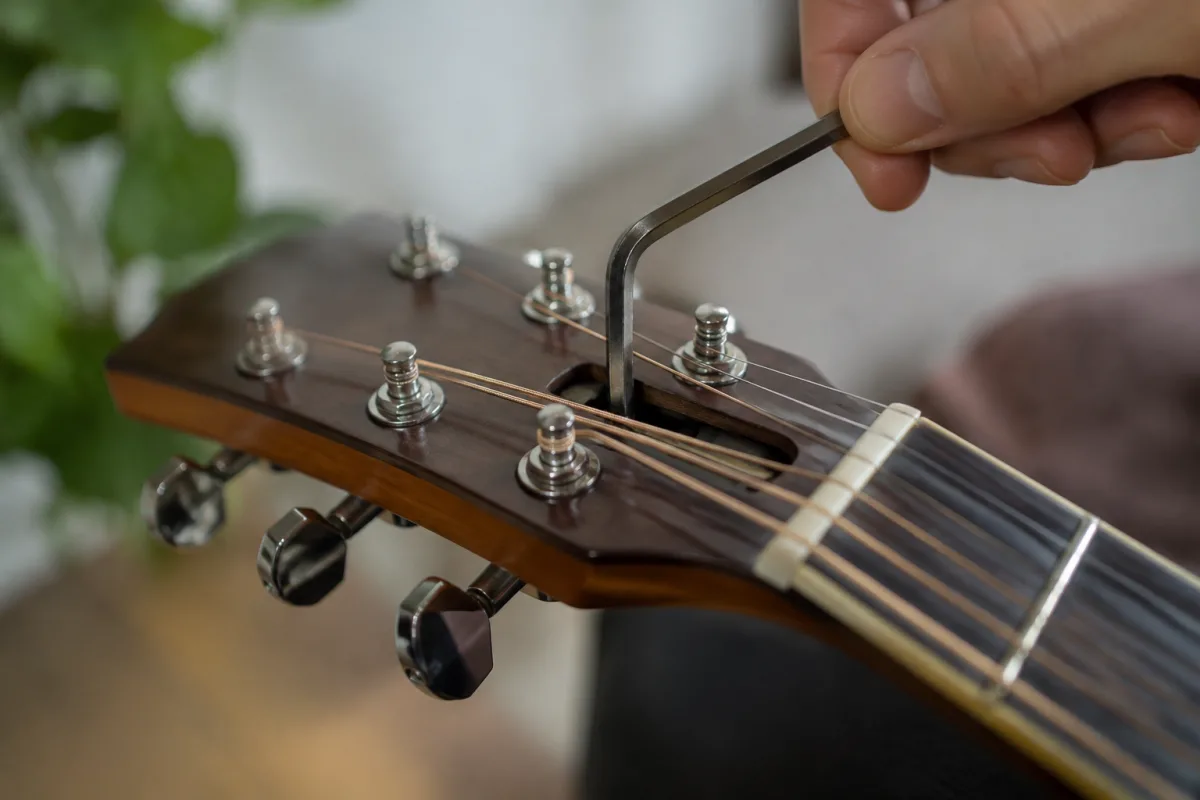
The guitar neck truss rod is one of the most misunderstood components on any acoustic or electric guitar. Yet understanding how this small metal rod works and how to adjust it properly is essential for maintaining playability and preventing permanent damage to your instrument.
What Is a Guitar Neck Truss Rod?
A guitar neck truss rod is a metal rod, usually made from steel or aluminium, that runs through the centre of the guitar neck from headstock to body. Its sole purpose is to counteract the tremendous pull exerted by the strings on the neck. Without a guitar neck truss rod, the strings would gradually bend the neck forward into a banana shape, rendering the instrument unplayable.
The tension in steel strings creates a constant downward pull that would otherwise warp the neck over time. The truss rod applies counter-tension to keep the neck straight, or to introduce the slight curve that optimises playability and sustain.
How Does a Truss Rod Work?
Inside the guitar neck, the truss rod sits in a channel carved parallel to the frets. When you turn the adjustment nut (or wheel) at the headstock or body end, you either tighten or loosen the rod. Tightening pulls the rod upward, which counter-bends the neck and reduces any forward bow. Loosening allows the neck to bow slightly forward.
The subtle interaction between string tension and truss rod tension is what gives a guitar its feel and tone. Too much tension and the strings sit too high, making the guitar unpleasant to play. Too little and the neck bows, causing buzzing and reduced sustain.
Signs Your Truss Rod Needs Adjustment
The guitar neck truss rod may need adjustment if you notice:
- High action — strings sit unnaturally far from the fretboard
- Fret buzz — a buzzing sound when certain notes or chords are played, especially open strings
- Dead spots — notes that sound muted or choked even when properly fretted
- Difficulty bending notes — strings feel stiff or uncomfortable to bend
- Visible neck warp — looking down the fretboard reveals a significant curve
Basic Truss Rod Adjustment
Before adjusting your guitar neck truss rod, understand that this is a precision task. A quarter-turn of the adjustment nut can make a significant difference. Most adjustments should be made in tiny increments, then the guitar left to settle for an hour before checking again.
The fundamental principle: clockwise tightens the rod (pulls the neck back), whilst anti-clockwise loosens it (allows forward bow). Start with an eighth-turn, retune the guitar, then reassess. Never force the adjustment nut — if it feels stuck, stop immediately.
When to Seek Professional Help
If the guitar neck truss rod is completely unresponsive, or if adjustment makes things worse rather than better, this signals a more serious problem — the rod may be damaged, or the issue may lie elsewhere. Similarly, if your guitar requires frequent truss rod adjustments or extreme settings to play well, a qualified technician should inspect it.
Environmental changes — humidity and temperature shifts — naturally cause seasonal neck movement. A small truss rod adjustment two or three times a year is normal. Constant major adjustments suggest a structural issue.
Preventative Care
Proper humidity control is the best preventative measure. Keeping your guitar at 40–50% relative humidity helps stabilise the wood, reducing the stress on the guitar neck truss rod and minimising seasonal adjustments. Store your guitar in its case in a stable environment, away from direct sunlight, radiators and damp areas.
String gauge also affects neck stress. Heavier strings pull harder on the neck, so if you switch to a lighter gauge, the guitar neck truss rod may need loosening slightly.
Different Types of Access
The guitar neck truss rod adjustment nut is accessed either at the headstock or at the body end, depending on the guitar design. Headstock-access rods (common on Fender and many modern guitars) are easier to adjust without removing the strings. Body-access rods (common on Gibsons and some vintage designs) require more disassembly. Some guitars, particularly older or budget models, lack a truss rod entirely — these instruments rely on neck angle and bracing to stay straight.
Conclusion
The guitar neck truss rod is a vital component that deserves respect and understanding. Learning to make small, careful adjustments keeps your guitar playing at its best, whilst knowing when to seek help prevents costly mistakes. A well-maintained guitar neck, with its truss rod properly set, offers the optimal balance of playability, tone and sustain that every player deserves.


Comments