


Cleaning a Guitar Neck article
The Complete Guide to Cleaning A Guitar Neck
A clean guitar neck improves playability, brightens tone and protects the wood. This straightforward step-by-step guide covers everything you need to safely clean your fretboard.
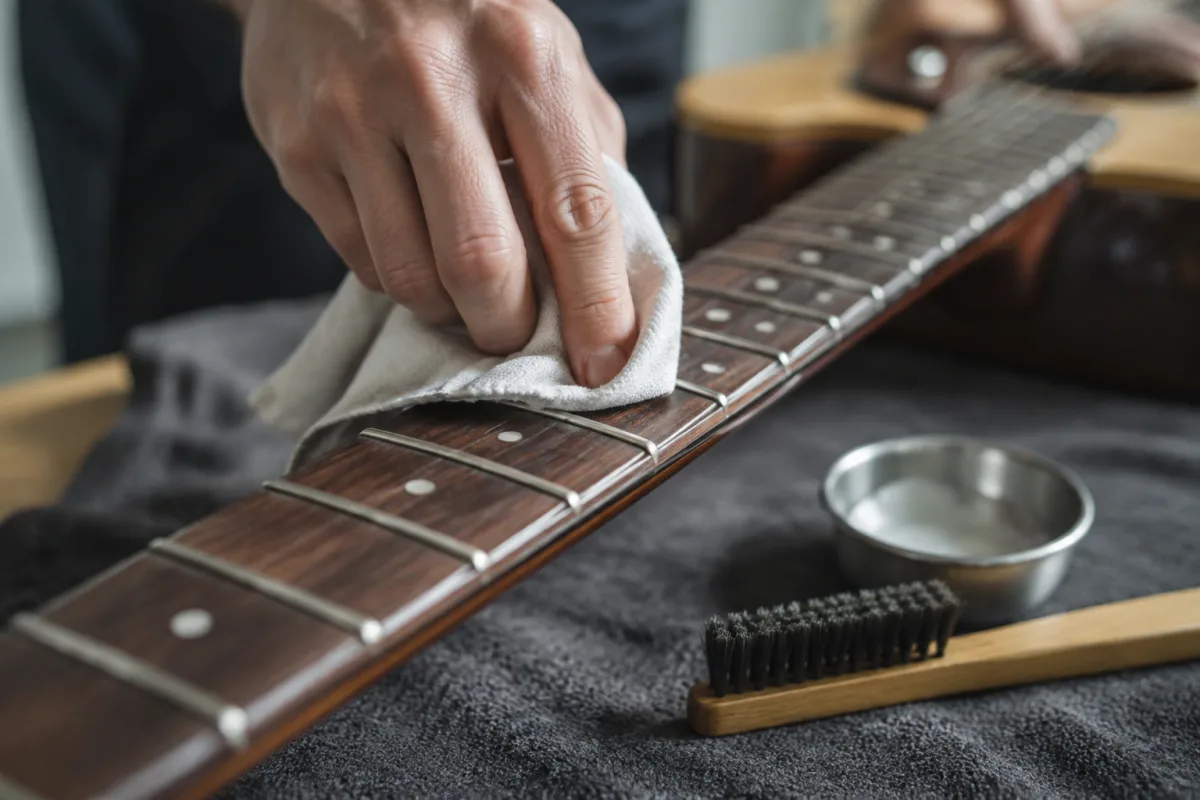
A clean guitar neck is essential for comfortable playing, crisp sound and longevity of your instrument. Over time, sweat, dust and dried-on oil accumulate under the strings, creating a grimy layer that dulls tone and makes fretting uncomfortable. Fortunately, cleaning a guitar neck is a straightforward task that takes only 15 minutes and requires just a few common household items. Whether you're a meticulous player who cleans monthly or you're tackling years of neglect, this guide will walk you through a safe, effective process.
Why Clean Your Guitar Neck?
The guitar neck bears the brunt of playing. Your fingers leave sweat, dead skin cells and oils every time you play. Combined with dust, humidity changes and the occasional spilled drink, the fretboard becomes a grimy, sticky surface that affects both feel and tone. A clean fretboard brightens your sound, feels smoother under your fingers, and protects the wood from premature degradation. Most players notice an improvement in playability and resonance immediately after a thorough cleaning.
Tools and Materials You'll Need
Before you start, gather these items:
- Masking tape — protects the body finish from moisture.
- Soft microfibre cloth — the ideal tool for cleaning (old t-shirt cotton works too, but microfibre is superior).
- Cleaning solution — either a commercial fretboard cleaner (such as Dunlop Lemon Oil) or a homemade mixture of equal parts white vinegar and water.
- Optional: steel wool or fine-grit sandpaper (0000 grade) — for stubborn, caked-on grime only. Skip this unless your neck is badly neglected.
- Optional: fretboard conditioner — rosewood and ebony benefit from occasional conditioning. Linseed oil or commercial fretboard conditioner works well.
Avoid using harsh chemicals, acetone or household cleaners, which can damage the wood finish.
Step-by-Step Process for Cleaning a Guitar Neck
- Remove the strings (or loosen them significantly). This gives you full access to the fretboard. You can either remove them entirely (preferred for a deep clean) or loosen them so they sit away from the frets. If you remove them, note the string order and winding—you'll restring them in the same configuration.
- Mask the body by placing masking tape along the base of the neck where it meets the body. This protects the finish from moisture and cleaning solution.
- Apply the cleaning solution sparingly to your microfibre cloth. Do not pour it directly onto the fretboard—excess moisture can seep into the wood and cause damage. A damp cloth, not a wet one, is your goal.
- Wipe the frets with firm, deliberate strokes along the length of the fretboard, working from the headstock toward the body. Pay special attention to the spaces between frets where grime accumulates. Flip or rotate your cloth frequently to avoid spreading grime around.
- Clean the spaces between frets using a corner of your damp cloth or a soft brush (an old toothbrush works). Work methodically down the neck, ensuring every space receives attention.
- Address stubborn deposits (optional). If grime persists after wiping, use 0000 steel wool or fine sandpaper with gentle, light pressure in the direction of the wood grain. Never use heavy-handed scrubbing, which can damage the frets or wood. Test on a small area first.
- Dry thoroughly with a clean, dry microfibre cloth. Remove all moisture from the fretboard to prevent water damage and oxidation. Pay special attention to the headstock and between frets.
- Optional: condition the fretboard. If your fretboard is rosewood or ebony, apply a tiny amount of fretboard conditioner or linseed oil to a cloth and gently work it into the wood. This restores natural oils and enhances appearance. Do this sparingly—a little goes a long way. Maple fretboards (like those on many Fenders) do not need conditioning.
- Remove the masking tape and inspect your work. The fretboard should look bright, clean and smell fresh.
- Restring your guitar in the original order and tuning. If you only loosened the strings, carefully pull them back over the cleaned fretboard and retune.
Cleaning a Guitar Neck: Different Wood Types
Different fretboard materials require slightly different care:
| Fretboard Material | Cleaning Method | Conditioning Needed? | Special Considerations |
|---|---|---|---|
| Rosewood | Damp cloth + vinegar solution | Yes, occasionally | Responds beautifully to conditioning; natural grain deepens with proper care |
| Ebony | Damp cloth + vinegar solution | Yes, occasionally | Rich, dark wood; conditioning enhances lustre. More durable than rosewood. |
| Maple | Damp cloth + mild cleaner | No | Finished with a protective lacquer; do not oil. Use minimal moisture. |
| Pau Ferro | Damp cloth + vinegar solution | Yes, occasionally | Similar care to rosewood; oils naturally over time. |
How Often Should You Clean a Guitar Neck?
The answer depends on how often you play and how conscientious you are. Light players who wash their hands regularly might clean deeply every 6–12 months. Gigging musicians or heavy players should aim for monthly. At minimum, wipe your fretboard with a dry cloth after every session—this simple habit prevents most buildup. For most players, a thorough cleaning three to four times per year keeps the neck fresh and playable.
Common Mistakes to Avoid
- Using too much liquid: Excess water seeps into the wood and causes swelling, fret sprout and finish damage. Keep your cloth damp, never dripping.
- Using harsh chemicals: Acetone, turpentine and aggressive degreasers strip finishes and damage wood. Stick to mild soap, vinegar solution or commercial fretboard cleaners.
- Skipping the masking tape: Protecting the body finish takes 30 seconds and prevents potential damage. Always mask before cleaning.
- Scrubbing across the grain: Always work parallel to the wood grain, never against it. Cross-grain scrubbing can damage the wood surface.
- Conditioning maple fretboards: Maple is sealed with lacquer and does not need conditioning. Oil-based products can cause buildup and discolouration on maple.
Preventative Care Between Deep Cleans
A simple habit prevents 80% of fretboard grime: wipe your fretboard with a dry cloth after every playing session. This removes sweat and dead skin before they dry and accumulate. Additionally, wash your hands before playing if you've been handling food, working outside or after anything messy. These two simple steps keep your guitar neck cleaner longer and reduce the need for deep cleaning.
Conclusion
Cleaning a guitar neck is one of the easiest maintenance tasks, yet it has a profound effect on playability and tone. Whether you tackle the job yourself or have a professional luthier handle it, a clean fretboard is a happy fretboard. Start with light cleaning solutions and a damp cloth; progress to steel wool only if truly needed. With regular care and mindful preventative habits, your guitar neck will remain responsive, comfortable and beautiful for years to come.


Comments