


Guitar Hardware article
The Ultimate Guide to Electric Guitar Hardware
Electric guitar hardware — from tuning pegs to pickups — shapes how your instrument plays and sounds. Understanding each component lets you maintain, upgrade and troubleshoot your own guitar.
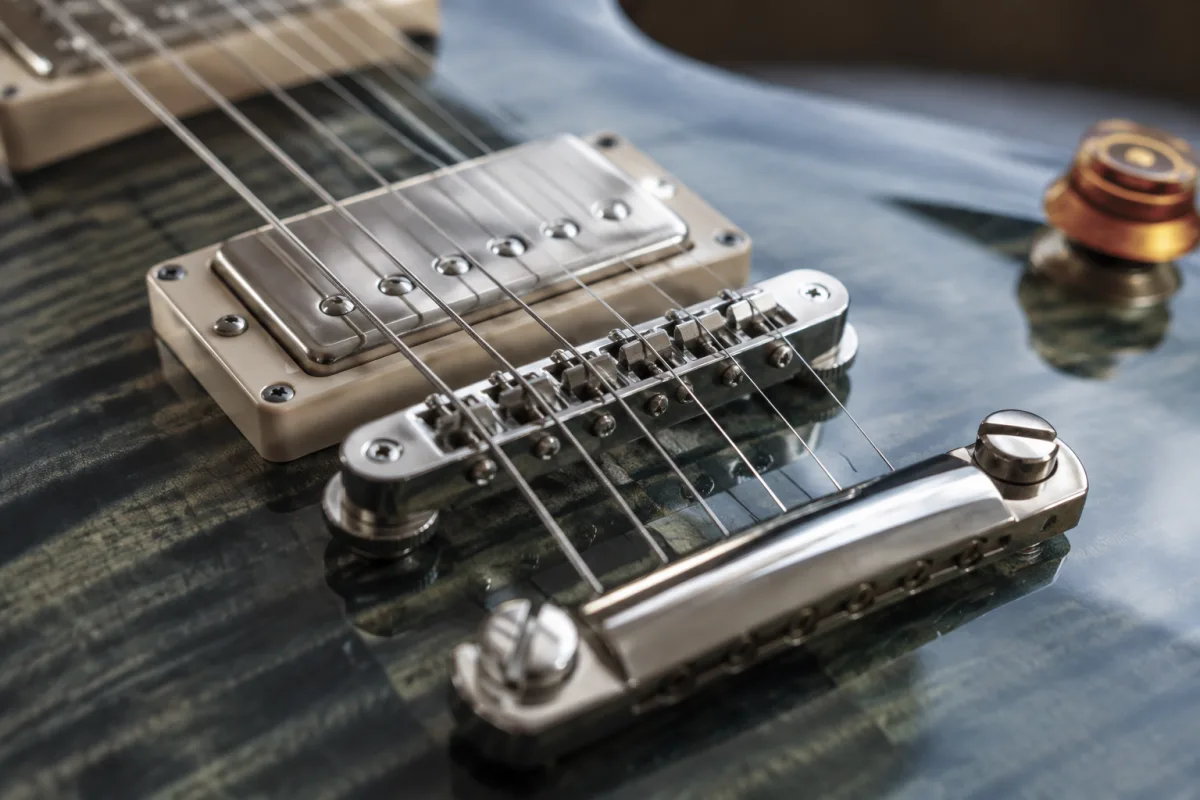
Electric guitar hardware comprises all the metal, wooden and plastic components that make your instrument play, stay in tune and endure years of playing. Understanding each piece transforms you from a player into someone who can maintain, upgrade and troubleshoot their own guitar — and make informed decisions when buying.
Tuning Machines and Tuning Pegs
Tuning machines, or tuning pegs as they're sometimes called, are your first line of defence against string slippage. Located on the headstock, they hold the strings and allow you to adjust pitch by winding or unwinding the post. Quality matters enormously here — poor tuning stability ruins even a great guitar.
Look for machines with a smooth, geared action and tight tolerances. A 1:18 ratio is standard; higher ratios (like 1:21) offer finer tuning control. Sealed machines resist dirt and humidity, keeping your guitar stable for weeks between tuning sessions. Locking tuners, common on modern instruments, grip the string post and eliminate slippage entirely — they're worth the upgrade if your guitar doesn't have them.
The Bridge and Bridge Hardware
The bridge transfers string vibration to the body and anchors the strings at a precise angle. On electric guitars, the two main types are hardtail bridges, which simply anchor the strings at the body, and floating bridges with spring-loaded vibrato systems.
A hardtail bridge offers rock-solid tuning stability and direct tonal transfer. Floating bridges, like a Fender Stratocaster's synchronized tremolo or a Floyd Rose locking system, let you bend pitch dramatically but require more maintenance and careful setup. The bridge saddles — tiny metal or bone pieces that the strings rest on — carry enormous tonal weight. Bone transmits more vibration than plastic, and properly slotted saddles reduce string breakage.
Pickups and Electronics
Pickups are electromagnetic coils that sense string vibration and convert it to electrical signal. They're the soul of your guitar's tone. Single-coil pickups (found on Fenders) are bright and articulate but prone to hum. Humbucker pickups (found on Gibsons) are warm and thick, and their dual-coil design cancels hum — hence the name.
Beyond pickup type, the magnet material (Alnico, ceramic), coil wrap (tight or loose), and the metal covers all shape tone. Higher-output pickups drive an amp harder and favour heavy styles; lower-output pickups preserve articulation and suit clean tones. Active electronics with battery-powered buffers add clarity and sustain but require regular battery changes.
Volume and tone potentiometers control loudness and treble roll-off. A 500k pot is standard for single-coil guitars; 1M pots suit humbuckers and preserve more high end. Switches route pickups or activate coil-tapping modes. Quality pots and switches last years; cheap ones crackle and fail within months.
The Nut and Nut Materials
The nut is a slotted bar where strings rest between the tuning machines and the fretboard. It's a critical tone transfer point and sets string spacing. Bone nuts sound warmer and last longer than plastic; tusq (synthetic bone) sits between the two. The nut's height, slot width and depth all affect playability and tuning stability. A poorly cut nut causes dead spots and string breakage.
Fretboard Hardware and Frets
Frets are narrow metal wires laid into the fretboard that divide the playable range. Jumbo frets make playing easier for bends and vibrato but can feel harsh at first; smaller vintage frets suit precise, delicate playing. Stainless-steel frets last far longer than nickel-silver and resist wear beautifully.
The fretboard itself — rosewood, maple, or synthetic materials — contributes warmth or brightness and demands different care. Rosewood is rich and forgiving; maple is bright and durable but needs more maintenance.
Pickguards and Protective Hardware
Pickguards are thin plastic or wooden sheets mounted near the strings to protect the finish from pick scratches and sweat. They're mostly cosmetic, but they do shield your guitar's face during heavy playing. Some pickguards route cavities for electronics; others sit flat on top. High-quality pickguards are bevelled and polished for a professional finish.
Other protective hardware includes strap buttons (where your strap attaches) and output jacks. Ensure strap buttons are solid and anchored firmly — a loose button has ended many performances.
Output Jacks and Cable Connections
The output jack is where you plug your cable in. A quality jack accepts your plug smoothly and grips it firmly. Loose jacks crackle and drop signal mid-performance. Switchcraft jacks are the industry standard — they're robust and last years. Cheap jacks make contact intermittent and ruin tone.
Springs, Screws and Hardware Alloys
Vibrato springs, mounting screws and hinges all wear. Stainless-steel hardware resists rust; nickel-plated hardware looks better initially but tarnishes and corrodes. Bridge saddle screws are tiny but critical — they set string action and intonation. Stripped saddle screws force expensive bridge replacement.
Keep spare springs, screws and small parts in a drawer. A broken spring or lost screw during gigging is far less dramatic if you have a spare.
Setup and Maintenance of Guitar Hardware
New guitar hardware requires setup — adjusting the truss rod, bridge height, intonation and nut slot depth to play in tune with minimal effort. This is not something to rush. A professional setup costs £60–120 and pays for itself in playability and tone.
Regular maintenance keeps hardware performing. Clean potentiometers with contact spray to eliminate crackle. Lubricate tuning machine posts and bridge pivots lightly with machine oil. Replace worn strings promptly — old strings damage frets and saddles. Tighten loose screws and replace corroded springs before they fail.
Upgrading Guitar Hardware
If your guitar plays poorly, upgrading hardware can revive it. Better tuning machines improve stability dramatically. A bone nut replaces a cracked or worn plastic one. High-quality pickups transform tone more than any other single upgrade. Even replacing cheap pots and switches with quality versions reduces crackling and restores responsiveness.
Hardware upgrades are far cheaper than a new guitar — a new tuning machine set costs £30–80, a pickup swap runs £100–300, and professional installation adds another £30–60. A £500 guitar with £300 in well-chosen upgrades outplays a new £800 guitar.
Conclusion
Electric guitar hardware is not just nuts and bolts — each component profoundly shapes how your instrument plays, sounds and feels. Learning the names and roles of tuning machines, bridges, pickups, nuts, frets, hardware materials and electronics gives you control over your tone and playability. Whether you maintain your own guitar or work with a technician, understanding guitar hardware transforms your relationship with the instrument.





Comments