


White Flying V article
White Flying V for Beginners: A Complete Guide
Drawn to the white Flying V but worried the radical shape is hard for beginners? It isn't. Here's why this iconic guitar works beautifully for learning.
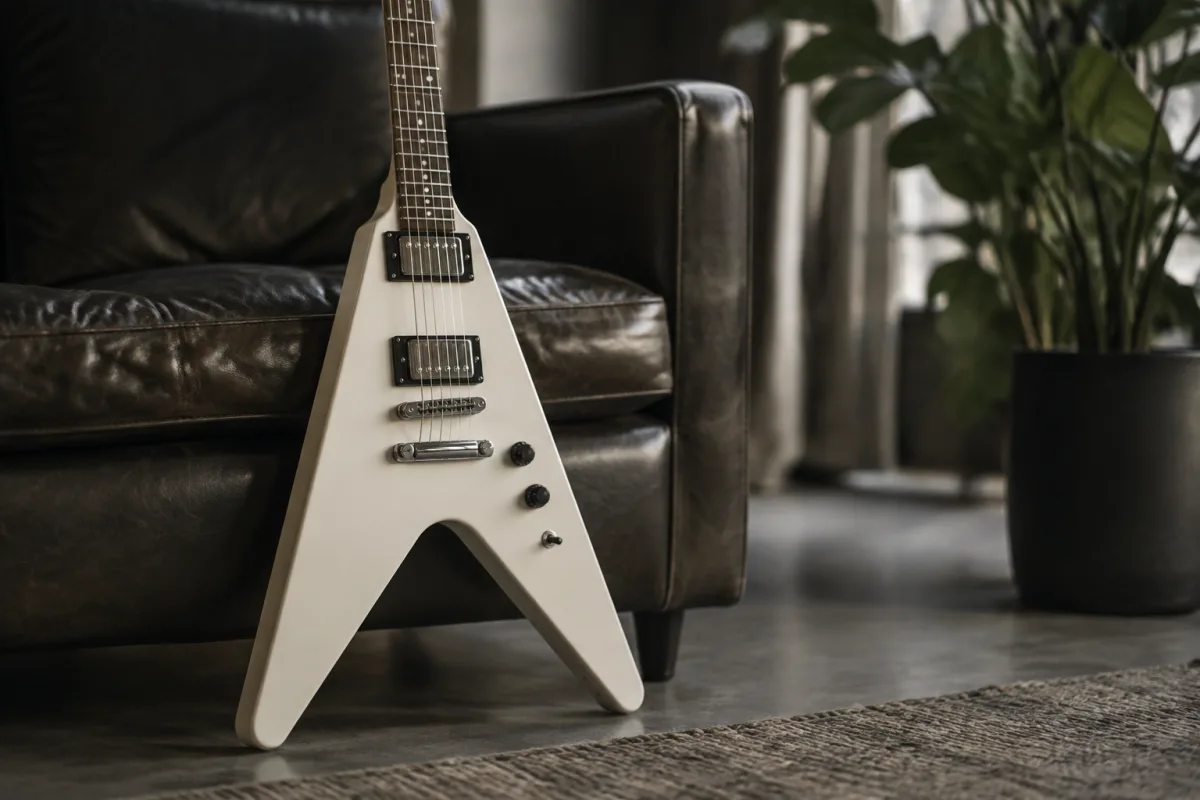
The white Flying V is an iconic electric guitar shape that looks radical and plays beautifully—even for beginners. If you're drawn to the Flying V's striking design but worried that its unconventional shape means it's hard to play, relax. A quality white Flying V is actually an excellent beginner guitar that delivers inspiration, playability, and a distinctive tone that makes learning rewarding from day one.
The Flying V: Bold Design, Approachable Playing Experience
Gibson introduced the Flying V in 1958 as an experimental guitar shape. Decades later, it's a proven, respected design played by professionals and beginners alike. The angular, geometric body looks aggressive but doesn't compromise playability—you still fret notes, play chords, and apply techniques exactly as you would on a Stratocaster or Les Paul.
The white finish adds visual appeal. It's striking on a pedalboard, looks professional on stage, and stands out in a practice room—all of which boost your motivation to pick the guitar up regularly. As a beginner, psychological factors matter enormously. A guitar that genuinely excites you visually will sit in your hands more often than a beige alternative.
Playability for Beginners: What Makes the Flying V Work
New players often worry that unconventional guitar shapes are harder to play. The Flying V actually isn't. Here's why it works as a beginner instrument:
- Neck dimensions are standard: The neck width, depth, and fret spacing are identical to Fenders and Gibsons. Your fingers adapt to a Flying V's neck exactly as they adapt to any other electric guitar.
- Body weight is manageable: Flying Vs are typically lightweight (7–8kg), lighter than many solid-body electrics. After 30 minutes of practice, your shoulder won't fatigue the way it might with a heavy semi-hollow guitar.
- Access to the upper frets is excellent: The pointed wing of the Flying V body actually gives you better access to higher frets than a Strat or Les Paul. If you're learning leads and scales, this is genuinely beneficial.
- Sitting and standing posture is natural: Despite its aggressive appearance, the Flying V balances well when sitting (on your thigh) and standing (with a strap). Your playing position is as comfortable as any other electric.
In practical terms, picking up a Flying V and playing scales or open chords feels natural within minutes. The shape doesn't interfere with your learning—it just looks incredible while you're doing it.
The White Finish: Aesthetic and Practical Considerations
A white Flying V is visually bold and requires slightly more care than darker finishes:
- Keeps looking great with basic maintenance: Wipe your guitar after playing to remove sweat and dust. The white finish actually shows grime less readily than you'd think because the satin or gloss poly finish is protective. Monthly gentle cleaning keeps it pristine.
- Visible wear over time: After years of gigging or heavy use, white finishes show age—minor dings become visible, edges can yellow slightly. This is cosmetic; tone and playability are unaffected. Some players love the aged look; others can refinish at a luthier's shop.
- Visibility advantage: On stage or in a rehearsal room, a white Flying V stands out. Psychologically, this reinforces your identity as a guitarist and makes practice feel purposeful. Beginners benefit from this psychological boost.
The white finish requires no special care beyond standard guitar hygiene. Don't overthink it—treat it like any other electric and it'll stay beautiful for years.
Tone Character: Punchy, Clear, and Inspiring
Flying Vs are solidbody electrics that prioritise clarity and punch. A white Flying V typically has a bright, articulate tone with good sustain—ideal for rock, funk, and lead-heavy music.
This tone character is actually beginner-friendly. Your chord work sounds clear and defined rather than muddy or dull. Simple open chord progressions sound immediately professional. This rapid gratification motivates you to practice more, accelerating your learning.
Compared to semi-hollow guitars (which are warm and jazzy) or heavily chambered designs (which are soft), a Flying V's solid tone is punchy and encouraging for new players finding their voice.
First-Timer Considerations
If you're choosing a white Flying V as your first electric guitar, remember these beginner-specific points:
- The unconventional shape will excite and motivate you. That's a feature, not a bug. Beginner motivation is often underestimated; if you love the way your guitar looks, you'll play it more often and improve faster.
- Your hand adapts quickly to any guitar shape. Within a few weeks, the Flying V will feel as natural as any other electric. Your fingers don't care about visual design—they just care about fret spacing and neck diameter (both standard on Flying Vs).
- Thin-body electrics are genuinely beginner-friendly. The Flying V's lightweight, compact form means you won't experience shoulder fatigue during longer practice sessions. Comfort aids learning.
- Seek out playable beginner-range Flying Vs. Entry-level models (Epiphone, Squier Flying V imitations, or budget Gibsons) often have poor setup out of the box. Budget for professional setup (£50–100) to ensure the action and intonation are optimal for learning.
- Don't assume the shape demands advanced playing. You can play beginner-level songs on a Flying V exactly as you would on any other guitar. The shape doesn't gatekeep any skill levels.
Common First-Timer Mistakes with Flying V Guitars
Beginners choosing Flying Vs sometimes make avoidable mistakes:
- Buying the absolute cheapest Flying V clone. Budget Squier or unbranded imports can have terrible playability. Spend a modest amount more for an Epiphone or entry Fender and you'll get a guitar worth practicing on.
- Assuming the white finish requires special care. It doesn't. Treat it like any other guitar and it'll stay beautiful. Stop overthinking the colour.
- Accepting poor setup as "just how it is." Many budget Flying Vs leave the factory with high action or intonation issues. A professional setup for £50–100 transforms playability from discouraging to inspiring.
- Underestimating the visual boost. Yes, choosing a guitar based on looks seems shallow, but psychological motivation accelerates learning. A guitar you genuinely love looking at will be played more. That's not shallow—it's smart.
- Forgetting that tone matters for motivation. Flying Vs sound brighter and punchier than some other electrics. If you love that punchy tone, you'll play scales and leads enthusiastically. Tone preference is personal; trust your ears.
- Worrying that the unique shape means limited genre applicability. Flying Vs work for any electric style: blues, rock, metal, funk, punk, and experimental. Don't let anyone tell you a Flying V is "only for metal"—play what you love.
Learning With a Flying V: Encouragement and Realistic Expectations
Your first weeks with a white Flying V will be exactly like any other beginner guitarist: your fingers will hurt, you'll struggle with barre chords, and chord changes will feel clumsy. These are universal beginner experiences that have nothing to do with your guitar's shape.
What's different is the inspiration. When those early struggles feel overwhelming, you'll glance at your striking white Flying V and remember why you started. That visual reminder can be the difference between practicing through frustration and giving up.
After 6–8 weeks, your calluses will toughen, basic chords will feel natural, and playing will stop hurting. The white Flying V will feel like an extension of your body. That's when you'll start genuinely enjoying the experience rather than just pushing through.
Comparing to Alternative Beginner Electrics
How does a white Flying V compare to beginner-friendly alternatives?
- Stratocaster: Curved, contoured, comfortable. More ergonomic than Flying V but less visually striking. Choose Strat if comfort is paramount; choose Flying V if inspiration matters more.
- Les Paul: Iconic and inspiring but heavier (8–11kg). Can cause shoulder fatigue during long practice. Flying V is lighter and equally inspiring visually.
- Telecaster: Simple, excellent tone, lightweight. Less visually distinctive than Flying V. If you want striking looks plus beginner-friendly playability, Flying V wins.
A white Flying V is genuinely a smart beginner choice. It combines visual inspiration, excellent playability, manageable weight, and punchy tone in one package.
Investment and Longevity
A quality beginner Flying V (Epiphone or entry Fender: £200–400) will serve you for years, even if you outgrow it eventually. Flying V resale value is decent because the shape appeals to musicians across experience levels. You'll recover 40–60% of your initial purchase if you decide to upgrade later.
Many beginner players eventually move on to different guitars as their playing style evolves. But some stay devoted to Flying Vs for life. Either way, starting with a quality beginner Flying V is a smart, emotionally rewarding choice.
Conclusion
A white Flying V is an excellent beginner electric guitar. It plays as naturally as any other design but looks distinctive enough to inspire daily practice. The bright tone motivates you to explore scales and leads. The lightweight build prevents shoulder fatigue during learning. And the iconic shape reminds you why you fell in love with playing in the first place. Don't worry that the unconventional design means it's hard to play—it isn't. Embrace the inspiration, invest in a proper setup, and let the white Flying V's striking aesthetic drive your practice sessions. You'll improve faster, enjoy the journey more, and own a guitar that remains beautiful and playable for decades. That's a winning beginner choice.


Comments