
Fender Precision Guitar article
The Complete Guide to Fender Precision Guitar
The Fender Precision Guitar revolutionised bass playing since 1951, establishing the benchmark for electric bass instruments with legendary tone and unmatched reliability.
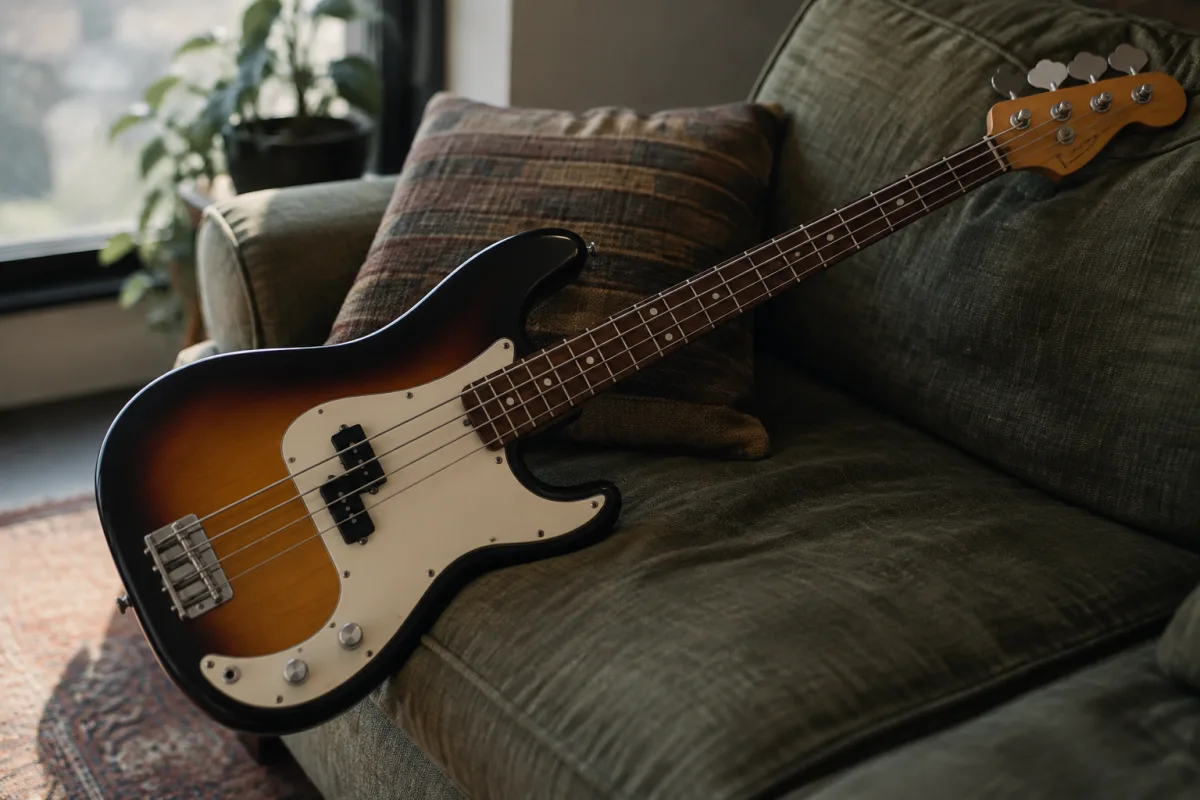
The Fender Precision Guitar, better known as the Precision Bass, stands as one of the most iconic bass guitars ever created. Launched in 1951, it revolutionised bass playing and remains the gold standard for countless musicians worldwide. Whether you're a seasoned bassist or exploring your first serious instrument, understanding the Fender Precision Guitar's unique characteristics is essential to appreciating bass guitar history and performance.
The Birth of an Icon
The Fender Precision Guitar emerged when founder Leo Fender recognised that upright bass players needed a more portable, amplified alternative. The Fender Precision Guitar addressed this need directly, becoming the first mass-produced electric bass guitar. Its solid body construction and built-in pickups meant a Fender Precision Guitar could project sufficient volume through an amplifier, liberating bass players from the constraints of acoustic instruments.
The name "Precision" reflects the instrument's key innovation: fretted fingerboard technology. Unlike upright basses, the Fender Precision Guitar featured frets that allowed bassists to play with precise intonation and consistent pitch, transforming bass playing from something requiring years of classical training into something more accessible to musicians from rock, pop, and other genres.
Design and Construction
What defines a Fender Precision Guitar is its straightforward yet brilliantly effective design. The body is typically solid ash, alder, or poplar — lightweight yet resonant woods that project clear tone. The Fender Precision Guitar's shape, with its slightly bevelled body edges, became iconic and spawned countless imitations.
The neck of a Fender Precision Guitar is traditionally constructed from maple with a rosewood fingerboard. Early Fender Precision Guitar models featured a single cutaway allowing access to higher frets, though this design evolved over decades. The scale length — typically 34 inches on a Fender Precision Guitar — has become the standard for modern bass guitars.
Electronics are another defining characteristic of the Fender Precision Guitar. The instrument features a single split-coil pickup positioned near the bass bridge, designed to capture full, punchy low-end while maintaining clarity across the midrange. A Fender Precision Guitar's wiring is elegantly simple: volume and tone knobs controlling a single pickup, yet this simplicity belies the tonal possibilities.
Tonal Characteristics of the Fender Precision Guitar
The sound of a Fender Precision Guitar is immediately recognisable. The split-coil pickup design produces a warm, punchy tone with pronounced midrange presence. A Fender Precision Guitar excels at cutting through a band mix, which explains why the instrument became the default choice for countless professional sessions and live performances.
Many bassists describe the Fender Precision Guitar's tone as "woody" yet articulate. Whether playing fingerstyle or with a pick, a Fender Precision Guitar delivers tonal clarity that suits rock, funk, soul, and jazz equally well. The versatility of the Fender Precision Guitar owes much to this balanced tonal character.
Playing dynamics matter significantly on a Fender Precision Guitar. The instrument responds beautifully to subtle touch variations, allowing experienced players to shape their tone through technique alone. A Fender Precision Guitar played with aggressive picking produces aggressive tone; the same instrument played with gentle fingers sounds warm and melodic.
Variations and Generations
Over seven decades, Fender released numerous Fender Precision Guitar variations. Early "Slab body" models differ significantly from modern versions. Classic Fender Precision Guitar designs from the 1960s featured different pickup configurations and hardware. American-made Fender Precision Guitar models are generally preferred by professionals, though Japanese-manufactured versions offer excellent value.
Modern Fender Precision Guitar lines include numerous options:
- American Professional — Modern Fender Precision Guitar featuring updated electronics and contemporary playability
- American Original — Fender Precision Guitar reissues capturing vintage specifications from specific decades
- Player Series — Budget-friendly Fender Precision Guitar option offering solid quality at lower cost
- Classic Vibe — Affordable Fender Precision Guitar with vintage aesthetics and decent playability
- Vintera Modified — Fender Precision Guitar blending vintage styling with modern improvements
Playability and Comfort
The Fender Precision Guitar is renowned for comfortable playability. The relatively moderate body depth means the Fender Precision Guitar sits close to your body when playing seated or standing. The neck profile of a Fender Precision Guitar is typically comfortable for hands of various sizes, though personal preference varies considerably.
String spacing on a Fender Precision Guitar is generous at the bridge — roughly 19mm between string centres — accommodating both fingerstyle and pick-playing techniques. The narrow body width compared to some bass guitars makes a Fender Precision Guitar easier to navigate when playing upper frets.
A Fender Precision Guitar's weight is moderate, typically between 4.5 and 5 kilograms, which is comfortable for extended performances. The balance point is generally excellent, meaning a Fender Precision Guitar won't neck-dive or feel awkwardly weighted when standing.
Why Choose a Fender Precision Guitar?
The Fender Precision Guitar appeals to players for several compelling reasons. Tonal consistency across instruments means buying a Fender Precision Guitar guarantees the tone you expect. Professional endorsements from legendary bassists — from John Entwistle to Victor Wooten — reinforce the Fender Precision Guitar's credibility.
The extensive aftermarket ecosystem surrounding the Fender Precision Guitar means parts and upgrades are readily available. Upgrading pickups, bridges, or hardware on a Fender Precision Guitar is straightforward and well-documented. This modifiability appeals to players wanting to customise their instrument.
Resale value for a Fender Precision Guitar is strong. Should you decide to sell or upgrade, a used Fender Precision Guitar typically holds its value better than most competing instruments. This makes investing in a Fender Precision Guitar financially sensible alongside the musical benefits.
Conclusion
The Fender Precision Guitar remains the benchmark bass guitar against which all others are measured. Its influence on music from the 1950s onwards cannot be overstated. Whether you're drawn to the Fender Precision Guitar for its legendary tone, proven reliability, or cultural significance, choosing one places you in distinguished company. A Fender Precision Guitar is more than an instrument — it's a connection to decades of musical innovation and excellence that continues to this day.



Comments