


Fender Five String Bass article
The Complete Guide to Fender Five String Bass
The Fender five string bass expands downward range and harmonic vocabulary, making it ideal for contemporary players exploring progressive rock, metal, fusion and modern funk.
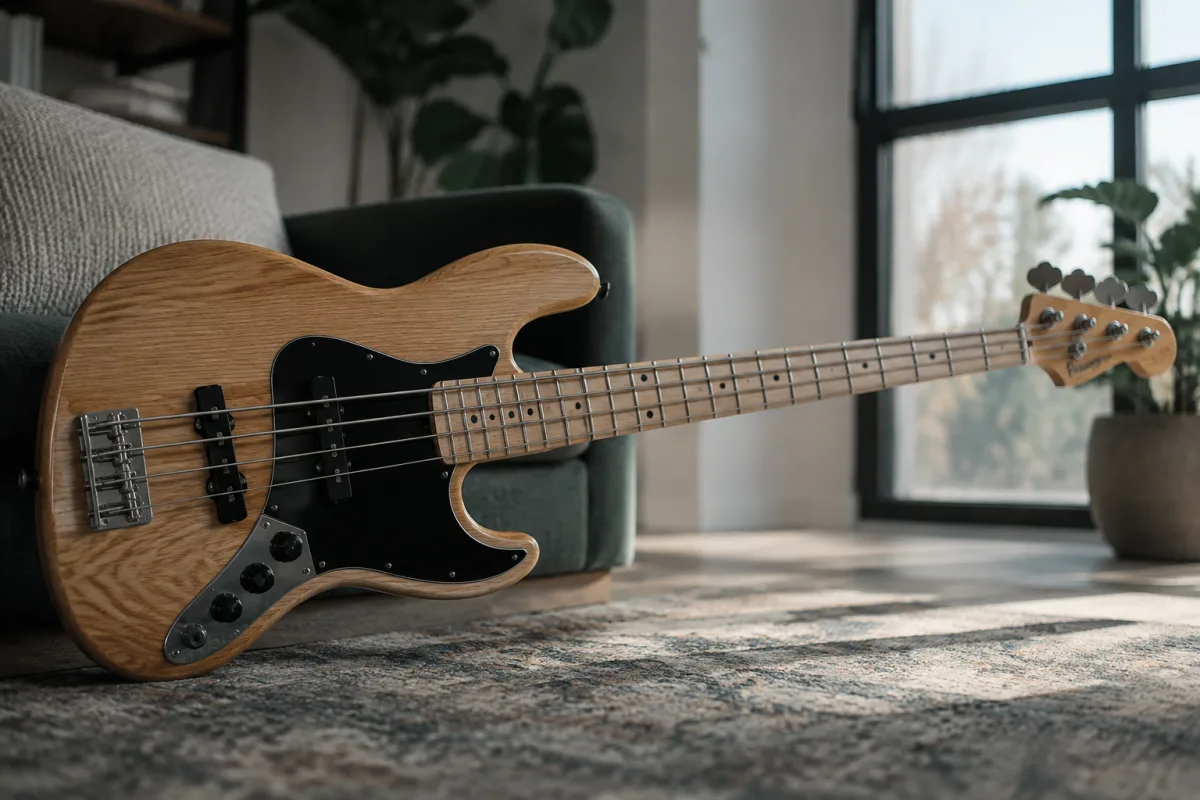
The Fender Five String Bass: Expanding the Sonic Palette
The Fender five string bass represents a fundamental shift in how modern players approach the low end of the frequency spectrum. Building upon Fender's legendary four-string heritage, the five string configuration adds a lower B string that extends the instrument's downward range by a perfect fourth, opening artistic possibilities for contemporary bassists. Whether you're exploring progressive rock, metal, jazz fusion or modern funk, a Fender five string bass combines the company's legendary construction standards with expanded creative scope.
Understanding the Five String Configuration
A traditional four-string bass covers E–A–D–G. The five string bass adds a low B string, dropping the tuning to B–E–A–D–G. This additional string doesn't merely mean "more of the same"—it fundamentally alters the instrument's voice and playing approach. The low B extends the bass range downward, allowing players to voice chords and melodies in lower registers without relocating up the neck. For contemporary music demanding deep, resonant low frequencies, the fifth string becomes indispensable.
Fender's five string designs maintain the company's tonal philosophy whilst accommodating the extended string configuration. The wider neck (typically around two inches at the nut) requires adjustment from players accustomed to four-string dimensions, yet this ergonomic difference settles quickly into muscle memory.
Tone and Construction Quality
Fender five string basses inherit the sonic characteristics that established the company's reputation. Most models feature solid bodies constructed from ash, alder or mahogany, paired with bolt-on maple necks and rosewood or maple fretboards. This construction approach prioritises sustain, clarity and tonal definition across the frequency spectrum.
The addition of a fifth string requires careful engineering to maintain balanced tone. Fender addresses this through thoughtful bridge design, precise neck geometry and quality hardware that ensures the low B string achieves clarity rather than murkiness. The wider string spacing on the bridge allows each string to resonate independently, preventing the frequency muddiness that afflicts poorly designed five string instruments.
Electronics typically include active or passive pickup configurations. Active electronics offer shape-able tone with on-board EQ, whilst passive systems deliver the natural, warm character Fender traditionalists appreciate. The choice depends on playing style and musical context—active systems suit players seeking tonal versatility and cutting power, whilst passive configurations appeal to players valuing transparency and natural resonance.
Playability and Technique Development
Transitioning from four to five strings initially feels unconventional. The wider neck alters hand position and finger span requirements. Most players need two to four weeks of regular practice to develop natural five string competency, though many find the transition surprisingly smooth given patience and consistent practice.
The five string configuration opens new technical possibilities. Players can voice bass lines in lower registers without dramatic position shifts, allowing for smoother, more fluid playing. Slap techniques, tapping and two-hand approaches gain additional sonic palette options. Jazz players particularly appreciate the harmonic possibilities—chords voiced on five strings create depth unavailable on four strings.
The lower B string introduces initial challenges with intonation and clarity. A well-set-up five string bass, with proper action height and bridge positioning, delivers tight low end definition. Poor setup or inadequate bridge design muddles the low frequencies, so purchasing a pre-setup instrument or investing in professional setup immediately post-purchase proves worthwhile.
Fender's Five String Bass Range
Fender produces several five string models across different price points and specifications. The Fender Player Series five string offers solid construction and playability at moderate investment, suitable for developing players and working musicians. The American Professional range delivers refined electronics, boutique-quality hardware and meticulous fret work, justifying the premium price tag for discerning players.
Signature models from notable Fender endorsers provide tailored specifications reflecting each artist's preferences. Boutique custom shop instruments represent the pinnacle of Fender's craftsmanship, featuring premium materials and exacting construction standards. Entry-level models introduce five string playing to budget-conscious beginners, though they require more careful selection and setup attention.
Who Should Choose a Five String Bass?
Five string basses suit players seeking extended downward range, those exploring contemporary genres demanding deep low frequencies, and experienced four string players ready to expand their harmonic vocabulary. Progressive rock, metal, jazz fusion and modern funk bassists frequently favour five string instruments. Composers and session players appreciate the additional harmonic possibilities.
Conversely, five string basses aren't essential for traditional rock, soul and pop players who thrive within four string limitations. Players with smaller hands or physical limitations may find the wider neck uncomfortable. Genre traditionalists and players focused on classic rock repertoire rarely need the extended range.
Five String vs Four String: The Practical Differences
The fundamental difference extends beyond mere string count. A five string instrument requires relearning familiar finger patterns—the additional string occupies space where the four-stringed high E string previously sat. Many players initially find this disorienting, yet most adapt within weeks of consistent practice. The playable range expands dramatically; complex harmonic ideas execute more smoothly across five strings than four.
Sonically, a five string bass introduces lower frequencies that four string instruments cannot produce. Modern music production increasingly demands these low frequencies; many contemporary tracks feature bass lines containing notes outside four string range. A five string player maintains flexibility unavailable to four-string specialists.
Setup and Maintenance Considerations
A Fender five string bass demands the same care as any quality instrument. Regular setup attention—truss rod adjustment, action height calibration and intonation verification—keeps the instrument performing optimally. The low B string particularly benefits from occasional professional care, as intonation and clarity depend heavily on precise setup.
Fender's American-made instruments generally feature excellent hardware and stable construction. Many players report owning five string Fenders for decades with minimal maintenance beyond string changes and occasional professional adjustments. Quality strings, appropriate humidity levels and careful handling preserve the instrument's voice and playability.
Investment and Value Retention
A Fender five string bass represents a significant investment, ranging from £400–500 for Player Series models to £2,000–3,000 for American Professional and custom shop instruments. This investment pays dividends through tonal quality, construction durability and value retention. Fender instruments command respect in the second-hand market, with used Fenders often appreciating rather than depreciating, particularly established models with proven playability.
Compared to custom luthier-built five string basses, Fender pricing remains reasonable given the company's reputation and manufacturing consistency. A used American Fender five string often represents superior value to a new instrument from an emerging builder, offering proven quality and recognised resale value.
The Five String as Your Next Instrument
For serious bass players, a Fender five string represents an evolution rather than a revolutionary change. The instrument expands creative horizons, opens new genres and encourages fresh compositional approaches. Whether you're a four-string player ready for new sonic territory or a beginner choosing your first serious instrument, a Fender five string bass rewards the initial investment in learning and adaptation with years of expressive, reliable playing.


Comments