
Fender Bass Head article
The Complete Guide to Fender Bass Head
Fender bass amplifier heads deliver professional tone and power for any musical context. From vintage tube designs to modern solid-state reliability, these amps form the foundation of bass rigs worldwide.
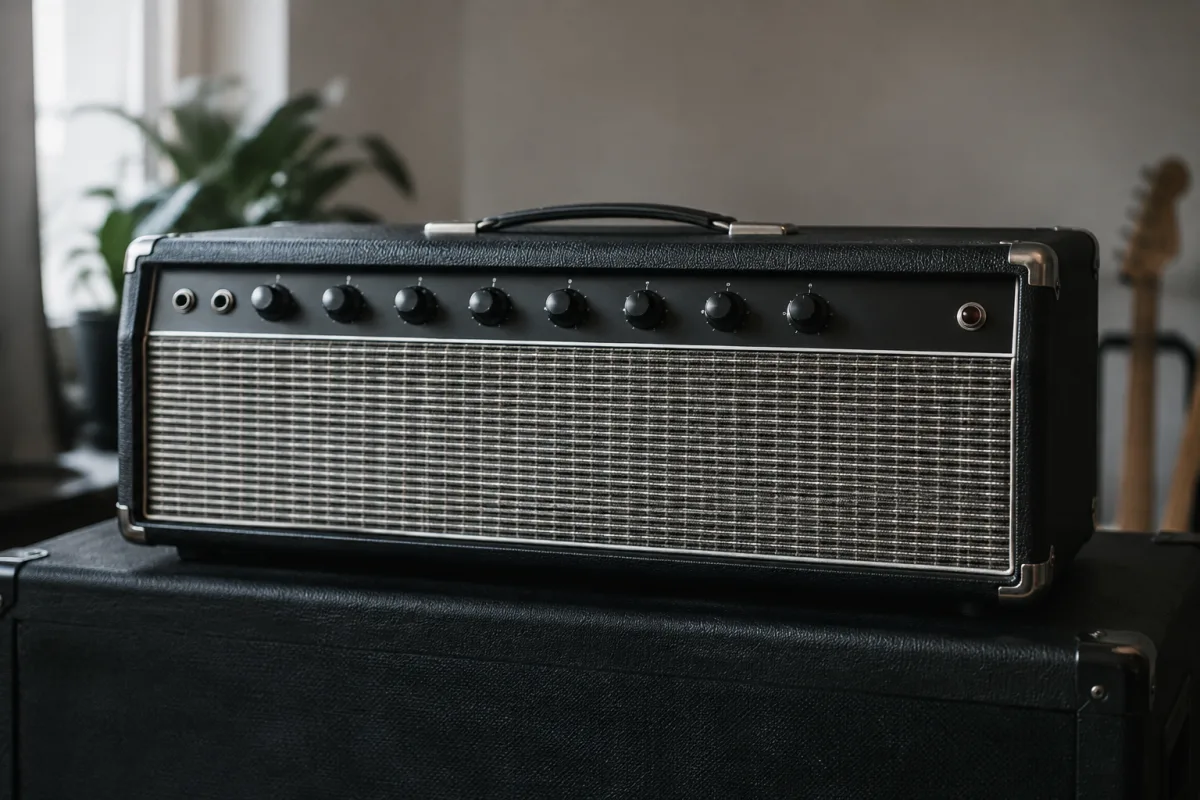
Fender bass amplifier heads represent the top half of a two-part bass rig, delivering power and tone shaping without the speaker cabinet. These standalone amplifiers range from vintage tube units prized for warm, organic tone to modern solid-state designs optimised for portability and reliability. Whether you play in a touring band, a rehearsal room, or a recording studio, a Fender bass head connects to external speaker cabinets to deliver the foundation every rock, funk, and jazz ensemble depends on.
The Fender Bass Amplifier Heritage
Fender’s bass amplifier designs emerged from the same golden era that created the Telecaster and Stratocaster. Early tube heads revolutionised how bass players sounded, delivering powerful lows and articulate midrange that could cut through a band mix. Throughout the decades, the brand has refined both its tube and solid-state approaches, creating products that balance vintage character with modern reliability.
Many professional bassists gravitate toward Fender units because they understand the brand’s design philosophy: robust construction, straightforward controls, and a sonic signature that works across genres from blues to metal.
Tube vs. Solid-State Bass Heads
Fender manufactures both types, each suited to different priorities. Tube amplifiers compress dynamically and produce harmonic saturation as they approach their limits, delivering a warm, responsive tone beloved in jazz and classic rock contexts. These designs require regular maintenance—tube replacement and output transformer servicing—and run warmer than alternatives.
Solid-state models prioritise reliability, weight savings, and consistent tone across the volume range. Modern solid-state technology has narrowed the tonal gap significantly; contemporary designs from Fender offer compelling character without the maintenance demands. They suit touring musicians and those seeking straightforward performance.
Power Output & Headroom
Bass amp power matters differently than it might for guitar applications. A 100-watt unit provides reasonable headroom for small venues and rehearsal rooms; 200–300 watts suits most live contexts; 400+ watts addresses large venues and reinforces against drummer and guitarist dynamics. The relationship between wattage and volume is logarithmic, so doubling power delivers roughly 3 decibels more perceived loudness.
Headroom—the amount of power reserve above normal playing levels—determines how clean and articulate the tone remains during peaks. Conservative players appreciate ample headroom; those seeking driven, overdriven textures sometimes deliberately run closer to the amplifier’s limits.
Controls & Tone Shaping
Fender bass amplifier heads typically feature a three-band or five-band EQ allowing independent control of bass, midrange, and treble frequencies. Some models include a parametric mid control for surgical tone adjustment. A preamp gain knob shapes the character of input signal clipping, whilst master volume controls output level independently of tone-shaping settings.
Many units include a direct output (XLR or 1/4-inch) for recording or feeding a mixing desk, bypassing the power amp entirely. This proves invaluable for studio recording and live reinforcement scenarios where the head serves as a tone source rather than acoustic amplification.
Input & Output Specifications
Standard connections include instrument input (high-impedance 1/4-inch), auxiliary input for playback, and typically multiple speaker outputs allowing flexible cabinet configurations. Output impedance matching is critical; mismatching can damage output transformers. Modern solid-state designs often include impedance switches for this reason, whilst tube heads typically accommodate a specific cabinet impedance or impedance range.
Portability & Real-World Use
Bass heads separate from cabinets offer genuine portability advantages. A 40-pound amplifier can be carried with one hand, contrasting sharply with a 100-pound cabinet. This modularity suits gigging musicians managing equipment logistics, and allows flexible cabinet choices—run two small cabinets for intimate venues, or pair the same head with a full-size 2x10 for large stages.
The real-world advantage emerges when equipment fails or needs upgrading. Replacing a cabinet leaves the amplifier intact; replacing a cabinet-integrated combo unit requires replacing everything.
Notable Fender Bass Head Models
The Fender Bassman series represents the most celebrated lineage, with the original 50-watt Bassman regarded as a classic tube amp. Modern incarnations like the Bassman 800 deliver solid-state reliability with carefully voiced tone shaping. The Rumour series targets intermediate players, whilst the amp range spans from compact practice models to substantial touring rigs.
Pairing any Fender head with appropriate speaker cabinets creates a system tailored to specific venues, musical styles, and personal tonal preferences.
Choosing the Right Bass Amplifier Head
Selection depends on several factors: your musical context (genre, venue size, touring requirements), tonal priorities (warm vintage character or modern clarity), and budget constraints. Consider whether you already own a preferred speaker cabinet, as output impedance compatibility becomes essential. Reflect on maintenance willingness—tube models demand periodic care but reward with distinctive character; solid-state alternatives offer set-and-forget convenience.
A Fender bass head connects you directly to decades of bass amplification heritage. Whether your first professional amplifier or an addition to an existing collection, it becomes the tonal engine of your bass rig—shaped by your hands, your bass, your cabinet, and your musical vision.


Comments