


Acoustic Fender Amp article
Acoustic Fender Amp for Beginners: A Complete Guide
New to acoustic amplification? This friendly guide walks you through choosing your first Fender acoustic amp, basic setup, understanding controls, and tips for confident first performances.
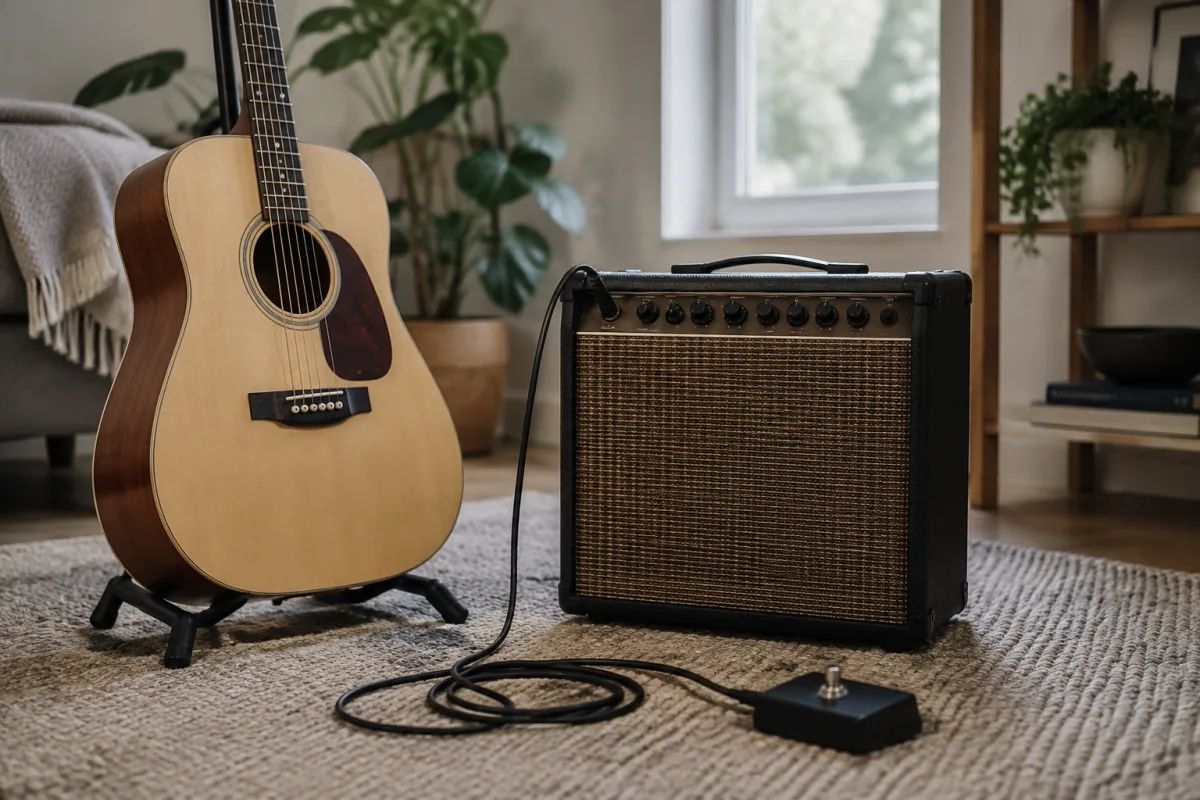
The idea of amplifying an acoustic guitar might seem intimidating if you're new to performance or live playing. Worries about tone changes, technical complexity, or getting your investment wrong are completely natural. Here's the good news: using an acoustic Fender amplifier is genuinely straightforward, and Fender makes excellent equipment specifically designed to preserve your acoustic guitar's natural sound whilst making it loud enough for venues and rehearsals. This beginner's guide demystifies acoustic amplification, walking you through everything you need to know to confidently use a Fender acoustic amp in your first performances.
Understanding Why Acoustic Players Use Amplifiers (You're Not Alone)
Many beginning acoustic guitarists feel hesitant about amplification, worried they're betraying their instrument's acoustic purity. Actually, professional acoustic musicians across all genres—classical, folk, country, indie—use amplifiers regularly. An acoustic amp isn't meant to turn your acoustic guitar into an electric-sounding instrument; it's designed to make your acoustic sound louder and clearer for venues where your unamplified volume simply won't project to a full room.
Think of an acoustic amplifier like a public address system for your guitar. It takes the beautiful sound your guitar already makes and shares it with everyone in the room at appropriate volume levels. Fender acoustic amps are particularly respected because they achieve this whilst preserving your guitar's natural tone rather than colouring or radically changing it.
Whether you're playing a coffee shop open mic night, performing at a wedding, rehearsing with a band, or simply practising at higher volume without bothering others, an acoustic amp removes these limitations. You'll be amazed at how differently your acoustic guitar sounds when properly amplified—not different in character, but clearer, with better-defined notes and more balanced presence across the room.
Choosing Your First Acoustic Fender Amp: Sizing and Starting Out
Your first decision involves choosing an appropriately sized amplifier. Don't worry about precise technical specs; use these straightforward guidelines:
- For home practice and very small venues (fewer than 50 people): A 15-30 watt Fender acoustic amp is perfect. These are affordable (£150-300), lightweight, and produce surprisingly full sound for small spaces. This is genuinely the best starting point for most beginners.
- For regular small venue performances (50-200 people): A 60-watt model is ideal. These cost £350-500 and provide comfortable headroom for live playing without excessive size or weight.
- For larger venues or outdoor performances: Jump to a 100-watt or larger model. Most beginners don't need these initially; you'll know when you've outgrown a smaller amp and want to upgrade.
Start smaller rather than larger. A 30-watt amp that you actually enjoy using is infinitely better than a 100-watt amp that's too heavy to transport and too powerful for your needs. You can always upgrade later as your playing situation evolves.
Basic Setup: It's Simpler Than You Think
Setting up your acoustic Fender amp for the first time is straightforward. Don't worry if the back of the amplifier looks intimidating with multiple connectors; you'll use just a few:
- Find the instrument input (usually clearly labelled with a guitar icon or the word "instrument")
- Connect your guitar cable from your guitar's output jack to this input socket
- Connect the amplifier to mains power and switch it on
- Start with the volume control at minimum
- Play your guitar whilst slowly turning up the volume until you hear comfortable sound level
- Adjust the bass, midrange, and treble controls (usually labelled Low, Mid, High) to taste
That's genuinely all you need. You've successfully amplified your acoustic guitar. Congratulations!
Understanding the Controls (Don't Overthink It)
Acoustic Fender amps feature straightforward controls, all designed to be intuitive for performers:
- Volume/Master: Controls overall amplifier loudness. Start low, increase gradually to your desired level.
- Gain or Input Level: Controls how hard the amplifier is working. Usually set at midway; don't adjust unless experiencing distortion.
- Bass, Midrange, Treble (EQ controls): Adjust tone balance. Turning any knob up emphasises that frequency; turning it down reduces it. Neutral (12 o'clock) position works perfectly for most acoustic guitars.
- Reverb: Adds spaciousness to your tone, making it feel like you're playing in a concert hall. Start at minimum, increase gradually until you enjoy the effect.
- Effects: Some models include chorus or other effects. Leave these at zero initially; you'll explore them once you're comfortable with basic operation.
Here's the key insight: there are no wrong settings. If you turn a knob and don't like how it sounds, turn it the other direction. You'll quickly discover what adjustments create sounds you enjoy. Don't be scared of experimenting.
First Performance Tips and Confidence Building
Before your first performance with an acoustic amp, follow these practical steps:
- Practise with your amp multiple times at home. Play through several songs, getting comfortable with how your amplified tone sounds. Most beginner nervousness disappears with familiarity.
- Arrive early to your first venue and do a sound check. Plug in, play through a song, adjust levels if needed. Sound checks eliminate last-minute surprises and build confidence.
- Start with the volume slightly lower than you expect to need. You can always increase volume during performance; starting too loud is uncomfortable for your audience.
- Ask for feedback from audience members or fellow musicians. "Could you hear me clearly?" is the only question that matters. Your volume and tone are correct if people say yes.
- Keep your setup simple in early performances. Use just the volume control and maybe one or two tone adjustments initially. Master simple settings before exploring complex effects.
Genuine confidence comes through success. Your first amplified performance will feel awkward; that's completely normal. By your second or third performance, you'll feel genuinely comfortable. The amplifier becomes transparent—you'll forget you're using one and simply play your guitar naturally.
Common First-Timer Worries (And Why They're Unfounded)
Many beginners fret about common concerns that rarely become real problems:
- "Will amplification destroy my acoustic tone?" No—Fender acoustic amps are specifically designed to preserve natural tone. Your amplified acoustic guitar will sound like a clearer, louder version of itself, not something radically different.
- "What if I damage the amplifier?" These are robust, professional equipment built for regular use. Normal playing and standard connections won't damage anything. You'd have to do something quite intentional to cause problems.
- "Will I sound like I'm trying too hard?" Professional acoustic musicians amplify regularly—it's completely normal and expected. Your audience expects to hear you clearly; amplification makes this possible.
- "What if I hate how it sounds?" You'll adjust tone controls to your preference. If you genuinely dislike acoustic amplification, you can always return to unamplified playing. But try it genuinely first—most players discover they love how their guitar sounds amplified properly.
Practical Troubleshooting for First-Time Users
If something seems wrong, these simple checks usually solve it:
- No sound when you play: Check that the amplifier is powered on (look for a power light). Verify your guitar cable is firmly connected at both the guitar and amplifier. Gradually turn up the volume knob from minimum.
- Sound is very quiet: Turn up the volume control. Increase the gain/input level if volume remains low. Check that your guitar's volume control (on the guitar itself) isn't turned to zero.
- Sound is distorted or harsh: This usually means the volume is too high. Turn down the master volume control. If distortion persists, reduce the gain/input level control.
- Hum or buzz in the signal: Move your guitar cable away from the amplifier's power cable. Hum often results from electrical interference; physically separating power and signal cables solves this.
- One knob doesn't seem to work: Some controls are at minimum when turned fully counter-clockwise; try turning other directions. If a control genuinely doesn't work, it's probably not critical—play with other settings.
Next Steps and Moving Forward
Once you're comfortable with your acoustic amp in performances, you'll naturally explore more advanced features and adjustments. Some players add effects pedals for additional tone shaping. Others learn to dial in specific tones for different venues. These steps are all optional; even professionals often keep their acoustic amp settings simple because simple settings work beautifully.
Remember: your acoustic Fender amp is a tool meant to enhance your playing, not something to fear or overthink. Use it with confidence, and focus your energy on what matters—playing your best music.
To dive deeper into acoustic amplification topics, explore our complete guide to acoustic Fender amps, which covers advanced techniques, troubleshooting, and equipment recommendations in greater depth.


Comments