


Fender Stratocaster Pickguard Buying guide
Fender Stratocaster Pickguard: A Complete Buyer's Guide
Choosing a Fender Stratocaster pickguard means deciding between blank and loaded, colours, and materials. Learn what matters and avoid costly mistakes.
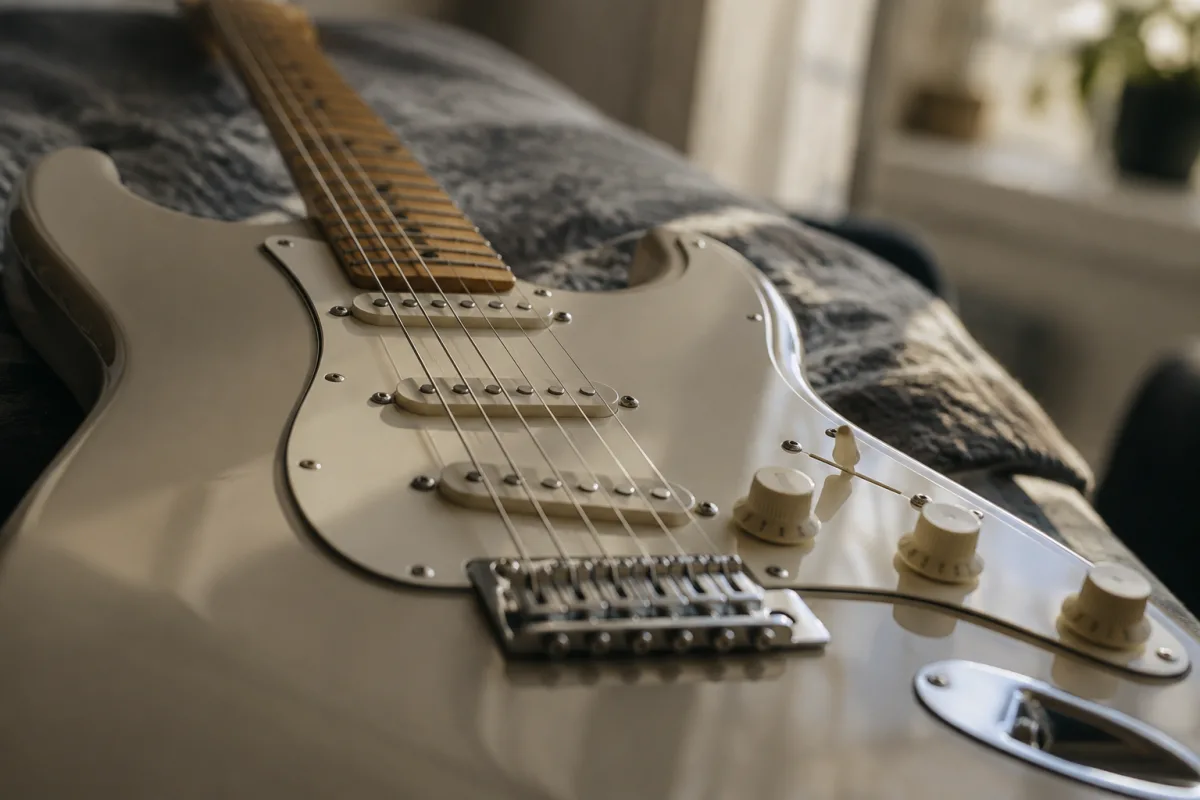
Replacing a Fender Stratocaster pickguard is one of the easiest guitar mods, yet choosing which one to buy can be surprisingly confusing. Do you want vintage cream, pearlescent white, or tortoiseshell? Should you upgrade to a loaded pickguard with pots and switches pre-installed, or buy the blank and wire it yourself? This buying guide cuts through the options and shows you exactly what to check before buying, how much to spend, and what mistakes to avoid.
Why Replace Your Pickguard?
Fender Stratocaster pickguards scratch easily, and after years of picks, sweat, and handling, yours probably shows wear. A fresh Fender Stratocaster pickguard transforms your guitar's look instantly. Beyond aesthetics, upgrades improve electronics quality, reduce microphonic noise, and sometimes change tone subtly. It's an affordable mod with outsized visual and sometimes sonic impact.
Material Types and Quality
Three main materials define pickguard options:
- 3-ply plastic (the standard) is authentic, affordable, and looks great. Most vintage and modern Fender Stratocaster pickguards use this. Colours range from cream to white to black.
- Tortoiseshell-pattern plastic mimics vintage aesthetic. Beautiful if done well, gaudy if cheap. Pay for quality here; a bad tortoiseshell pickguard looks toy-like.
- Anodised aluminium is durable and unusual. Primarily cosmetic; it won't change tone.
- Pearl and abalone are premium materials. Stunning but fragile and expensive (£50–£200+).
For most players, standard 3-ply plastic is correct. It matches vintage aesthetics, remains affordable, and sounds and plays identically to premium materials. Don't overpay for material unless you love how it looks.
Key Specs and Compatibility
Before you buy a Fender Stratocaster pickguard, confirm:
- Hole configuration — Modern Fender Stratocasters have 11 screw holes; vintage models have 8. Check your current guard or consult your manual. An incompatible guard won't fit.
- Thickness — Standard is 0.095 inches. Thicker guards (0.110 inches) are available but may not fit correctly. Stick with standard unless your guitar specifically requires otherwise.
- Wiring cavity depth — If you're buying a loaded pickguard (with electronics pre-installed), check that cavity matches your guitar's electronics routing.
- Pickup routing — SSS (three single-coils), HSS (humbucker + single coils), or others. Your guard's routing must match your pickups.
Blank vs. Loaded Pickguards
A blank Fender Stratocaster pickguard is just the guard itself. You transfer your old electronics or buy new ones separately. Cheaper (£15–£40) but requires soldering if you upgrade pots or switches.
A loaded pickguard comes with pots, switches, jacks, and sometimes pickups pre-wired and ready to install. More expensive (£50–£200+) but saves labour and hassle. If you're not comfortable soldering, buy loaded.
Most players start with blank pickguards (easier, cheaper, lower stakes). Upgrading to a loaded guard with better pots and switches comes later.
Budget and Value Tiers
Budget blank pickguards (£15–£25) are adequate. Solid plastic, standard colours, no frills. These are perfect if you're just replacing a damaged original.
Mid-range pickguards (£30–£60) offer better finish quality, more colour options, and sometimes loaded variants. This is the sweet spot for most upgrades.
Premium pickguards (£80–£200+) use exotic materials (pearl, abalone) or come loaded with boutique electronics. Worth it only if you love the look or specifically want upgraded electronics.
Colour and Aesthetic Choices
Standard choices: cream (vintage accurate), white (modern), black (rock aesthetic), tortoiseshell (vintage cool). Any works, depending on your guitar's body colour and personal taste.
Unusual options (purple, silver, mirror) are fun but risky. They age poorly in photos and can feel gimmicky. Stick with classic colours unless you're certain.
Common Pitfalls
Don't buy without confirming hole configuration. Wrong holes mean a guard that won't mount properly or looks misaligned.
Don't assume "Fender-compatible" means perfect fit. Third-party guards fit reasonably but sometimes require minor filing of the guard or guitar body. Budget for this possibility.
Don't ignore shielding. Some pickguards include copper shielding on the back to reduce hum. Worth it if your guitar is noisy; unnecessary if it's quiet.
Don't buy loaded pickguards unless you're upgrading electronics intentionally. A loaded guard with generic pots isn't worth the extra cost.
Installation and Soldering
Changing a blank Fender Stratocaster pickguard is straightforward: unscrew the old one, pull the wiring, install the new guard, reinstall the wiring. 15 minutes max.
Upgrading pots and switches requires soldering if you're not transferring old components. If soldering intimidates you, ask a tech to do it (£30–£50 labour) or buy a loaded pickguard.
Making Your Choice
Choose based on your goal. Refreshing the look? A blank cream or white guard (£20–£30) does the job perfectly. Upgrading electronics and aesthetics simultaneously? A loaded mid-range guard (£60–£100) combines both goals. For more on Fender Stratocaster history, modifications, and tone shaping, read our complete guide to Fender Stratocaster pickguards. A new pickguard transforms your guitar's character with minimal fuss and cost.


Comments