


Fender Stratocaster Left Handed article
The Complete Guide to Fender Stratocaster Left Handed
A proper left-handed Fender Stratocaster is engineered for left-handed players. Learn the differences between models, why it matters, and how to find the right one.
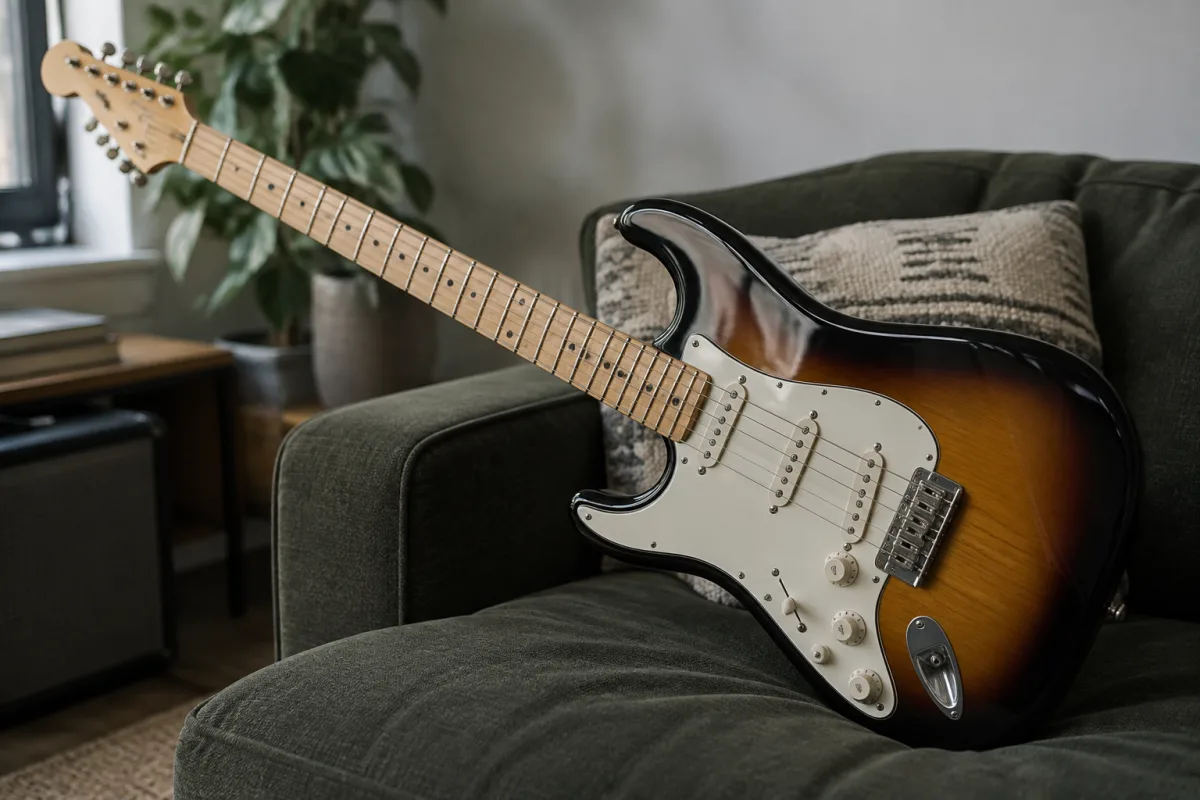
Left-handed guitarists know the frustration: walk into a shop with 50 guitars on the wall, and maybe one is left-handed. Fender Stratocasters are the world's most popular electric guitars, but finding a left-handed version is still a challenge for many players. Yet Fender has been making left-handed Stratocasters since the 1960s, and modern left-handed Strats are excellent instruments. The choice to buy one isn't primarily about availability anymore—it's about whether a left-handed Strat fits your hands, your sound, and your budget.
Why Left-Handed Stratocasters Matter
A left-handed Stratocaster is mirror-image reversed: the neck attaches on the right, the pickups face the opposite direction (the high-E and low-E strings are reversed), the controls are flipped, and the body contours are mirrored. This isn't just a right-handed guitar with strings changed—it's a completely different instrument engineered for left-handed playing.
For many left-handed players, a proper left-handed guitar is the only option. Trying to play a right-handed guitar left-handed involves restringing (which changes the guitar's electronics and balance), or playing it backwards (which feels deeply unnatural). A true left-handed Strat simply fits your hands the way a guitar should.
Availability and the Cost Factor
Fender makes left-handed Stratocasters across its entire range: Squier budget models (£150–200), Mexican-made Fenders (£400–600), and American-made Fenders (£1,000+). However, availability varies dramatically by region. In the US and UK, left-handed models are usually in stock or readily orderable. In some countries, you might need to special-order or import.
Left-handed guitars typically cost the same as their right-handed equivalents. There's no "left-handed premium" in the Fender lineup, which is fair—they're made with the same care and cost to produce. The added challenge is simply finding one in stock.
Squier vs. Mexican vs. American Left-Handed Strats
A Squier left-handed Stratocaster (budget range) is an genuinely playable guitar. The action is reasonable out of the box, the pickups are competent, and it sounds like a Strat. It's not built for years of professional touring, but it's more than adequate for learning, practising, and playing casually. Many professional players own Squiers as backup or travel guitars because they're reliable and you don't mind if they get dinged.
Mexican-made Fenders are the sweet spot for most players. The build quality is noticeably better than Squier—finer wood, better electronics, tighter tolerances. The playability is excellent, and the sound is distinctly Stratocaster: bright, twangy, responsive. A Mexican left-handed Strat will serve you well for decades.
American-made Fenders represent the top tier. Better wood selection, hand-finished details, American-made pickups, and more rigorous quality control. The difference between a Mexican and American Strat isn't enormous—both are excellent guitars—but an American Strat has a presence and resonance that justifies the cost for serious players.
Body Contours and Left-Handed Comfort
The Stratocaster's body contours are famously comfortable—the waist and arm bevel suit playing while sitting or standing. A proper left-handed Strat has these contours mirrored, so the arm bevel curves the correct direction for your left elbow. This matters more than it sounds—after years of playing a right-handed guitar backwards, switching to a proper left-handed guitar reveals how much those contours actually do for comfort.
The horn (the pointed upper bout) is also mirrored. On a left-handed guitar, it extends toward your right side, balancing the guitar better when you're standing and playing.
Controls and Switching Mechanics
On a left-handed Stratocaster, the three-way pickup selector switch is on the right side of the body (reversed from a right-handed guitar). The volume and tone controls are arranged in mirror image. For a left-handed player, this is natural—your right hand (your strumming hand) can easily adjust the selector switch without breaking your playing flow. On a right-handed guitar played left-handed, that switch is in an awkward location behind your left wrist.
This might seem like a minor detail, but it's the kind of ergonomic advantage that makes a left-handed guitar feel purposeful rather than adapted.
Pickup Configuration and Electronics
A left-handed Stratocaster has the same three single-coil pickups as a right-handed model, but they're wired in mirror-image. The high-E pickup is now on the left side of the neck, and the low-E pickup is on the right side. This doesn't change the sound—the Strat's classic bright, articulate tone is identical—but it means a left-handed Strat's electronics are optimised for how a left-handed player's hands approach the strings.
The Resale Market and Long-Term Value
Left-handed guitars have a different resale market than right-handed guitars. There are simply fewer buyers, which can mean slower sales if you ever sell. However, Fender Stratocasters, even left-handed ones, hold value well because they're iconic and sought-after. A Mexican-made left-handed Strat you buy today will likely resell for 60–70 per cent of what you paid in five years, which is actually quite good for a guitar.
Practical Considerations: Setup and Maintenance
A left-handed Stratocaster requires the same setup and maintenance as a right-handed model—intonation adjustment, truss rod changes, etc. Most qualified guitar technicians can handle left-handed guitars without issue. Parts and replacements (pickups, bridges, tuners) are available for left-handed Strats, though selection is more limited than for right-handed models.
If you're someone who likes to DIY setup and maintenance, this is worth considering. Left-handed Strat parts are available but require searching harder than right-handed equivalents.
Finding Your Left-Handed Stratocaster
Fender's website shows left-handed availability in your region. Retailers often stock limited left-handed inventory—you might need to special-order from a music shop. Used left-handed Strats appear regularly on secondhand markets at good prices if you're willing to hunt. Many players find their left-handed Strat used and save £200–300 compared to new.
When you find one, test it the same way you'd test any guitar: play it standing and sitting, check the action (string height), make sure the neck is straight, and verify that the tuning machines are smooth and the electronics work without crackling. A left-handed Strat should feel natural in your hands immediately—if it doesn't, keep looking.
The Bottom Line
A left-handed Fender Stratocaster is a genuine, properly-engineered guitar designed for left-handed playing. It's not a retrofit or adaptation—Fender has made these instruments for decades. Whether you choose a budget Squier, a Mexican-made Fender, or an American-made classic depends on your budget and ambitions. What matters is that a proper left-handed Strat fits your hands naturally and respects your playing. For left-handed guitarists tired of playing backwards, it's worth seeking out.



Comments