


Amplifier Fender Mustang article
Amplifier Fender Mustang for Beginners: A Complete Guide
A beginner's guide to using a Fender Mustang amplifier, covering setup, control explanation, amp models, practice settings, and common first-time mistakes.
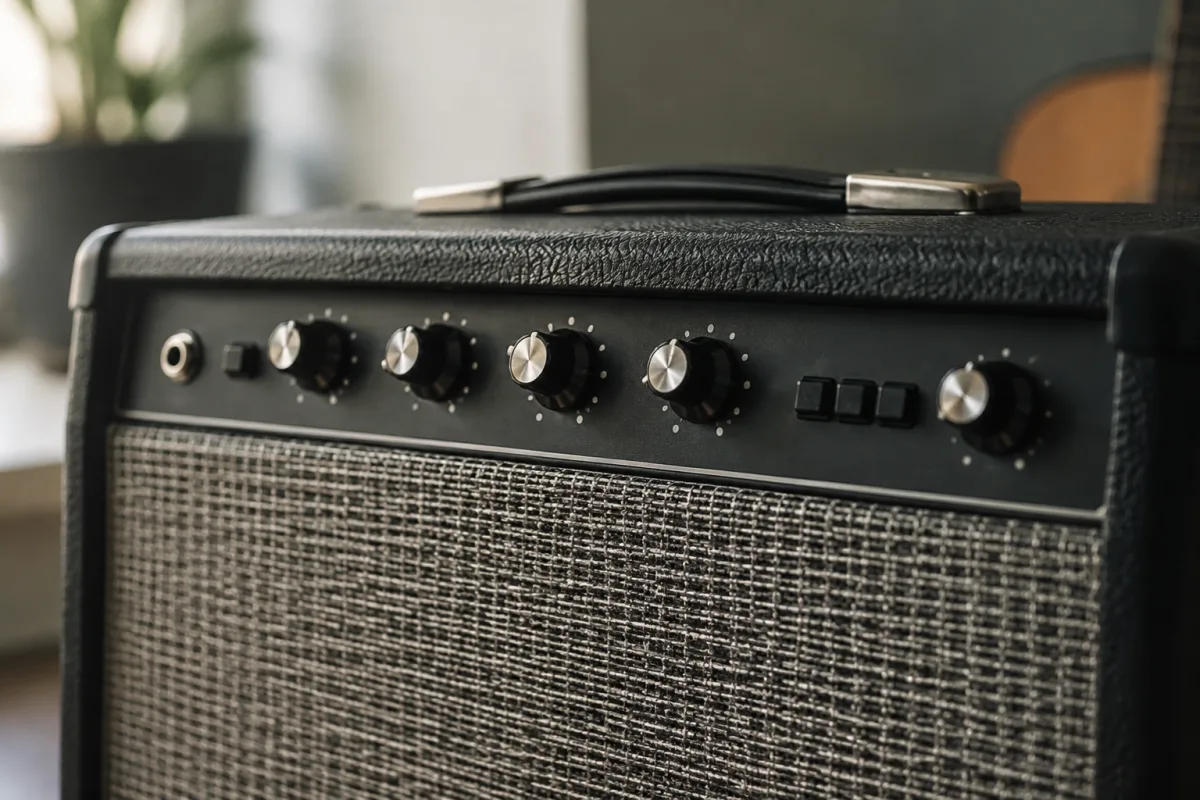
You've just unboxed your new Fender Mustang amplifier, and it looks more complex than you expected. Don't worry—the Fender Mustang is designed to sound great even when you're just starting out, but it helps to understand the basics. This beginner's guide will walk you through setup, essential controls, and common mistakes so you can get playing confident music in minutes rather than hours of frustration.
Understanding What You Have
Your Fender Mustang amplifier is a solid-state combo amp, meaning the amplifier and speaker are built together in one unit. What makes it special is the built-in digital processing—your amp contains dozens of virtual amplifier models and effects. Think of it like having a room full of expensive equipment packed into one box. The models let you recreate the sound of legendary vintage amps alongside modern high-gain machines, all at the push of a button.
This flexibility is brilliant for exploration, but it can feel overwhelming. The good news: you don't need to understand all the models to make your Fender Mustang sound amazing. You can get great tone using just one or two models for weeks until you're ready to explore further.
Your First Setup: Getting Connected
Follow these steps to get your Fender Mustang amplifier playing music:
- Plug the power cable into a wall outlet and switch on the amp (a button on the rear panel)
- Connect your guitar cable from your instrument to the input jack on the front
- Set the master volume to a low level (around 2-3 o'clock) and stand back a little
- Gently strum your guitar—you should hear sound
- Gradually increase the volume until you hear yourself clearly
That's it. You now have a working setup. Many beginners make the mistake of cranking the volume too high immediately, or they touch every control and then wonder why the sound is strange. Keep things simple at first.
The Essential Controls Explained
Your Fender Mustang amplifier has several important knobs and switches. Here's what you need to know about the ones that matter most:
- Gain: This controls how much drive (distortion/overdrive) is added to your tone. Start with gain around 12 o'clock (middle). Turn it up for crunch; turn it down for clean tone. The higher you push gain, the more distorted your tone becomes.
- Master Volume: This is your overall loudness control. It doesn't affect tone colour like gain does—it just makes everything louder or quieter. Use this to match your playing environment.
- Bass, Midrange, Treble: These tone controls shape your sound. Bass gives weight; treble adds brightness. Midrange controls presence. Start with all three at 12 o'clock (centre). Adjust slightly if the sound feels too muddy (add treble) or too thin (add bass).
- Presence: This subtle control adds either compression or openness to your tone. 12 o'clock is neutral. Don't worry about this as a beginner.
That's all you need to control. Everything else on your Fender Mustang amplifier can wait until you're comfortable.
Choosing Your First Amplifier Model
When you switch on your Fender Mustang, it powers up in a default model—usually a clean amp setting. Leave it there. Play and get familiar with how this model sounds across your guitar. Once you're comfortable, you can explore:
- Fender models (clean): Bright, chiming tone, perfect for rock, country, and funk.
- Fender models (driven): Classic crunch, ideal for blues and classic rock.
- Marshall models: Heavy gain options; try these if you want aggressive rock tones.
- Vox models: Warm, slightly breakup, great for 1960s rock and indie.
A beginner trick: find one model you love and stick with it for a week. Switch models only after you've mastered the gain and EQ controls. Changing models constantly prevents you from learning how to shape tone intentionally.
Effects: Start With Nothing
Your Fender Mustang amplifier includes reverb, delay, and modulation effects. As a beginner, ignore them completely. Effects are wonderful for creative exploration, but they can muddy your tone if you don't understand how they work. Focus on getting a clean, direct sound from the amp itself first. After a week or two, you can experiment—but resist the temptation to add effects just because they exist.
Beginner Mistakes to Avoid
Many new players using a Fender Mustang make these preventable errors:
- Cranking everything to maximum: High gain + high volume = noise, not tone. Start with everything at moderate levels and adjust gradually.
- Setting the master volume too high for practice: You'll damage your hearing and annoy neighbours. Keep practice volume at conversation level.
- Confusing gain with volume: Gain controls distortion; volume controls loudness. A common beginner confusion that creates muddy, unclear tone.
- Constantly switching between amp models: You can't learn how to shape tone if you change models every thirty seconds. Commit to one model until you're confident.
- Assuming something's broken when it sounds strange: You've probably just activated an effect, muted something, or accidentally changed a setting. Most "problems" are user error.
- Forgetting to turn off the amp: Your Fender Mustang amplifier will wear out faster if left on constantly. Always switch it off when finished playing.
Practice Settings: Finding Your Sweet Spot
For bedroom practice, set your Fender Mustang amplifier like this:
- Gain: 12 o'clock (centre)
- Master Volume: 8-9 o'clock (quiet, but clear)
- Bass, Midrange, Treble: 12 o'clock (centre)
- No effects activated
Play scales and melodies to hear exactly what the amp does. Gradually increase gain to add drive. This methodical approach teaches you how controls affect tone. After a week, you'll instinctively know which knobs to adjust for the sound you want.
Live or Band Playing: Adjusting for Volume
Once you're comfortable in a band setting or playing live, you'll increase master volume to match your drummer and bassist. When you do:
- Don't increase gain; increase master volume instead. Gain remains moderate for clarity.
- You may need to reduce bass and treble slightly to stay balanced in a mix.
- The amp will naturally compress at higher volumes, changing tone character slightly.
This is where your weekly practice with moderate settings pays off—you already know how your amp responds, so adjusting for volume is intuitive.
Moving Forward: What Comes Next
After two or three weeks with your Fender Mustang amplifier, you'll be ready to explore deeper. Model switching becomes fun rather than overwhelming. Effects add dimension to your playing. Maybe you'll discover you prefer Marshall tones or you love the Vox warmth. Maybe you'll find yourself using reverb and delay musically rather than accidentally. This is normal progression—and it only works because you built solid fundamentals first.
Your Fender Mustang is designed to grow with you. What feels complex today will feel intuitive soon.
For deeper exploration of amp models, effects chains, and advanced tone-shaping techniques, see our comprehensive guide to amplifier Fender Mustang, which covers everything from classic tones through studio recording applications.



Comments