


Fender Guitar Picks article
Fender Guitar Picks for Beginners: A Complete Guide
Starting with Fender guitar picks removes confusion from beginning guitar playing. This guide shows first-time players how to get comfortable and avoid frustrating trial-and-error.
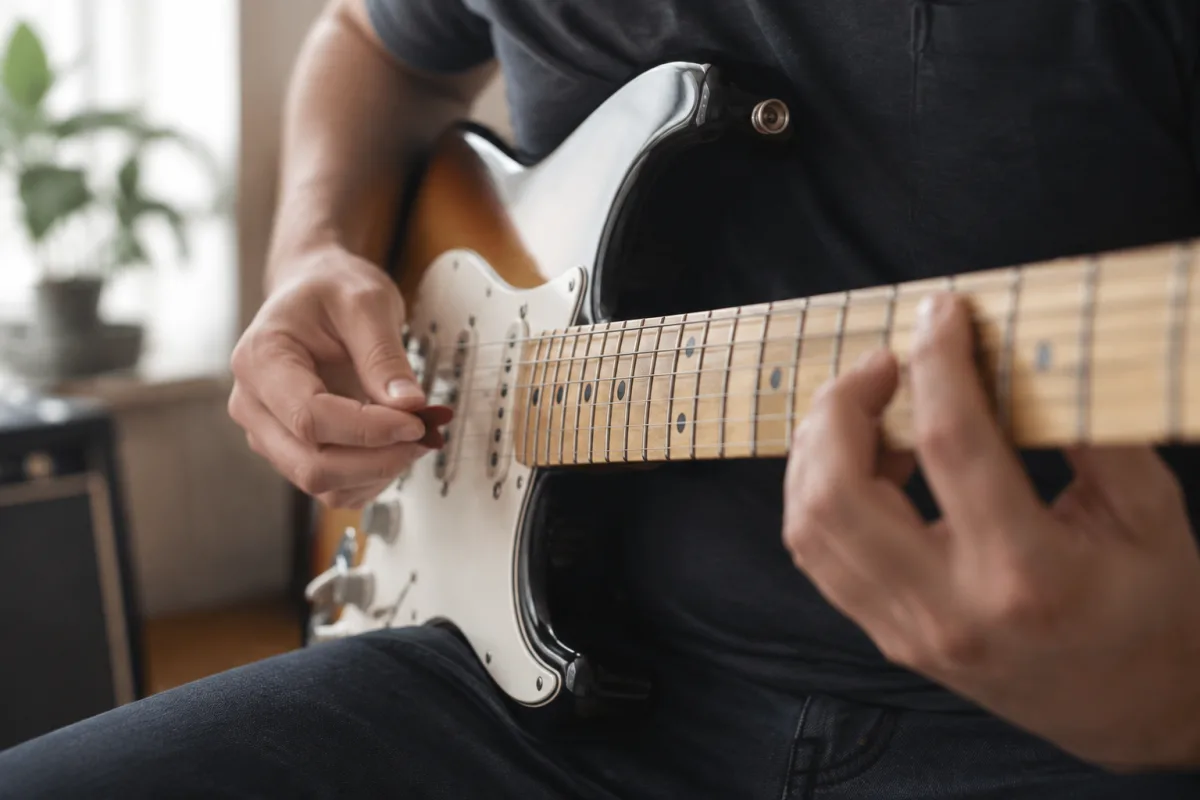
Starting your guitar journey feels daunting enough without agonising over equipment choices, yet something as simple as choosing a guitar pick confuses many beginning guitarists. Fender guitar picks represent a reliable entry point into the world of plectrum choices, offering beginner-friendly options alongside professional-grade alternatives. This beginner's guide removes the mystery, showing first-time players how to get comfortable with Fender picks and avoid the frustrating trial-and-error many guitarists experience unnecessarily.
Why Your Guitar Pick Actually Matters to Your Playing
When you're just beginning, picking technique feels clumsy and difficult regardless of equipment. This makes it tempting to assume your pick doesn't really matter—surely any piece of plastic works fine? In reality, your pick influences everything from tone and clarity to your ability to develop good technique. The right pick feels natural in your hand and responds predictably to your playing approach. The wrong pick fights your technique and makes learning frustrating.
Fender picks have earned their reputation through generations of guitarists discovering they simply work well. They're not the only choice available, but for beginners, they represent a logical starting point: they're affordable, consistent, and readily available everywhere guitars are sold. You'll waste far less time experimenting with Fender than with no-name picks at pound shops.
Think of your pick as foundational to developing good habits. Using a quality pick from the beginning means your playing development isn't hindered by equipment that fights your technique. Later, once you've developed genuine skill, you can experiment with specialised picks for specific sounds. But right now, at the beginning, Fender picks remove a source of frustration.
The Beginner's Path: Start Simple, Discover Your Preference
Fender's beginner-focused pick range includes their standard celluloid picks in medium thickness and classic teardrop shape—exactly what most new guitarists need. Don't start by purchasing an assortment pack containing every possible variation. Grab a handful of the standard medium picks, learn to play comfortably, then experiment after you've developed basic competence.
This staged approach prevents the common beginner trap: buying 50 different picks, getting confused by the variety, and deciding picks don't matter because you can't decide between them. Picks absolutely matter—you're just not ready to make sophisticated distinctions yet. Use standard Fender medium picks for at least a few weeks or months of practice before reconsidering alternatives.
The medium thickness sits in the comfortable middle ground for beginners. Thinner picks (light gauge) feel flimsy and offer less control, whilst thicker picks (heavy gauge) resist bending in ways that feel awkward when you're developing pick control. Medium picks teach proper technique without fighting your developing skills.
Common Beginner Mistakes to Avoid From Day One
Beginners frequently drop their picks constantly because they're gripping too loosely or awkwardly positioning the pick in their fingers. Fender picks work best when you're using proper technique—holding the pick firmly between thumb and index finger with only the tip striking the strings. Loose gripping invites constant dropping. If you're losing picks constantly, the problem is usually technique, not the pick itself.
Another common mistake involves picking strings inefficiently. Beginners often use excessive force, striking strings like they're attacking an enemy rather than vibrating them gently. This approach wears down pick tips quickly and creates harsh tone. Let the pick do the work by moving efficiently through the strings with just enough force to make them vibrate. Fender picks withstand normal playing indefinitely, but not if you're grinding them against strings unnecessarily.
Don't assume a bent or worn pick is worthless. Beginners sometimes replace picks prematurely out of uncertainty about when picks actually need replacing. A pick with a slightly rounded tip still works perfectly. Replace picks only when the tip wears so thin it stops controlling tone and clarity properly.
Equally, don't buy the cheapest picks available under the assumption that all picks are interchangeable. No-name picks sometimes have manufacturing inconsistencies making them feel unpredictable. Fender picks cost mere pence more than the absolute cheapest options but offer genuine consistency justifying the minimal extra investment.
Finding Your Grip and Comfort Style
How you hold your pick significantly affects your control and comfort. Most beginners benefit from holding the pick near its thicker base, leaving just a small tip exposed for striking strings. This positioning provides maximum control and stability whilst you're developing technique.
Position your pick at a slight angle relative to the strings rather than perpendicular. This angled approach feels more natural and produces better tone than striking strings head-on. Experiment slightly with pick angle—you'll discover subtle improvements in tone and control as you adjust based on what feels responsive.
Your grip pressure matters. Tensing your entire hand around the pick creates fatigue and prevents the loose, flowing technique you'll eventually develop. Hold the pick firmly enough that it won't fly away, but not so tightly that your hand cramps during practice. Relaxation is key—tension creates mistakes.
Progressing Beyond the Beginner Stage
| Stage | Pick Recommendation | When to Move Forward |
|---|---|---|
| Complete beginner (0-3 months) | Fender medium standard picks | When basic open chord shapes feel natural |
| Early intermediate (3-6 months) | Fender medium, consider lighter for fingerstyle | When experimenting with different playing styles |
| Intermediate (6+ months) | Experiment with Fender's full range: thin, heavy, or specialty shapes | When you have clear preferences about tone and control |
| Advanced player | Tailored picks matching specific genres and techniques | When you fully understand how picks influence your playing |
Understanding Fender's Pick Lineup As You Advance
Once you're comfortable with basic guitar playing, exploring Fender's wider pick selection becomes genuinely educational. Lighter picks feel more flexible, produce brighter tones, and suit fingerstyle playing or lighter strumming. Heavier picks offer more control for aggressive playing, produce warmer tones, and work well for lead work.
Fender offers various shape options: the classic teardrop we discussed, rounded shapes, and specialty designs. Each shape subtly influences how the pick contacts strings and how it feels in your hand. These refinements matter only after you've mastered basic technique. Avoid getting distracted by shape variations initially.
Specialty picks like Fender's metal picks or unusual shapes represent experimentation for players with clear understanding of how picks influence playing. Beginners should never start here—you'll just get confused. Master basic playing with standard picks first, then explore variations understanding why each choice matters.
Building Your Pick Collection Gradually
As you develop genuine preference, maintain a small collection: a few standard medium picks for everyday playing, a lighter option for acoustic fingerstyle if that interests you, and a heavier option for when you want maximum control. This modest collection covers most playing scenarios without overwhelming you with choice.
Store your picks in a dedicated container rather than leaving them scattered about. Pick holders or small pouches prevent the constant searching that discourages practice. Organising your playing space might seem trivial, but it removes friction from starting practice sessions.
Your Journey Ahead
Remember that mastering guitar pick technique takes practice like everything else in music. Don't expect perfect comfort immediately. Your grip will improve, your pick control will develop, and playing will feel increasingly natural. Fender picks are simply the reliable tool supporting this development journey.
For deeper exploration of Fender guitar picks and how they fit into broader playing techniques and genre applications, explore our complete guide to Fender guitar picks, which covers advanced techniques, specialty applications, and professional approaches to pick selection.
Starting Your Fender Pick Journey Today
Get a handful of standard Fender medium picks and commit to using them for several weeks of practice. Don't overthink it. Focus on developing comfortable grip technique and smooth string striking. As your skills develop and preferences emerge, you'll naturally discover which Fender pick variations suit your playing best.
The goal right now isn't finding your perfect pick—it's removing picks as a source of confusion whilst you focus on the genuine challenge: developing basic guitar playing skills. Fender picks handle this beautifully, which is why they've been beginners' choice for generations.


Comments