
Fender Guitar Amplifiers article
The Complete Guide to Fender Guitar Amplifiers
Fender guitar amplifiers stand as iconic equipment used across rock, blues, and country music, famous for warm tube tone, reverb effects, and legendary reliability.
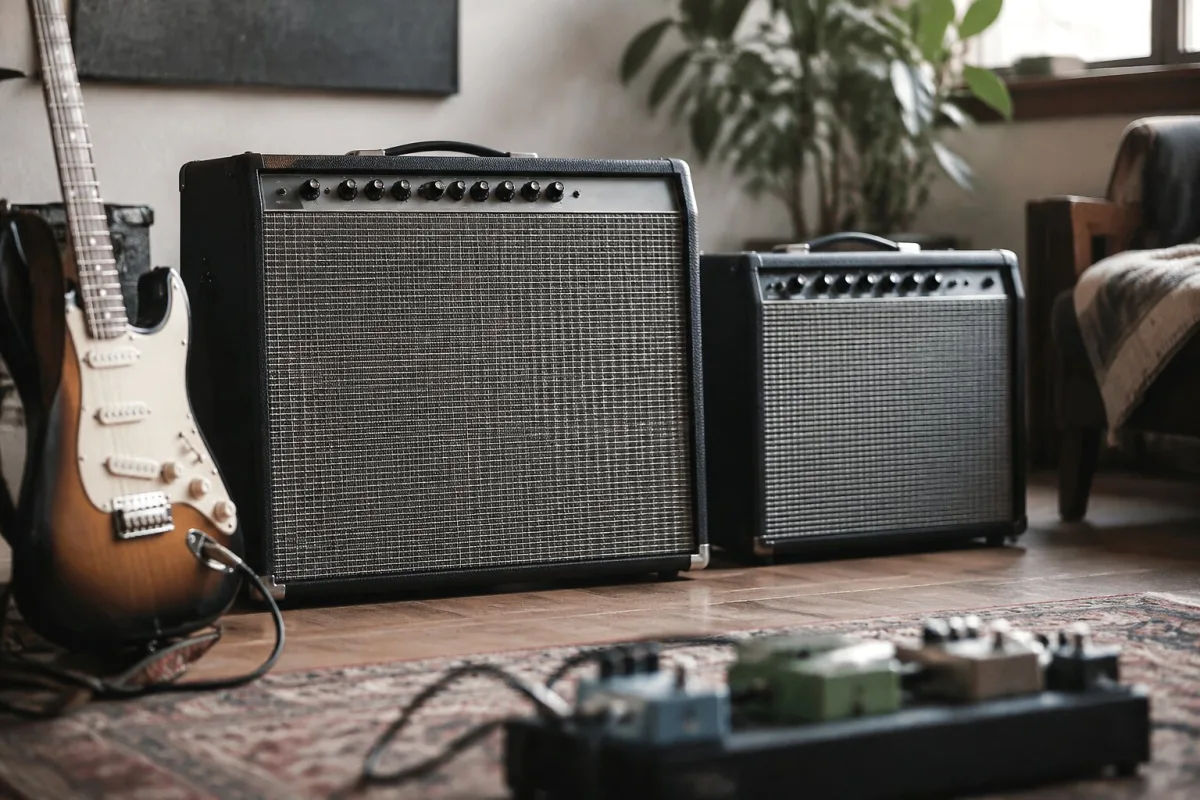
Fender guitar amplifiers stand as some of the most iconic and sought-after amplification equipment in music history, beloved by rock musicians, blues players, country artists, and performers across virtually every electric guitar-based genre. These amplifiers have defined the tone of countless classic recordings, shaped the sonic character of pivotal musical movements, and continue to inspire new generations of musicians seeking authentic, professional-grade amplification. Whether you're exploring your first amplifier, upgrading to professional equipment, or simply curious about the amplifiers shaped modern electric guitar music, Fender guitar amplifiers offer remarkable tonal characteristics, build quality, and heritage that few amplifier manufacturers can match. For over seven decades, Fender guitar amplifiers have remained synonymous with electric guitar amplification excellence.
History and Heritage of Fender Guitar Amplifiers
Fender guitar amplifiers emerged from the Fender company's recognition that electric guitars required proper amplification to realise their full sonic potential. Early Fender guitar amplifiers like the Bassman (1951) and Deluxe Reverb (1963) established sonic templates that remain relevant today. Fender guitar amplifiers revolutionised guitar tone through innovative circuit design, quality component selection, and rigorous manufacturing standards. The legendary Fender Stratocaster paired with Fender guitar amplifiers created some of rock and roll's most iconic sounds. Vintage Fender guitar amplifiers command premium prices in the used market, reflecting musicians' recognition of their sonic excellence and build quality. Fender guitar amplifiers transcend mere equipment—they represent cultural artefacts documenting amplifier evolution and electric guitar's development as a serious musical instrument.
Tube Amplifiers and Vintage Designs
Classic Fender guitar amplifiers employ vacuum tube technology, a choice distinguishing them from modern solid-state alternatives and contributing significantly to their cherished tonal character. Fender's vintage tube amplifiers—particularly the Deluxe Reverb, Twin Reverb, and Princeton Reverb—deliver warm, responsive tone that responds beautifully to guitar dynamics and playing techniques. Fender guitar amplifiers using tube technology produce natural harmonic distortion when overdriven, a quality beloved by blues musicians and classic rock players seeking authentic tone. The responsiveness of tube-based Fender guitar amplifiers means your playing technique directly influences tone—aggressive picking produces aggressive response, whilst subtle playing yields delicate dynamics. Maintenance requirements for Fender guitar amplifiers using tubes include periodic tube replacement and biasing adjustments, inconveniences offset by superior tonal rewards. Contemporary Fender guitar amplifiers continue employing tube technology despite modern solid-state alternatives, reflecting professional musicians' unwavering preference for tube warmth.
Solid-State and Hybrid Fender Guitar Amplifiers
Modern Fender guitar amplifiers increasingly incorporate solid-state and hybrid designs offering alternative characteristics to traditional tube amplifiers. Solid-state Fender guitar amplifiers provide reliability, reduced maintenance, and consistent performance across varying conditions without tube replacement concerns. Hybrid Fender guitar amplifiers combine tube preamps (maintaining tonal characteristics) with solid-state power amplification (providing efficiency and reliability). These Fender guitar amplifiers appeal to working musicians requiring dependable equipment surviving extensive touring and regular gigging without constant maintenance. Solid-state Fender guitar amplifiers deliver impressive power-to-weight ratios, particularly valuable for performers needing portable equipment. However, tube aficionados maintain that solid-state Fender guitar amplifiers never quite achieve the warmth and responsiveness of pure tube designs, and this philosophical divide continues influencing amplifier selection across the musician community.
Power Ratings and Size Categories
| Power Rating | Fender Amplifier Examples | Best Applications | Tonal Characteristics |
|---|---|---|---|
| 1-15W | Princeton Reverb, Princeton Chorus | Recording, home practice, small venues | Natural breakup at lower volumes, responsive |
| 22-40W | Deluxe Reverb, Mustang GT | Gigging, rehearsal, professional use | Versatile overdriven and clean tones |
| 50-65W | Twin Reverb, Super Reverb | Stages, recording studios, touring | Headroom, dynamic response, clarity |
| 100W+ | Bassman, Pro series | Large venues, festivals, touring | Power, punch, extended overdriven range |
Key Fender Guitar Amplifier Features
Iconic Fender guitar amplifiers share distinctive features contributing to their recognisable sonic character. Reverb circuits—combining springline reverb tanks with electronic control—remain defining characteristics of legendary Fender guitar amplifiers, adding spacious, organic ambience impossible to replicate convincingly via external effects. Tremolo effects—rhythmic volume modulation—remain standard on many Fender guitar amplifiers, providing dynamic effects possible without external equipment. Fender guitar amplifiers typically employ simple, elegant control schemes—straightforward volume, tone, and presence controls enabling immediate tonal customisation without overwhelming complexity. Quality transformers and carefully chosen capacitors throughout Fender guitar amplifiers contribute to their prized tone. This philosophy of sonic excellence through component selection rather than excessive feature proliferation distinguishes Fender guitar amplifiers from competitors pursuing complexity as primary selling point.
Fender Guitar Amplifiers in Professional Contexts
Fender guitar amplifiers remain professional musicians' preferred choice across numerous performance contexts. Studio recording sessions frequently employ Fender guitar amplifiers specifically because their tone photographs beautifully on recordings—balanced, clear, responsive, and naturally musical. Live performance stages worldwide feature Fender guitar amplifiers because their reliable construction, consistent tone, and stage presence inspire confidence. Session musicians maintain collections including multiple Fender guitar amplifiers, selecting specific models based on genre requirements and sonic aesthetics. Endorsement relationships between Fender guitar amplifiers and celebrated musicians reinforce their professional credibility—blues legends, country players, and rock icons favour Fender amplification specifically because these amplifiers deliver the sonic characteristics their genres demand. This professional preference continues attracting aspiring musicians purchasing Fender guitar amplifiers, viewing them as investments toward professional-level musicianship.
Vintage Versus Contemporary Fender Guitar Amplifiers
Musicians continually debate whether vintage Fender guitar amplifiers surpass contemporary models. Original Fender guitar amplifiers from the 1950s-1970s employed quality component tolerances and manufacturing standards producing tonal characteristics many consider unrepeatable. Conversely, contemporary Fender guitar amplifiers incorporate modern manufacturing refinements, improved reliability, and component sourcing ensuring consistency across instruments. Vintage Fender guitar amplifiers require restoration and maintenance; contemporary Fender guitar amplifiers offer ready-to-use functionality. Price differentials reflect supply scarcity—vintage Fender guitar amplifiers command premiums reflecting desirability and limited availability. Many professional musicians employ modern Fender guitar amplifiers for touring reliability whilst maintaining vintage Fender guitar amplifiers for recording and special projects. This pragmatic approach acknowledges vintage Fender guitar amplifiers' sonic excellence whilst accepting modern instruments' practical advantages for contemporary professional demands.
Choosing Your Fender Guitar Amplifier
Selection depends on your intended applications, budget, and sonic priorities. Entry-level Fender guitar amplifiers (budget-conscious models and combo amplifiers) suit learners and bedroom musicians exploring amplification basics. Mid-range Fender guitar amplifiers (30-65W tube models, hybrid systems) satisfy working musicians requiring professional tone without excessive investment. Premium vintage or contemporary Fender guitar amplifiers (100W+ tube models, sought-after classics) appeal to professionals and enthusiasts justifying substantial investment through professional use or serious collecting interest. Your choice between tube and solid-state Fender guitar amplifiers reflects personal priorities—vintage tube aesthetic and tonal warmth versus modern reliability and lower maintenance demands. Location considerations matter significantly—tube Fender guitar amplifiers produce considerable volume; solid-state models or low-wattage options suit apartment dwellers whilst professional venues accommodate full-power amplifiers.
Maintenance and Longevity
Fender guitar amplifiers demonstrate remarkable durability when properly maintained. Tube-based Fender guitar amplifiers require periodic tube replacement (typically every 3-5 years depending on usage intensity), a manageable cost preserving amplifier performance. Annual professional inspection catches potential issues—loose components, capacitor degradation, transformer problems—before they develop into serious failures. Protect Fender guitar amplifiers from excessive moisture and extreme temperature fluctuations, conditions accelerating component failure. Keep ventilation ports clear; overheating damages transformers and electronic components. These straightforward maintenance practices preserve Fender guitar amplifiers' reliability and performance across decades of active use. Many tube-based Fender guitar amplifiers exceed fifty years of reliable service with minimal maintenance, testament to their exemplary construction and engineering.
Conclusion
Fender guitar amplifiers represent far more than amplification equipment—they embody a commitment to sonic excellence, build quality, and musical integrity. From legendary vintage models defining electric guitar tone to contemporary instruments maintaining that heritage whilst incorporating modern conveniences, Fender guitar amplifiers continue inspiring musicians across all experience levels. Whether you're selecting your first amplifier, upgrading your rig, or collecting professional-grade equipment, Fender guitar amplifiers deliver tonal rewards and reliability justifying their prominent position in global guitar amplification. The enduring popularity of Fender guitar amplifiers across decades of musical evolution confirms their position as genuinely iconic instruments unmatched in heritage and professional acceptance.


Comments