
Es 335 Guitar article
The Complete Guide to Es 335 Guitar
The ES-335 is one of music's most iconic guitars, prized by jazz, blues, and rock musicians for its warm, complex tone. Explore this legendary semi-hollow design.
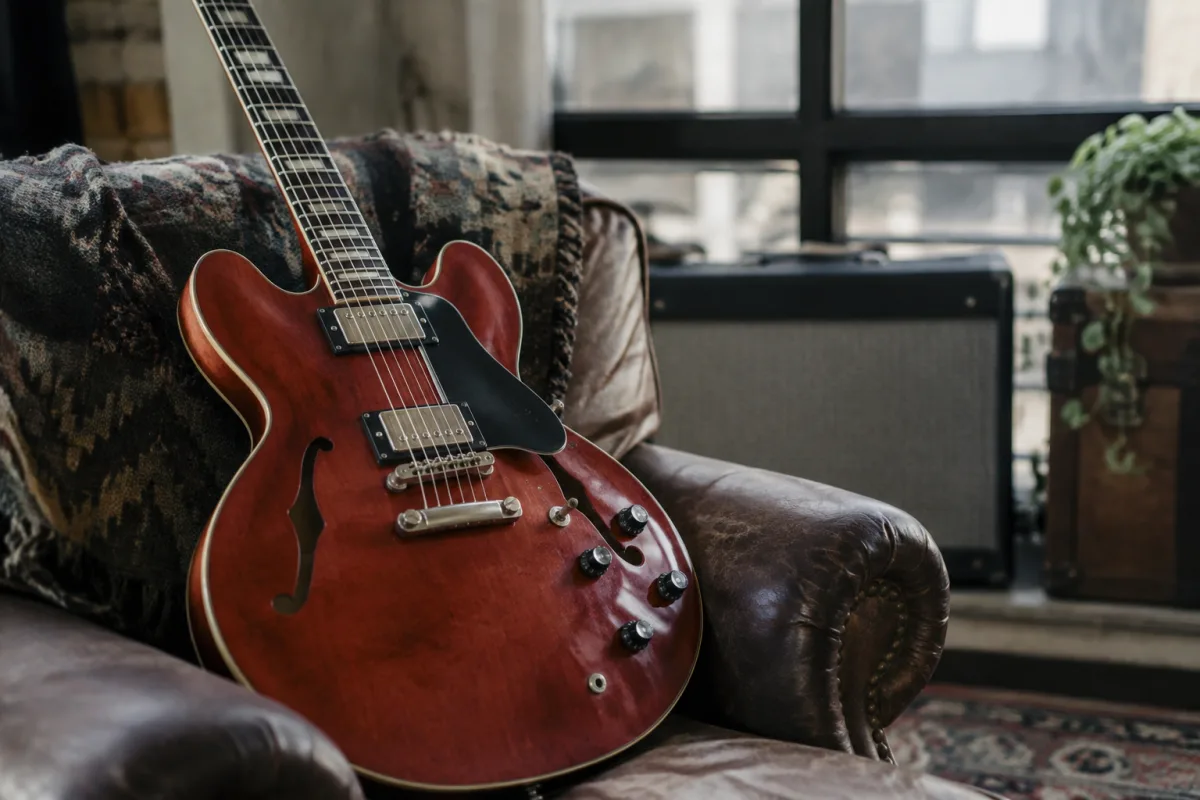
The ES-335 guitar stands as one of the most influential designs in electric guitar history, bridging the gap between solid-body and fully hollow acoustic instruments with a semi-hollow body design that captured the imagination of jazz, blues, and rock musicians since its introduction by Gibson in 1958. The ES-335's distinctive warm, woody tone combined with the feedback control of a solid guitar makes it uniquely versatile—equally at home in jazz ensembles, blues clubs, or rock bands. Understanding what makes the ES-335 special, recognising its historical significance, and exploring both authentic Gibson instruments and quality alternatives helps you appreciate this iconic guitar and decide whether it belongs in your own hands.
The ES-335: Design and Character
The Gibson ES-335 features a semi-hollow body—a thinner wooden shell reinforced by an internal solid block running through the centre, creating neither fully hollow acoustics nor completely solid tone. This design offers a sublime middle ground: the warmth and resonance of a hollow body combined with the sustain and feedback control of a solid-body electric. The result is a tone uniquely rich, complex, and musical compared to either extreme.
A fully hollow guitar body tends toward acoustic feedback when played loudly through an amplifier, making it impractical for rock and high-volume performance. A solid-body guitar can sound harsh without careful amplification tuning. The ES-335's semi-hollow body resonates naturally—producing a tone with acoustic character—whilst remaining stable and controlled through amplification. This versatility explains why the ES-335 has remained continuously in production for over sixty years, unchanged in fundamental design.
Historical Significance and Iconic Players
The ES-335 became synonymous with legendary musicians who defined their genres through this instrument. B.B. King's "Lucille," his famous ES-335, became as recognised as his playing itself. Chuck Berry used an ES-335 for rock and roll innovation. John Paul Jones wielded one through Led Zeppelin's heaviest songs. Joe Satriani, Jeff Beck, and contemporary players continue choosing ES-335s for their tonal character and stage presence.
This pedigree isn't mere nostalgia—it reflects a genuine, measurable advantage. An ES-335 simply sounds like itself in ways that transcend genre. A blues player plugging into an ES-335 gets immediate tonal authority; a rock player finds unexpected richness in power chords; a jazz musician discovers articulation and warmth impossible on solid-body instruments.
The ES-335 Range: Gibson vs. Epiphone and Alternatives
| Brand/Model | Price Range | Target Audience | Tone Character |
|---|---|---|---|
| Gibson ES-335 | £1,800–2,500+ | Professional musicians; serious collectors | Warm, complex, rich—the benchmark |
| Gibson CS ES-335 | £3,000–6,000+ | Demanding professionals; vintage tone seekers | Hand-crafted; vintage specs; premium materials |
| Epiphone ES-335 Pro | £400–600 | Intermediate players; budget-conscious learners | Surprisingly capable; solid all-rounder |
| Ibanez Artcore (AS-series) | £350–800 | Players seeking alternatives; modern aesthetics | Bright, articulate; slightly less warmth |
| Fender Coronado | £700–1,200 | Fender loyalists; unique aesthetic preference | Slightly brighter than Gibson; different character |
An authentic Gibson ES-335 is the definitive instrument, but its £1,800+ price point prices out many players. Epiphone's ES-335 Pro (£400–600) delivers respectable ES-335 character at a fraction of the cost, suits learners and casual players perfectly, and holds its value well on the secondhand market. For players demanding vintage tone and Custom Shop exclusivity, Gibson's CS (Custom Shop) models approach £4,000+ but deliver hand-crafted quality that justifies the investment.
Key Specifications When Considering an ES-335
Wood quality and construction. Authentic Gibson ES-335s use maple bodies and necks with mahogany centres, producing tone with natural resonance. Epiphone uses basswood or similar budget woods—serviceable but lacking the tonal complexity of premium materials. Vintage Gibson ES-335s (1958–1960s models) command premium prices because the aged wood contributes to legendary tone.
Pickup configuration. Original ES-335s feature Gibson's P-90 or PAF humbucking pickups, delivering warm, organic tone perfect for blues and rock. Modern Gibson ES-335s ship with modern humbuckers; Epiphone models include Alnico humbuckers that approximate Gibson tone without matching its articulation. Your ear will detect the difference, particularly through a tube amplifier.
Neck profile and playability. Most ES-335s feature vintage-style thicker necks that feel substantial and encourage sustain-focused playing technique. Thinner modern necks suit faster playing; chunky necks reward expressiveness and vibrato. The "right" neck depends on your hands and playing style.
Electronics and hardware. Premium Gibson ES-335s feature superior tuning machines, bridges, and wiring quality that supports stable intonation and clean tone through years of heavy use. Budget models cut corners here, resulting in tuning instability and occasional electrical noise.
Playing Styles Best Suited to an ES-335
Blues players find the ES-335's warmth and natural sustain perfect for expressive playing, bending notes and vibrato shaping tone with nuance. Rock and hard rock guitarists appreciate the feedback control and power-chord authority. Jazz musicians love the articulation and responsiveness to touch dynamics. The ES-335 is genuinely versatile—perhaps the most genre-crossing guitar ever designed.
If you favour clean, articulate tone through solid-body instruments, or full acoustic warmth through hollow-body guitars, the ES-335's middle-ground character may frustrate you. But if you value tonal complexity, historical significance, and the confidence of playing an instrument chosen by legends, an ES-335 is unmatched.
Building Your ES-335 Setup
An ES-335 deserves amplification that highlights its character. Tube amplifiers—particularly vintage-style designs—reveal the ES-335's warmth and complexity beautifully. A 15–30 watt tube amp serves studio and rehearsal perfectly; gigging musicians often use 50+ watts for stage volume. Solid-state amplifiers work acceptably but don't capture ES-335 magic the way tubes do.
Avoid overwrought effects chains; let the ES-335's natural tone shine. Reverb and modest compression enhance; overdrive and distortion mask the instrument's character. A simple signal chain—guitar, perhaps a compressor or light overdrive, reverb, and amplifier—lets the ES-335 speak.
Conclusion
The ES-335 remains a genuinely special instrument capable of producing tones and character unmatched by other electric guitars. Whether you invest in an authentic Gibson ES-335 (£1,800+) or explore Epiphone's capable ES-335 Pro (£400–600), you're choosing an instrument steeped in history and beloved by musicians across genres. Play one, and you'll understand immediately why the ES-335 has inspired musicians for sixty years.


Comments