
Electric Guitar and Amplifier article
The Complete Guide to Electric Guitar And Amplifier
The combination of electric guitar and amplifier defines your tone. Discover how to match guitar character to amp type, and explore classic pairings that shaped modern rock.
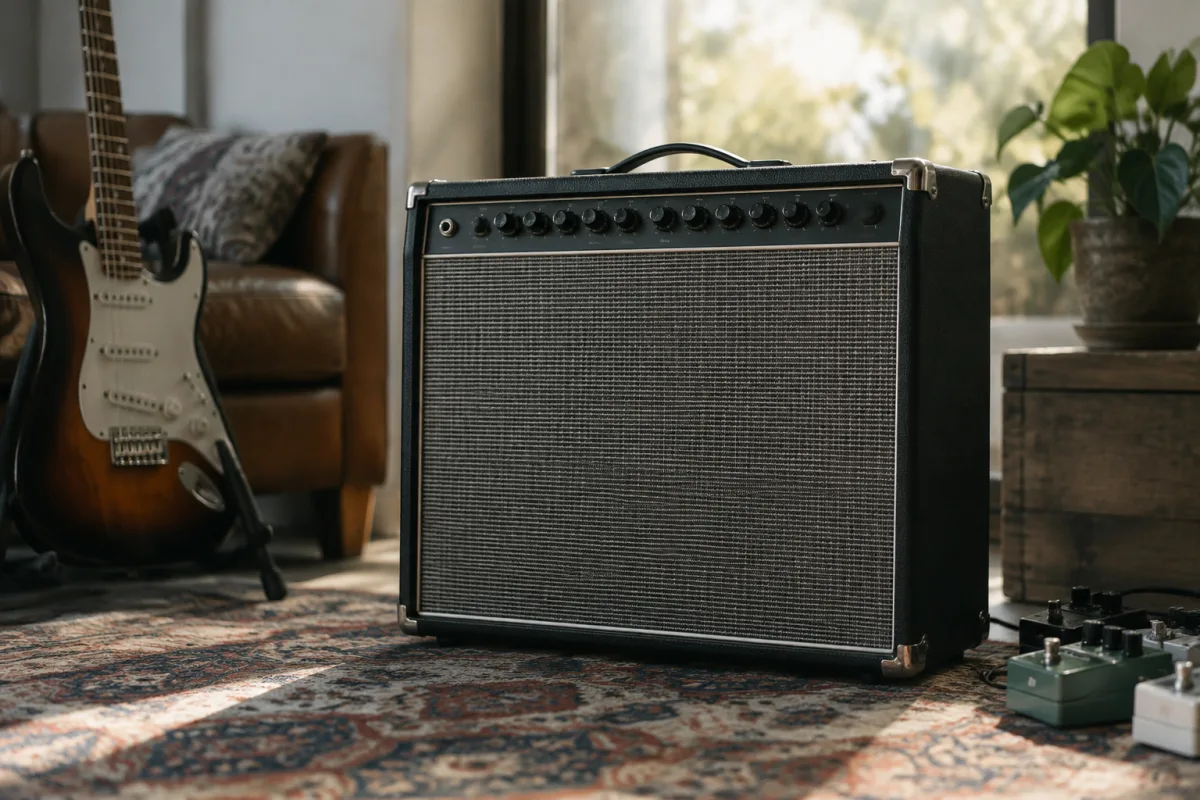
Pairing an electric guitar and amplifier is one of the most important decisions any guitarist makes. The combination of guitar and amp defines your tone more than any individual component alone—a bright, thin guitar sings through a warm, dark amplifier, whilst a thick guitar through a transparent amp can sound sterile. Understanding how electric guitar and amplifier interact helps you build a rig that flatters your playing style and inspires your music.
Why Electric Guitar and Amplifier Matching Matters
An electric guitar's tone is incomplete without an amplifier. The guitar's pickups, wood and construction shape the initial signal, but the amplifier interprets that signal, colours it with its own character, and projects it into the world. A mismatched electric guitar and amplifier pairing—say, a thick, dark guitar into a bright, cutting amp—feels wrong and requires constant EQ tweaking to achieve balance. The right pairing feels natural, requires minimal adjustment, and makes playing inspired and effortless.
Professional guitarists choose amplifiers specifically to complement their guitars' inherent character. This is why a Gibson Les Paul through a Marshall amp is iconic—the combination produces a thick, warm crunch that either component alone cannot achieve. Similarly, a Fender Stratocaster through a Fender Deluxe Reverb is a classic pairing for clean, chiming tones.
Electric Guitar Characteristics and How They Affect Tone
Before choosing an amplifier, understand your guitar's character:
Pickup type: Single-coil pickups (Fender Stratocasters, Telecasters) are bright, articulate, and transparent. Humbucking pickups (Gibson Les Pauls, semi-hollow bodies) are thick, warm, and compressed. The pickup character is fundamental—an amplifier can colour this, but cannot transform it entirely.
Body wood: Mahogany (Gibson) tends toward warmth and thickness; alder (Fender) is brighter and more transparent. Body mass matters too—a lightweight body sounds thinner and more resonant, a heavier body darker and more sustained.
Scale length: Longer scales (25.5", Fender) produce brighter, tighter tone; shorter scales (24.75", Gibson) are warmer and thicker. A 24-fret neck accommodates more range; a 22-fret is more compact but limits repertoire slightly.
Understanding these factors helps you choose an electric guitar and amplifier pairing that balances naturally, rather than fighting against each other's character.
Amplifier Types and Their Role in an Electric Guitar Setup
Three amplifier architectures serve different needs:
Tube (valve) amplifiers produce warm, organic distortion and respond dynamically to playing dynamics. Classic for rock, blues, and alternative. Tube amps require ventilation, maintenance, and power to breakup. A 20–30 watt tube amp with headroom provides clean tones and natural crunch at moderate volumes. Higher wattages (50+) suit large venues.
Solid-state amplifiers are reliable, affordable, and maintenance-free. They produce brighter, more linear distortion and don't interact with playing dynamics the same way tubes do. Excellent for metal, hard rock, and styles demanding clean gain with minimal character.
Digital/modelling amplifiers offer vast algorithm libraries and effects built-in, with USB connectivity and silent operation via headphones or direct output. Ideal for studio work, traveling, and tonal exploration. The downside is less organic feel compared to tube amps, though modern units bridge this gap considerably.
Matching an Electric Guitar and Amplifier: Key Pairing Strategies
| Electric Guitar Type | Ideal Amplifier Character | Example Pairing | Tone Character |
|---|---|---|---|
| Thick, dark (Gibson, semi-hollow) | Bright, cutting tube amp or solid-state | Les Paul + Marshall JCM800 or Orange | Thick, aggressive rock/metal crunch |
| Bright, articulate (Fender, single-coil) | Warm, colourful tube amp (Class A) | Stratocaster + Fender Deluxe Reverb | Chiming, warm, clean with natural breakup |
| Versatile, moderate (PRS, modern design) | Transparent, detailed amp (tube or solid-state) | PRS + Marshall Plexi or equivalent | Balanced across genres, responsive to playing |
| Metal guitar (thin, hot pickups) | High-gain solid-state or aggressive tube | Ibanez + Peavey XXX or Mesa Boogie | Saturated gain, clarity at high volumes |
Wattage, Headroom and Playing Contexts
An electric guitar and amplifier pairing must accommodate your typical playing scenario:
Bedroom/home practice: 5–15 watts, tube or solid-state. At low volumes, a tube amp's breakup is accessible and responsive. A 15-watt solid-state is clean and reliable.
Small clubs and rehearsal: 20–50 watts, tube or solid-state. Enough volume to be heard; tube amps breakup naturally at moderate levels, creating organic saturation.
Large venues and touring: 50–100+ watts, tube or solid-state with good channel switching. Plenty of headroom for clean tones and controlled gain, with enough volume to fill stages.
Wattage is not volume alone—a 20-watt tube amp is louder than most guitarists realize, and 50 watts provides genuine headroom without requiring extreme volume to achieve distortion.
Effects and Your Electric Guitar and Amplifier Relationship
Pedals sit between electric guitar and amplifier, shaping the signal before it reaches the amp. Understand this hierarchy:
- Tone shaping (dynamics, EQ): Compression and EQ pedals sit first, evening out your playing and pre-colouring your tone.
- Gain staging (overdrives, distortions): Overdrive and distortion pedals layer gain before the amp, creating saturation and aggression.
- Modulation (chorus, flange, phaser): These sit mid-chain, affecting the entire signal.
- Ambience (reverb, delay): Reverb and delay live at the end, adding space and trails after the amp.
A good electric guitar and amplifier pairing needs minimal pedal intervention to sound great—the best rigs sound inspiring with just a good cable, nothing more.
Testing an Electric Guitar and Amplifier Pairing
Before committing to a purchase, spend time with the combination:
- Play through the electric guitar and amplifier at multiple volumes to hear how it responds.
- Test clean and driven sounds—how naturally does the amp breakup?
- Listen to how the guitar's attack and sustain interact with the amp's responsiveness.
- Play with the tone controls and hear whether they interact musically or feel disconnected.
- If possible, record a few phrases and listen back critically—does it sound like the tone you imagined?
Great electric guitar and amplifier pairings feel immediate and effortless. If the combination requires extensive tweaking to sound good, it's likely not the right match.
Conclusion
The relationship between an electric guitar and amplifier is fundamental to your tone and playing experience. Choose an amplifier that complements your guitar's character—warm to balance brightness, cutting to balance darkness—and you'll discover tones that feel natural and inspiring. Start with a classic pairing if you're unsure, or experiment once you understand your guitar's fundamental character. The electric guitar and amplifier that fits your style and playing context will serve you for decades.


Comments