
Zoom Pedals article
The Complete Guide to Zoom Pedals
Zoom pedals deliver professional-grade multi-effects processing in portable devices. Learn how to choose between guitar and bass models and maximise their creative potential.
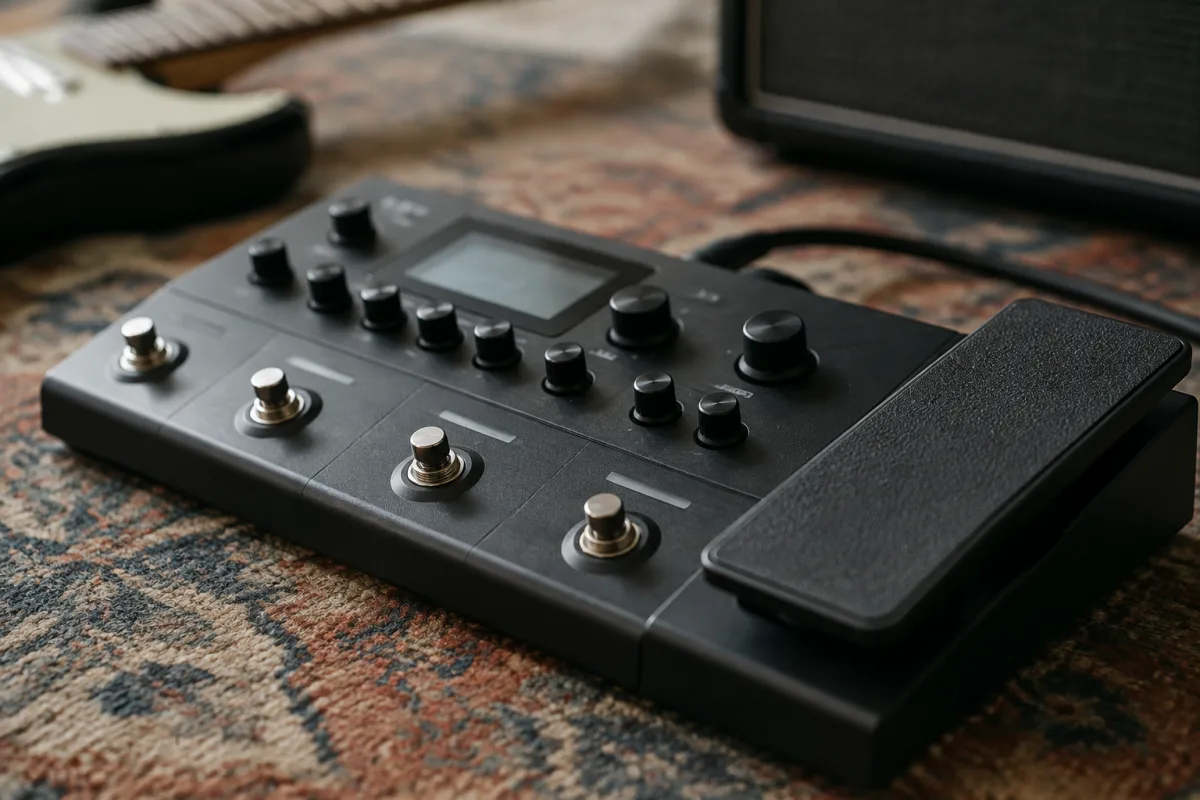
Zoom pedals represent a revolution in portable multi-effects processing, allowing musicians to carry a comprehensive effects suite in a single compact device. Whether you're a bass guitarist seeking tone shaping, a guitarist exploring creative soundscapes, or a touring professional needing reliable backup effects, Zoom pedals offer exceptional versatility and reliability at prices that make professional-grade effects accessible. This guide explores what Zoom pedals offer and how to choose the right device for your musical needs.
What is a Zoom Pedal?
A Zoom pedal is a multi-effects processor—a self-contained unit that combines multiple guitar/bass effects, amp simulations, and sometimes loop recording capabilities into a single device. Unlike traditional pedalboards where each effect requires a separate pedal, a Zoom pedal contains dozens of effects internally, selectable and customisable via foot controls and a screen interface.
The most popular models—the G1X Four, G3X, B1X Four, and B3X—combine compact physical footprints with deep effect libraries. These pedals run on batteries or USB power, connect to amplifiers or audio interfaces, and typically include expression pedals for real-time effect control.
Types of Zoom Pedals
Zoom manufactures guitar-focused and bass-focused multi-effects pedals. Guitar models emphasise amp simulations and effects suited to guitar tones—distortions, fuzz, modulation, reverbs, and delays optimised for six-string instruments. Bass models include dedicated bass amp models and effects specifically tailored to bass frequencies.
The company also produces Zoom U-series audio interfaces that combine multi-effects with audio recording capabilities, suitable for home recording and practice. The choice between models depends on your specific needs—gigging guitarists require different features than bass players recording at home.
Multi-Effects Processing
A typical Zoom pedal contains 100+ effects covering distortions, overdrives, compressors, EQs, modulation effects (chorus, flanger, phaser), time-based effects (reverbs, delays), amp models simulating vintage and modern amplifiers, and cabinet simulations. This comprehensive library means you can design virtually any tone imaginable without purchasing separate pedals.
The effects can be chained in customisable order—a fundamental difference from traditional pedalboards where signal flow is physically determined. With a Zoom pedal, you can place an EQ before a distortion (affecting the distortion's character) or after it (affecting the final tone), and change this ordering with a few button presses. This flexibility opens creative possibilities impossible with traditional setups.
Amp Modelling and Cabinet Simulations
Modern Zoom pedals include physical amp modelling—digital emulations of famous amplifiers. A guitarist can select a Marshall stack model, a Fender Twin Reverb model, or a Vox AC30 model with cabinet simulations that model the speaker characteristics. This technology has matured to where professional recording engineers use Zoom amp models confidently in studios, rather than relying solely on expensive physical amplifiers.
For touring musicians, this capability is transformative. You can dial in your tone at home, record it as a preset, and reproduce it identically on any stage regardless of what amplifier is available. A guitarist using a Zoom can connect to any venue's PA system and know exactly what tone they'll produce.
Footswitch Control and Expression Pedal
Zoom pedals feature built-in footswitches allowing hands-free effect selection, preset switching, and effect parameter control during performance. The number of switches varies by model—entry-level units have 4–6 switches; professional models include 6–8 switches plus an assignable expression pedal for real-time parameter changes.
The expression pedal is particularly valuable, mimicking the function of physical wah-wah pedals or allowing dynamic control of effect parameters. A bassist can use an expression pedal to modulate filter cutoff frequencies in real time, creating dynamic filter sweeps without requiring a separate pedal.
Power and Connectivity
Most Zoom pedals operate on AA batteries (typically 4–6 batteries providing 10–15 hours of playing time), though USB power supplies are available. Battery operation provides ultimate portability—you can use a Zoom pedal in environments without AC power access. Battery-powered operation also eliminates hum that sometimes accompanies USB power.
Connectivity typically includes 1/4-inch audio inputs and outputs for connecting to amplifiers or mixing consoles, headphone outputs for silent practice, and USB connections for firmware updates and audio recording. Some models include Bluetooth MIDI connectivity, allowing wireless control from external devices.
Zoom Pedals for Guitars vs. Bass
Zoom manufactures separate guitar and bass models because the frequency ranges differ substantially. Guitar effects are optimised for 80 Hz–12 kHz (guitar's typical frequency range), whereas bass effects must handle lower frequencies down to 40 Hz. Using a guitar-focused Zoom for bass risks losing low-end clarity or causing unexpected tonal changes.
Bass-specific models include bass amp simulations, bass cabinet models, and effects tailored to low frequencies. A bass player should choose a B-series Zoom (B1X Four, B3X) rather than a G-series guitar model to ensure the effects work optimally with bass frequencies.
Comparison with Traditional Pedalboards
A traditional pedalboard comprises individual effect pedals chained together. An experienced player might invest £5,000–10,000 building a comprehensive pedalboard with quality pedals, cables, and a pedalboard. A Zoom pedal offers comparable effect variety at £300–600.
The tradeoff is that traditional pedals feel more tactile—physical knobs and switches appeal to musicians who prefer hands-on control. Zoom pedals require more screen navigation, though this improves with practice. Additionally, individual pedals sometimes offer deeper customisation than Zoom's versions, which occasionally simplify controls for accessibility.
Reliability and Durability
Zoom pedals are built ruggedly to withstand touring demands. The plastic housing and metal footswitches survive years of stage use. The most common maintenance is replacing batteries or updating firmware via USB. Unlike physical pedalboards where individual pedals can fail independently, a Zoom pedal is a single unit—if it fails, your entire effects suite fails simultaneously, though this occurs rarely.
Professional touring musicians rely on Zoom pedals partly because the company provides reliable customer support and firmware updates. If a firmware bug affects your tone, Zoom typically addresses it within weeks via an updated release.
Learning Curve and Accessibility
Zoom pedals include extensive presets created by Zoom engineers and community members. A beginner can select a preset and play immediately without understanding effects in depth. As you advance, accessing the deeper customisation menus allows tweaking effects and designing custom tones.
The learning curve is gentler than understanding traditional pedalboards because Zoom provides visual feedback via the screen and has relatively intuitive menu structures. After an hour of exploration, most players can navigate confidently and design basic custom tones.
Conclusion
Zoom pedals represent exceptional value for musicians seeking comprehensive multi-effects processing. Whether you need portable effects for gigging, practice tone-shaping, or recording at home, a Zoom pedal delivers professional-grade capabilities in a compact device at prices that make effects affordable for everyone. For guitarists and bass players unwilling to invest thousands in traditional pedalboards, Zoom pedals offer the most practical path to sophisticated tone control.



Comments