
Voice Pedals article
The Complete Guide to Voice Pedals
Voice pedals add harmonic depth and creative texture to bass and guitar tones. Learn how octave and harmony voice pedals work, how to position them in your signal chain, and discover practical applications for tone transformation.
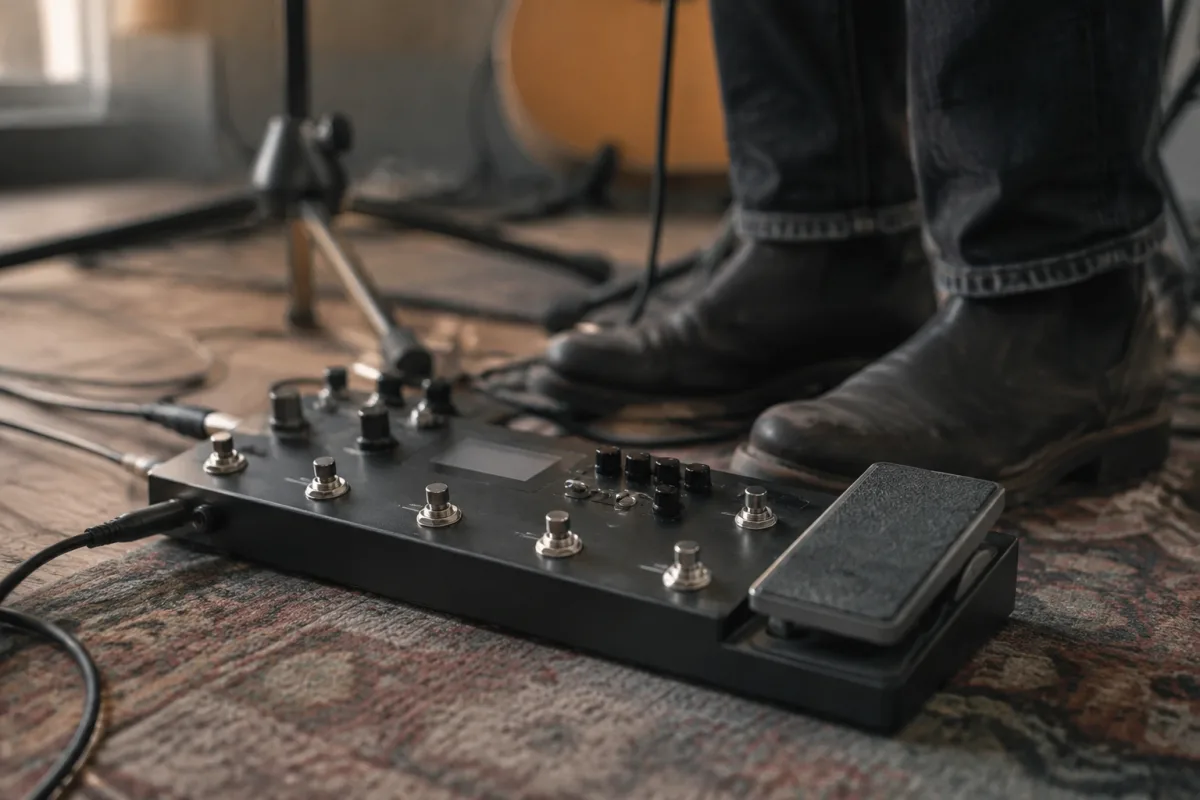
Voice Pedals: Adding Harmonic Depth to Bass and Guitar
Voice pedals represent a sophisticated category of effects that add harmonic complexity, octave layers, and dynamic textures to bass and guitar tones. Whether you're seeking to thicken your bass sound, add harmonic richness to guitar passages, or explore experimental tonal possibilities, voice pedals transform your instrument's character. This guide explores how voice pedals work, their diverse applications, and how to integrate them into your effects rig for maximum creative impact.
Understanding Voice Pedals
Voice pedals generate additional notes or frequencies based on your instrument's input signal. Unlike simple distortion or reverb effects, voice pedals create harmony—a separate note that follows your played notes at a specified interval. A voice pedal tracking your bass input and adding a lower octave creates a deeper, heavier sound; guitar voice pedals often add fifths or thirds, creating chord-like harmonic enhancement. Modern voice pedals employ sophisticated tracking algorithms to follow your playing accurately, responding in real time to your finger movements and dynamics.
Common Voice Pedal Types
Octave Pedals
Octave-based voice pedals add notes one or two octaves above or below your played notes. Bass players frequently use voice pedals generating lower octaves, creating a fuller, more powerful sound without sacrificing note clarity. Guitar players often blend upper octaves with their original tone, adding shimmer and width. Voice pedals with multiple octave options allow precise control over the harmonic layers you introduce.
Harmony Pedals
Harmony-based voice pedals add notes at specified musical intervals—thirds, fifths, sevenths—creating chord-like accompaniment. These sophisticated voice pedals often feature key selection, allowing the voice pedal to generate harmonically appropriate notes regardless of your input. Harmony voice pedals enable soloists to create full, orchestral accompaniment from a single instrument.
Formant Shifters
Formant shifting voice pedals alter the spectral characteristics of your sound without changing pitch, creating vocal-like qualities or robotic tones. These experimental voice pedals appeal to adventurous musicians exploring unconventional textures and sound design possibilities.
Integration into Your Rig
| Consideration | Impact | Best Practice |
|---|---|---|
| Placement in Signal Chain | Position affects how voice pedals interact with other effects | Generally place voice pedals early, before distortion/compression; after tuning |
| Blend Control | Balance between voice pedal harmonics and original tone | Start with conservative blend (30–50%) to avoid overwhelming original signal |
| Attack and Release | How quickly voice pedals respond to your playing dynamics | Adjust for your playing style; faster response for percussive playing, slower for legato |
| Key Selection | Harmony voice pedals need correct key for musical accuracy | Select key matching your song; most voice pedals allow real-time key changes |
| Tracking Accuracy | How precisely voice pedals follow your playing | Test tracking with various techniques; some voice pedals excel with fast playing, others with sustained notes |
Popular Voice Pedal Models
The voice pedal market offers options for every budget and application. Boss Octave pedals provide affordable entry-level functionality. TC-Helicon voice pedals excel in vocal processing and harmony creation. Electro-Harmonix offers experimental voice pedals for sound designers. DigiTech voice pedals deliver comprehensive feature sets. Choosing voice pedals depends on your specific application—bass reinforcement, harmonic enrichment, or experimental texture creation.
Practical Applications
Bass players frequently employ voice pedals to create fuller, more authoritative sounds without increasing volume excessively. Adding a lower octave via voice pedals strengthens low-end punch whilst preserving note definition. Guitar players use voice pedals to thicken rhythm sections or add textural interest to solos. Keyboardists layer voice pedals for richer, more orchestral voices. Experimental musicians exploit voice pedals for vocal effects, robotic processing, and unconventional tonal exploration.
Challenges and Considerations
Voice pedals demand careful tuning and clean playing technique. Sloppy intonation or excessive noise confuses voice pedal tracking algorithms, producing musical artifacts. Floor noise and feedback sometimes interfere with voice pedal tracking. Modern voice pedals include advanced filtering and tracking algorithms that minimise these issues, but understanding your voice pedal's specific characteristics remains essential for successful integration.
The Bottom Line
Voice pedals unlock harmonic possibilities that transform your instrument's sonic character. Whether reinforcing bass tone, enriching guitar harmony, or exploring experimental textures, quality voice pedals reward careful integration and patient parameter exploration. Select voice pedals matched to your primary application, place them thoughtfully in your signal chain, and discover how harmonic layering adds professional depth to your playing.


Comments