
Tune Electric Bass article
The Complete Guide to Tune Electric Bass
Master tuning your electric bass with our comprehensive guide covering tuning methods, the best tools to use, and expert tips for staying in pitch.
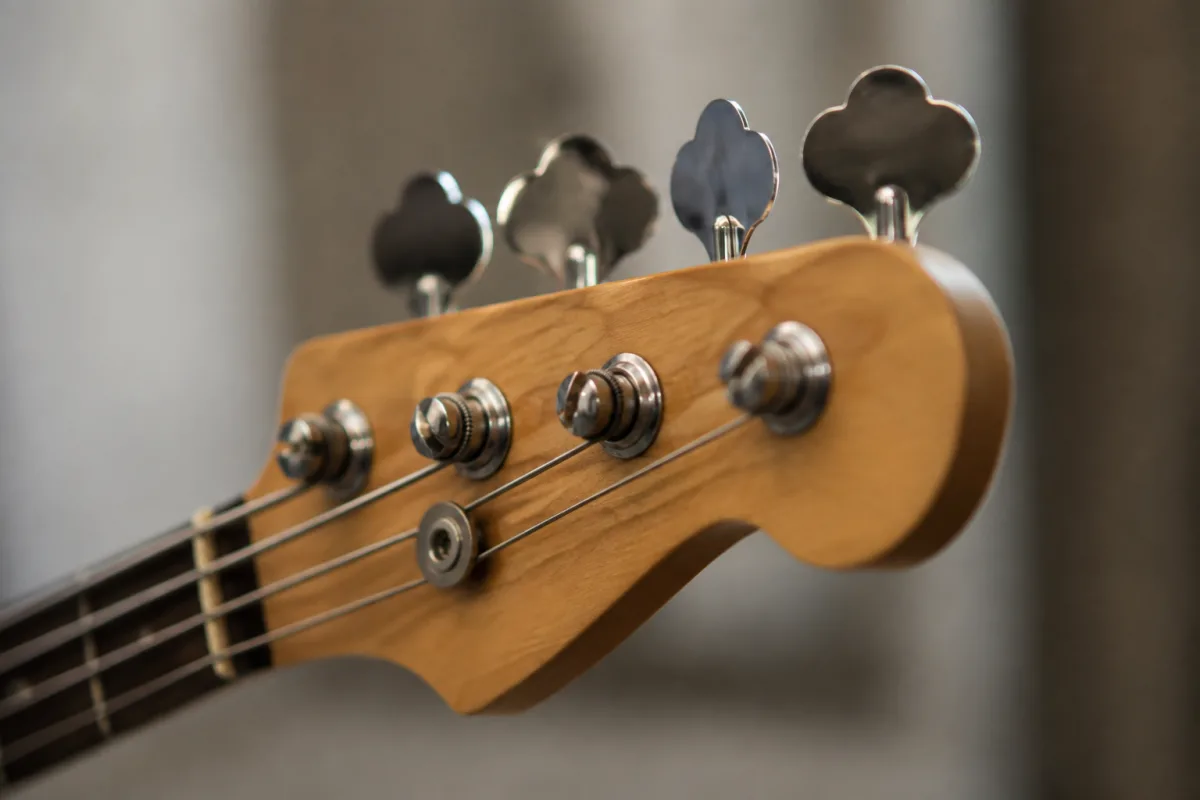
How to Tune an Electric Bass Accurately
Tuning an electric bass is essential for any bassist who wants their instrument to sound right and play in pitch. Whether you're at home, in rehearsal, or about to perform, knowing how to tune your bass quickly and accurately is a skill that separates the professionals from the rest. We'll walk you through every method, the tools you'll need, and common mistakes to avoid.
Standard Bass Tuning
The standard tuning for a four-string electric bass is E–A–D–G, with the lowest note on the thickest string. This tuning has become the universal standard across jazz, rock, metal, pop and virtually every other genre. If you're learning bass for the first time, this is the tuning you'll start with.
Each string has a specific frequency. The low E string vibrates at 41.2 Hz, the A at 55 Hz, the D at 73.4 Hz, and the G at 98 Hz. Tuning an electric bass means adjusting each string's tension so its pitch matches these frequencies.
Tools You'll Need to Tune an Electric Bass
A good tuner is the foundation of accurate tuning. Here are your main options:
- Chromatic tuner: A dedicated handheld device that reads the note you're playing and shows whether you're sharp, flat, or in tune. Chromatic tuners work with any instrument.
- Clip-on tuner: Clips directly to your bass headstock and uses vibration to detect the pitch. These are affordable, portable and perfect for live playing.
- Pedal tuner: A dedicated effects pedal that shows your tuning status. Commonly used by gigging bassists who want tuning always visible on stage.
- Smartphone app: Free or low-cost tuning apps work surprisingly well, though they're less reliable than dedicated tuners in noisy environments.
- Strobe tuner: The most precise option, using visual feedback. Professional-grade tuners for studio work.
For most bassists, a clip-on tuner is the sweet spot—affordable, quick and reliable in most situations.
Tuning an Electric Bass: Step by Step
Finding an accurate tuning method matters. Follow this process for consistent results:
First, choose your tuning reference. If you have a tuner, that's your reference point. If not, you can use a reference tone from YouTube, or start from a piano or keyboard. An audio source gives you something to match against.
Next, work on one string at a time. Start with the low E string, the thickest string. Pluck it and watch your tuner's feedback. If the needle points left, you're flat (too low)—tighten the tuning peg by turning it clockwise. If it points right, you're sharp (too high)—loosen the tuning peg by turning it anticlockwise.
Make small adjustments. Turn the peg gently. Large movements overshoot and waste time. Small, deliberate turns let you creep toward the pitch gradually. A quarter turn often makes a significant difference.
Settle each string at pitch. Once your tuner reads "in tune," you're ready for the next string. Repeat for A, D and G strings in order.
Always double-check the low E string. After tuning the higher strings, return to the low E. Tuning the others can affect overall string tension slightly, so a final check ensures everything is locked in.
Why Your Electric Bass Loses Tuning
A bass that sounds out of tune within minutes of tuning often has one of these problems:
- Worn tuning pegs: If the mechanisms are loose or worn, they won't hold pitch. Replacement may be necessary.
- Bridge issues: A bridge that's not properly seated can cause tuning instability. Check that all bridge components are secure.
- Bent or damaged strings: Strings that have been bent excessively at the tuning peg or nut can slip and lose pitch. Replace them.
- Nut problems: If strings sit too loosely in the nut slots, they'll slip during play. A professional setup can recut the nut correctly.
- Temperature changes: Wood expands and contracts with temperature, shifting tuning. This is normal and usually requires only a small tweak between songs.
Alternative Bass Tunings
Once you're comfortable with standard tuning, you might explore other tunings for specific sounds. Drop D tuning—lowering the low E string to D—is popular in rock and metal. Half-step down tuning flattens all strings by a semitone, giving a heavier sound. Five-string basses introduce a low B string, extending your range downward. Learning these tunings expands your musical palette.
Tuning Tips for Bassists
Professional bassists use these techniques to stay in tune:
- Tune frequently. A quick check every few songs during rehearsal or performance ensures you're always pitch-accurate.
- Use your ear alongside your tuner. Over time, your ear develops a sense of pitch. Use this intuition to double-check your tuner's reading.
- Stretch new strings. After installing new strings, gently pull on them to help them settle faster and hold tuning better.
- Keep spare strings handy. A broken string during a gig won't ruin your performance if you have a replacement ready.
- Invest in quality tuning pegs. Better hardware holds tuning more reliably, making your life easier.
Getting Started: Your First Tuning
If you're brand new to tuning an electric bass, don't overthink it. Get a clip-on tuner, follow the step-by-step method above, and practice a few times. Within a week, tuning becomes second nature. Your ears will start recognising when each string is in pitch, and soon you'll be able to do it quickly without thinking.
Tuning an electric bass is not complicated—it just requires the right tools, a clear method, and a little practice. Once you master it, you'll have the foundation for consistently great-sounding playing.


Comments