


Fender Short Scale Bass article
Fender Short Scale Bass for Beginners: A Complete Guide
New to bass? A Fender short scale bass is an excellent beginner choice. This guide covers first steps, what to expect, essential gear, and how to practise successfully with realistic encouragement.
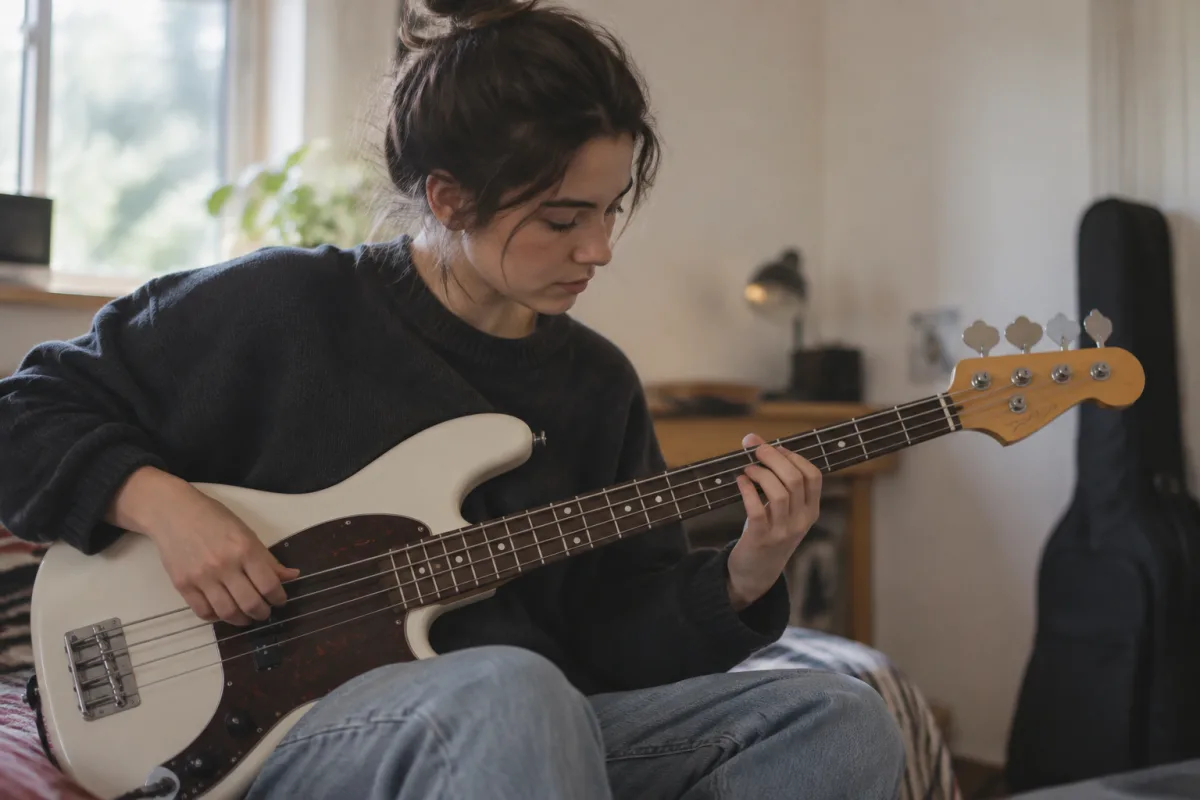
If you're considering bass guitar and have smaller hands, or simply prefer something less intimidating than a full-size bass, a Fender short scale bass might be the perfect entry point. The idea of "short scale" sounds limiting, but it's actually wonderfully liberating for beginners. Fender's short scale instruments let you reach further up the neck more comfortably, develop hand strength without strain, and engage with the bass in a way that feels natural rather than painful. This guide walks you through starting with a Fender short scale bass, easing you into bass playing with realistic expectations and practical encouragement.
Understanding Why Short Scale Matters for Beginners
A full-size bass typically has a 34-inch scale, which refers to the distance from the bridge saddle to the frets near the headstock. A short scale bass—usually 30 to 32 inches—brings everything closer together. Your fretting hand travels less distance between notes. The strings feel less stiff under your fingers. Your fingers don't stretch as far reaching chords. For someone with smaller hands, or anyone finding a full-size bass uncomfortable, this isn't a compromise. It's a smarter starting point. Fender recognised this decades ago, creating the Mustang Bass and Bronco Bass, legendary short scale instruments that countless beginners have learned on. Modern Fender short scale basses inherit this beginner-friendly legacy.
Your First Bass: Expect Some Initial Discomfort
Honestly, bass is not immediately comfortable for anyone. Your fingers aren't used to the pressure required to fret notes clearly. Your fretting hand will ache during the first weeks. Your plucking hand's fingers will develop calluses. This is completely normal. The advantage of a short scale bass is that this breaking-in period feels less punishing. You're not fighting an instrument built for larger players. You're learning on something that matches your physiology. Don't expect to play fluently within days—bass rewards patience and practice—but expect to feel like you've made a real decision, not compromised your options, by choosing short scale.
Fender Short Scale Models Worth Knowing
The Mustang Bass remains the iconic Fender short scale choice for beginners. It's approachable in price (£350–£600 new), instantly playable, and genuinely fun. The Bronco Bass offers a vintage aesthetic and warm tone, similarly beginner-friendly. Modern Player series Fender short scale basses (£250–£400) offer budget-conscious entry. Vintage Fender short scale models hold value and command respect from musicians who know their history. You don't need the most expensive option—a budget Mustang serves beginners brilliantly—but familiarity with models helps you understand the ecosystem and available options.
Getting Started: The Essential Steps
Buying a Fender short scale bass is only the beginning. Professional setup matters tremendously for beginners. Frets should be level, the neck properly relieved, and the action (string height) adjusted so you're not fighting excessive string pressure. Budget £30–£50 for professional setup—it's the best investment you'll make. Get a quality strap that feels comfortable around your shoulder for extended play. Choose a tuner (£15–£30)—a clip-on tuner is perfectly adequate for learning. Consider a stand or wall mount so your bass sits safely between practice sessions. A simple practice amp (£80–£200) or, alternatively, connecting to headphones through an interface (£50–£100) lets you practice quietly. These essentials total £200–£400 beyond the bass itself, but they're the difference between genuine practice and frustrating attempts.
Learning to Play: Start with the Fundamentals
Don't rush to learn songs immediately. Spend your first weeks on fundamentals: placing your left-hand fingers properly to fret notes clearly, developing consistency with your plucking hand, understanding rhythm and timing, learning the note names on the fretboard. Online resources are invaluable—YouTube has thousands of excellent beginner bass tutorials, many specifically for short scale instruments. Apps like Fretboard Academy or Yousician offer structured practice. Some beginners find even a few lessons with a local teacher invaluable for establishing correct hand position and avoiding bad habits that are hard to unlearn later. Four to eight lessons (£40–£80 each) is often enough to establish solid fundamentals.
Your First Song: Start Ridiculously Simple
The most common beginner mistake is trying to play a song you love but that's too technically demanding. Choose instead a song with four or fewer distinct bass notes and simple, slow rhythm. "Money" by Pink Floyd, "Come Together" by the Beatles, "Blitzkrieg Bop" by the Ramones—these iconic songs have simple, repeating bass lines that reward beginners with the satisfaction of sounding recognisable after surprisingly little practice. Learn one note at a time, repeat endlessly, then add the next note. This might feel tedious, but it's where bass playing lives—repeating lines, learning feel and timing, letting muscle memory develop. You're not jamming; you're learning. That distinction matters.
The Importance of Consistency Over Intensity
Fifteen minutes daily beats ninety minutes once weekly. Consistency builds muscle memory and lets your fingers adapt gradually. If you practice intensively once weekly, your fingers ache, you get discouraged, and a week passes before you try again. That's not learning—that's suffering. Daily practice, even short sessions, creates genuine progress. Keep your Fender short scale bass in a visible place—by your chair, on a stand in your practice space—where grabbing it takes zero effort. The easier it is to pick up, the more likely you'll practice consistently.
Common Beginner Mistakes to Avoid
Don't play too hard. Aggressive plucking doesn't sound better; it's just louder and makes your fingers hurt faster. Let the bass do the work. Don't anchor your thumb on the pickup—let it float, moving to support your fingers. Don't ignore tuning between practice sessions; even a slightly detuned bass teaches bad muscle memory. Don't compare your progress to experienced players—you're learning a skill that takes years, not weeks. Don't upgrade the bass immediately because you're bored; boredom usually means you need better fundamentals, not different gear. A Fender short scale bass deserves committed practice before you blame the instrument.
When to Consider Upgrading
After six months of consistent practice, you'll know whether bass is genuinely your instrument or merely an experiment. If you've committed to learning, your hands have adapted, and your skills have measurably improved, consider whether an upgrade makes sense. Many players stay happily with a Mustang Bass for years—it's a legitimate professional instrument, not just beginner gear. When upgrading does make sense, it's usually because your hands have grown enough to comfortably handle a full-size bass, or because you want additional tonal variety that a more expensive instrument offers. This decision comes from experience, not pressure.
Final Encouragement
A Fender short scale bass is not a stepping stone to "real" bass playing—it's a legitimate instrument choice made by professionals and loved by beginners. Starting with one means you're making a smart decision about your physiology and learning style. For deeper context about these instruments, explore the complete guide to Fender short scale bass. Bass rewards patience, consistency, and genuine commitment. You're going to struggle at first—everyone does. The difference between players who succeed and those who quit isn't talent; it's the willingness to sound terrible for a month and practice daily anyway. If you're ready for that, a Fender short scale bass is waiting. It's a genuinely friendly instrument, and it will teach you everything you need to know about bass playing. The rest is up to you.


Comments