
Squier Precision Bass Guitar article
The Complete Guide to Squier Precision Bass Guitar
The Squier Precision Bass provides legitimate entry into electric bass playing, offering proven design and professional tone at accessible prices for beginners and intermediate players.
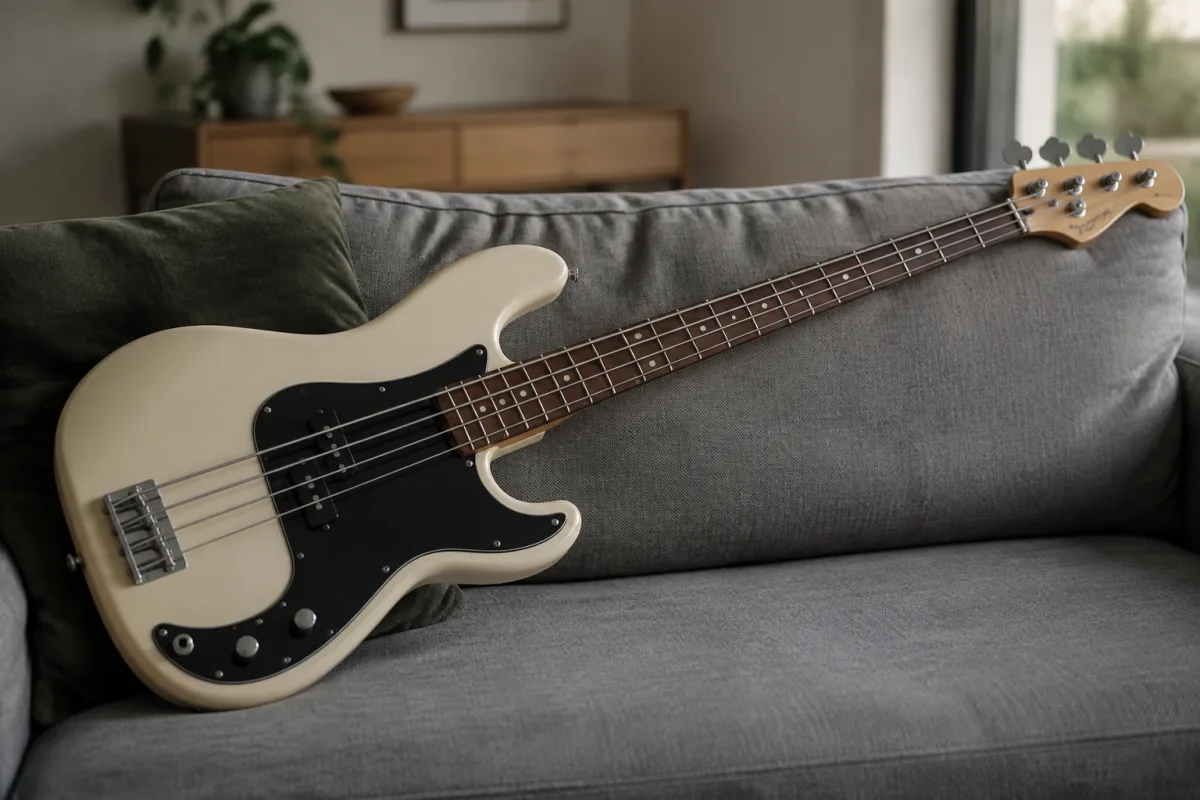
The Squier Precision Bass stands as one of the most accessible entry points into professional-quality bass playing. As Fender's budget-friendly brand, Squier provides instruments capturing the legendary Precision Bass design at a fraction of the cost of American-made models. Understanding the Squier Precision's heritage, contemporary quality improvements and suitability for different playing levels helps musicians make informed purchasing decisions when selecting their first electric bass or upgrading their instrument collection.
The Precision Bass Legacy
Leo Fender's original Precision Bass revolutionised electric bass in 1951, introducing the first mass-produced solidbody electric bass guitar. The distinctive split-coil pickup design, simple single-cutaway body shape and solid construction became the template for countless imitators and remains the gold standard for traditional bass tone. The Precision Bass name—derived from its fretted fingerboard enabling precise intonation—instantly became synonymous with professional bass playing across rock, funk, soul and R&B music.
Squier, established as Fender's budget subsidiary in 1982, initially manufactured instrument copies to penetrate cost-conscious markets. Subsequent quality improvements transformed Squier from dismissible beginner instruments into legitimate entry-level professional tools. Modern Squier Precision Basses remain recognisably faithful to Fender's original design whilst incorporating contemporary manufacturing improvements and professional-grade components unavailable in earlier budget models.
Design and Construction
The Squier Precision Bass faithfully reproduces Fender's original single-cutaway body shape, featuring solid hardwood bodies (typically poplar or basswood) with bolt-on maple necks and rosewood or pau ferro fingerboards. The iconic split-coil pickup arrangement delivers the characteristic Precision Bass tone—a punchy, focused low-end with articulate midrange presence ideal for traditional bass playing styles.
Contemporary Squier models feature die-cast bridge saddles replacing earlier stamped designs, improving tuning stability and intonation consistency. Four-in-line headstock designs remain standard, whilst some contemporary models offer three-plus-one configurations slightly more ergonomic for certain playing styles. The overall construction quality and attention to detail have improved substantially, with modern Squier instruments feeling robust and reliable.
Tone and Playing Characteristics
The split-coil Precision Bass pickup delivers the distinctive warm, woody tone that defined rock, funk and soul bass playing for decades. Squier instruments capture this tonal character remarkably faithfully despite more economical construction than American models. The solid body construction provides adequate sustain and resonance, though connoisseurs occasionally detect subtle tonal differences compared to premium American-made instruments featuring aged woods and hand-selected components.
The neck profile strikes a balance between comfort and playability—not as thick as traditional Fender Jazz Basses but not as thin as modern Ibanez designs. Many players find Squier Precision necks comfortable and encouraging, though personal preference varies based on hand size and playing technique.
Value Proposition and Market Position
| Instrument Tier | Typical Price | Construction Quality | Target Audience |
|---|---|---|---|
| Squier Precision (entry) | £200–350 | Solid body, simple electronics | Absolute beginners |
| Squier Precision (classic vibe) | £350–550 | Enhanced components, vintage aesthetics | Intermediate players |
| Fender Precision Player | £550–750 | Modern features, updated design | Intermediate to advanced |
| Fender Precision American | £1,200–2,000 | Premium woods, American manufacture | Professional touring |
Squier Precision Basses offer exceptional value for money. Entry-level models priced around £200–300 provide legitimately playable instruments suitable for learning fundamentals without significant financial investment. Intermediate models at £350–550 incorporate enhanced components, vintage aesthetics and improved hardware, delivering instruments genuinely suitable for amateur gigging and recording.
Quality Improvements Over Time
Squier manufacturing has evolved substantially since the brand's budget origins. Modern facilities employ stricter quality control, improved materials sourcing and contemporary manufacturing techniques that yield instruments exceeding expectations for the price point. Significant improvements include improved fretwork, more consistent pickup winding, sturdier hardware and more durable finishes. Players comparing vintage and contemporary Squier models often remark on noticeable quality progression.
Suitable Applications and Playing Contexts
Squier Precision Basses excel for beginners learning fundamentals without risking substantial investment in cases where commitment remains uncertain. The instruments prove entirely suitable for amateur bands, rehearsals and small venue performances. Recording studios increasingly accept Squier instruments, recognising that modern examples deliver professional recording tone. Professional touring musicians rarely select Squier Precision models, though budget-conscious working musicians occasionally employ them for less demanding situations.
The value proposition shifts dramatically for intermediate and advanced players. At the £350–550 price point, Squier Classic Vibe models offer sufficient quality for serious amateur musicians. However, players with established skills and regular gigging demands might justify investing slightly more for Fender Player Precision models offering enhanced components and contemporary features.
Upgrades and Customisation
Aftermarket upgrade components—replacement pickups, bridges and electronics—frequently prove worthwhile investments for Squier instruments. Quality pickup replacements (£150–250) substantially elevate tone and playability. Hardware upgrades and electronics refinement remain remarkably economical compared to the instrument's base cost, enabling progressive instrument improvement over time as skills develop and budget allows.
Conclusion
The Squier Precision Bass represents an intelligent entry point into electric bass playing, offering genuine quality, proven design and professional tone at accessible prices. Whether selecting your first bass, establishing a backup instrument or exploring budget-conscious alternatives to premium models, the Squier Precision Bass deserves serious consideration. By understanding construction quality, tone characteristics and suitable playing applications, musicians can make confident decisions about whether the Squier Precision aligns with their current needs and budget constraints.



Comments