
Precision Bass Guitar article
The Complete Guide to Precision Bass Guitar
The Fender Precision bass guitar has shaped popular music for seven decades. Discover why it remains the foundation of modern bass playing.
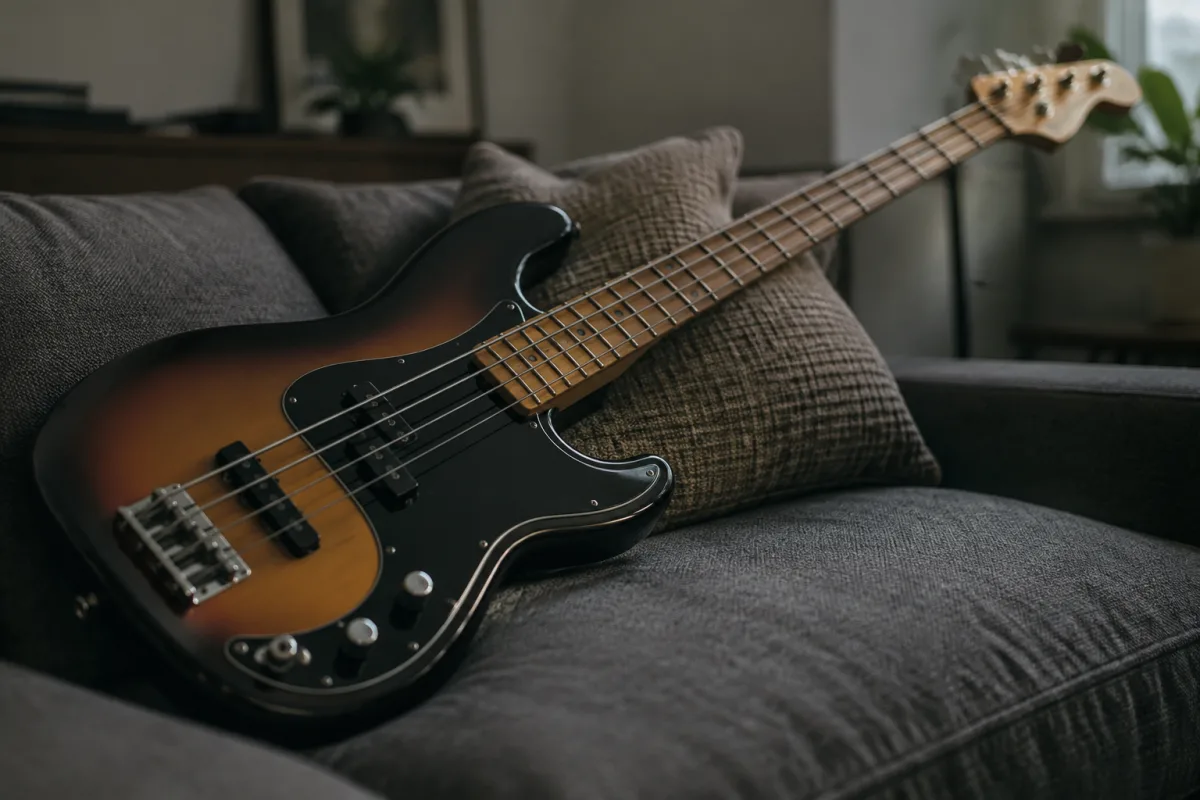
The Fender Precision Bass has been the gold standard of bass guitars for nearly seventy years. When you talk about "the Precision bass", you're talking about an instrument that's shaped popular music's foundation. From rock to funk to soul, the Precision bass has anchored countless hits, and for good reason. But what makes the Precision bass guitar so special? Is it hype, or is there something genuinely superior about this particular design? The answer, unsurprisingly, is more nuanced than the legend suggests.
The Precision Bass Guitar: A Brief History
Leo Fender introduced the Precision bass guitar in 1951, making it the first mass-produced solid-body electric bass. Before the Precision bass guitar appeared, most bass players used upright acoustic basses. The Precision bass guitar changed everything. Its solid body eliminated feedback. Its frets made intonation consistent and precise—hence the name. The Precision bass guitar was revolutionary, and Fender's design proved so right that it's barely changed in seven decades.
The Precision bass guitar's influence on bass playing itself is worth noting. Motown session bassist James Jamerson made the Precision bass guitar his primary instrument, essentially inventing modern bass line composition on the Precision bass guitar. His work on the Supremes, Temptations, and Miracles records proved the Precision bass guitar could carry a song. That association with Motown's golden age gives the Precision bass guitar a legendary status that newer designs struggle to match.
What Sets the Precision Bass Guitar Apart
The Precision bass guitar's single split-coil pickup is its defining feature. This distinctive design uses two coils positioned under each string pair—and that geometry matters. The split-coil pickup on a Precision bass guitar naturally rejects hum and cancels certain frequencies that a standard single-coil would amplify. The result is a warm, focused tone that sits beautifully in a mix. The Precision bass guitar doesn't compete with the instruments around it; it anchors them.
The body shape of the Precision bass guitar is ergonomic perfection for sitting players. The Precision bass guitar's contoured upper bout fits your body, making hours of playing surprisingly comfortable. The narrower nut on a Precision bass guitar—19 mm compared to wider jazz bass designs—makes playing fast passages and tight lines easier. These small differences compound into an instrument that responds to what you do, rather than fighting you.
Precision Bass Guitar vs. Other Designs
Jazz bass guitars have a wider string spacing and separate single-coil pickups, giving them a more aggressive, cutting tone. Many players prefer the Jazz bass guitar's brighter character for slap bass and solo work. The Jazz bass guitar is more versatile in that sense. But a Precision bass guitar excels at sitting in the mix, providing the pocket that bands actually need.
Modern designs like the Ibanez Soundgear or Musicman StingRay offer more aggressive tones and better high-fret access. They're legitimately good Precision bass guitar alternatives for certain players. But they lack the cultural weight and the particular tonal magic that the Precision bass guitar delivers. A Precision bass guitar sounds like itself—instantly recognisable.
Tone Characteristics of the Precision Bass Guitar
The Precision bass guitar's tone is thick and woody in the low end, with a pronounced fundamental and a natural presence peak around 1–2 kHz. This presence peak gives the Precision bass guitar its characteristic "thump"—the quality that lets you hear it clearly even in dense mixes. The Precision bass guitar doesn't have the aggressive bite of a slap bass or the thin clarity of a fretless, but it doesn't need to. The Precision bass guitar's job is clarity with depth, and it delivers exactly that.
Tone control on a Precision bass guitar dramatically changes character. Roll the tone knob down, and the Precision bass guitar becomes almost orchestral—deep, woody, dark. Push it to full treble, and the Precision bass guitar gets snappy and defined. Most players find the Precision bass guitar sounds best with the tone control around 60–70% for everyday use.
Precision Bass Guitar Playability
A good Precision bass guitar plays easily once set up correctly. The straight neck typical of vintage Precision bass guitars has been refined over decades, and modern Precision bass guitar production has improved consistency. String action on a Precision bass guitar needs to be relatively low for comfortable playing on lower frets, but high enough to avoid fret buzz. This balance varies by player preference and playing style, but most find 2 mm on the E string a good starting point for a Precision bass guitar.
The Precision bass guitar's narrower neck makes it the most forgiving design for players with smaller hands. Reaching across four strings feels natural on a Precision bass guitar, even for younger players. This accessibility partly explains the Precision bass guitar's popularity with beginners and professional players alike.
Precision Bass Guitar Variations
Fender makes several versions: the American Precision bass guitar (premium, hand-finished, resonant), the American Professional Precision bass guitar (modern features, excellent value), and the Player Precision bass guitar (beginner-friendly, solid quality). Mexico-made versions offer value without the premium price. Squier makes affordable student-grade Precision bass guitars that are genuinely playable.
Aftermarket builders and boutique makers offer custom Precision bass guitars with exotic woods, refined pickups, and personalisation. These premium Precision bass guitars can cost £3,000–5,000, but they're built to individual specifications. Most players find a mid-range Precision bass guitar sufficient for professional work.
Is a Precision Bass Guitar Right for You?
A Precision bass guitar shines in classic rock, funk, soul, reggae, and traditional pop. If your band plays within those traditions, a Precision bass guitar is unquestionably the right choice. If you're exploring contemporary jazz, metal, or progressive rock, you might want to audition a Jazz bass guitar or Musicman alongside the Precision bass guitar. The Precision bass guitar won't fail you in any genre, but some genres feel more natural on it than others.
Your budget matters, but a Precision bass guitar is available at every price point. A used vintage or Japanese Precision bass guitar from the 1980s offers exceptional value. A modern Player Precision bass guitar costs £300–400 and is genuinely capable. You don't need to spend £2,000 to get a Precision bass guitar that works.
The Bottom Line
The Precision bass guitar's legendary status isn't accident or marketing. It's the result of a design that works beautifully, a tone that sits naturally in a mix, and decades of cultural weight in rock, funk, and soul music. A Precision bass guitar won't make you a better player, but it removes obstacles. You pick it up, and it responds to what you do. That simplicity, paired with the Precision bass guitar's inherent character, explains why so many professionals choose it. If you're serious about bass and want a Precision bass guitar that will handle anything you throw at it, you'll find one within your budget. The Precision bass guitar remains the fundamental choice, and it remains so for good reason.


Comments