
Overdrive Effects Pedal article
The Complete Guide to Overdrive Effects Pedal
An overdrive effects pedal creates responsive, musical breakup that reacts to your playing dynamics, making it essential for blues, rock, and countless other genres.
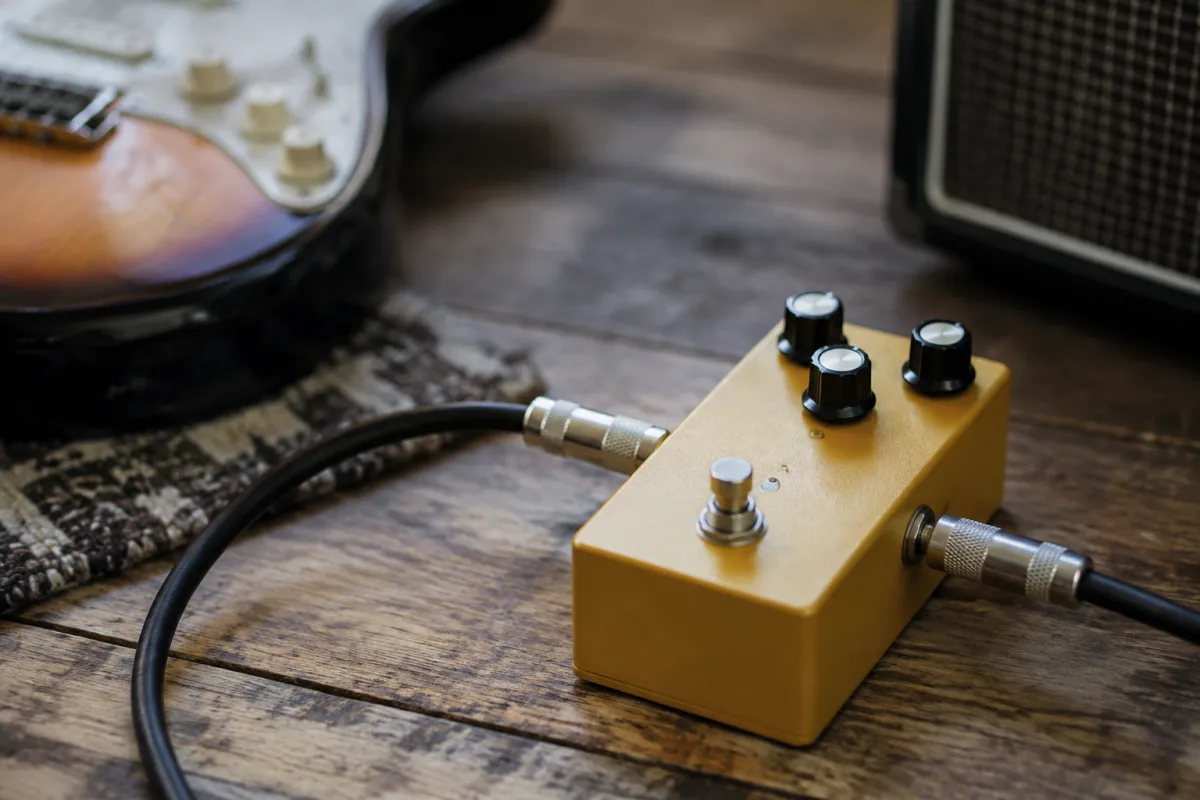
Such an effect shapes your guitar's tone by gently compressing and colouring the signal, creating anything from a subtle warmth to a thick, sustain-rich drive. Whether you're playing blues, rock, or indie, this effect remains one of the most essential stompboxes for exploring dynamic expression and tone variation.
What Is an Overdrive Effects Pedal?
At its core, this effect simulates the natural breakup that occurs when you push a tube amplifier hard. Rather than adding aggressive distortion, the effect provides a controlled, responsive compression that reacts to your picking dynamics. This responsiveness makes this effect particularly musical—playing softer yields cleaner tone, whilst digging in produces more break-up and sustain.
The magic of this effect lies in its interaction with your guitar's volume knob and playing technique. Because tone responds so directly to player input, many musicians consider this effect more expressive than distortion pedals, which tend to sound consistent regardless of dynamics.
Key Differences: Overdrive vs Distortion
Understanding the distinction between this effect and a distortion pedal matters for tone sculpting. Both add gain and break-up, but this effect typically produces a softer, more natural-sounding breakup, whilst distortion generates harder, more aggressive clipping. Such an effect works by gently pushing your amp's input stage, whereas distortion electronically clips the waveform.
Many professional guitarists use both—layering an overdrive effects pedal in front of a distortion pedal creates richer, more complex textures. This combination can boost the amp slightly even when distortion is engaged, adding resonance and note definition that pure distortion alone doesn't always deliver.
Characteristics of Overdrive Effects
Quality overdrives share several characteristics worth understanding:
- Responsiveness to picking attack: Soft muting produces subtle grit; hard picking drives the effect harder.
- Volume and tone interaction: Such an effect preserves your guitar's natural tone whilst adding warmth and sustain.
- Amp interaction: Tone changes based on your amplifier's headroom and characteristics—the same overdrive sounds different through a clean amp versus a naturally broken-up amp.
- Subtle compression: The effect adds slight compression that tightens note definition and increases sustain.
- Frequency enhancement: Quality overdrives subtly boost mid-range frequencies, pushing your signal forward in a mix.
Classic and Modern Overdrive Pedal Designs
Iconic overdrive effects pedal models have shaped modern rock tone:
| Style | Examples | Character |
|---|---|---|
| Blues-based | Ibanez Tubescreamer, Boss SD-1 | Smooth, natural breakup, mid-range push |
| Transparent | Xotic BB Pre, Fulltone OCD | Preserves guitar tone, minimal colouration |
| Vintage-voiced | Klon Centaur, DOD Overdrive | Warm, organic, slightly compressed |
| Boost-style | Timmy, Analogman Sunface | Emphasises sustain and note articulation |
Using an Overdrive Effects Pedal in Your Rig
Placement matters significantly when using this effect. In a traditional signal chain, this effect typically sits before distortion and modulation effects, allowing it to interact directly with your amplifier. However, some players experiment with this effect in different positions to achieve unique sounds.
Stacking overdrives creates powerful combinations. Many professional guitarists run multiple overdrive pedals in series, each set to different gain levels. Such an effect with high drive can emulate a distortion tone when pushed hard, whilst lower settings preserve dynamics for rhythm playing.
Tone Shaping With Drive and Tone Controls
Most overdrives feature drive, volume, and tone controls. The drive control on this effect determines how hard the effect compresses your signal—higher settings add more break-up and sustain. The volume knob lets you match the output level to your clean tone, ensuring this effect doesn't sacrifice level when activated.
Tone control on this effect usually adjusts the brightness—rolling down yields a darker, thicker tone perfect for sludgy blues, whilst turning up adds clarity and cut beneficial for lead work. The interplay between these controls allows enormous tonal flexibility within a single overdrive effects pedal.
Budget vs Premium Overdrives
Quality overdrives exist at every price point. Budget options like the Boss DS-1 or MXR 78 Distortion deliver satisfying tone for beginners without major investment. Mid-range units like the Ibanez Tubescreamer or Fulltone OCD offer more nuance and flexibility. Premium overdrives from boutique makers add hand-crafted characteristics and exotic component choices, though the practical difference diminishes after £150–200 investment.
Most players find this effect in the £80–150 range provides excellent value. At that price point, you get reliable build quality, intuitive controls, and genuine tone shaping capability suitable for both practise and professional work.
Recording With Overdrive
In studios, this effect remains as valuable as in live performance. Recording engineers often layer multiple guitar passes with different overdrive settings to build texture and depth. Such an effect's responsiveness to playing dynamics translates beautifully to recording, capturing subtle variations in performance that listeners appreciate.
Conclusion
Such an effect stands as one of the most expressive and musical tone-shaping tools available to guitarists. Its responsiveness to player input, natural breakup characteristics, and ability to complement nearly any amplifier make this effect invaluable for exploring tone variation. Whether you're a blues purist, rock rhythm section player, or experimental noise artist, this effect deserves a place on your board for the dynamic musical possibilities it unlocks.


Comments