


Mxr Effects Pedals article
Mxr Effects Pedals for Beginners: A Complete Guide
Your first MXR effects pedal opens new sonic possibilities. This beginner's guide covers setup, common mistakes, and how to explore your pedal's capabilities confidently.
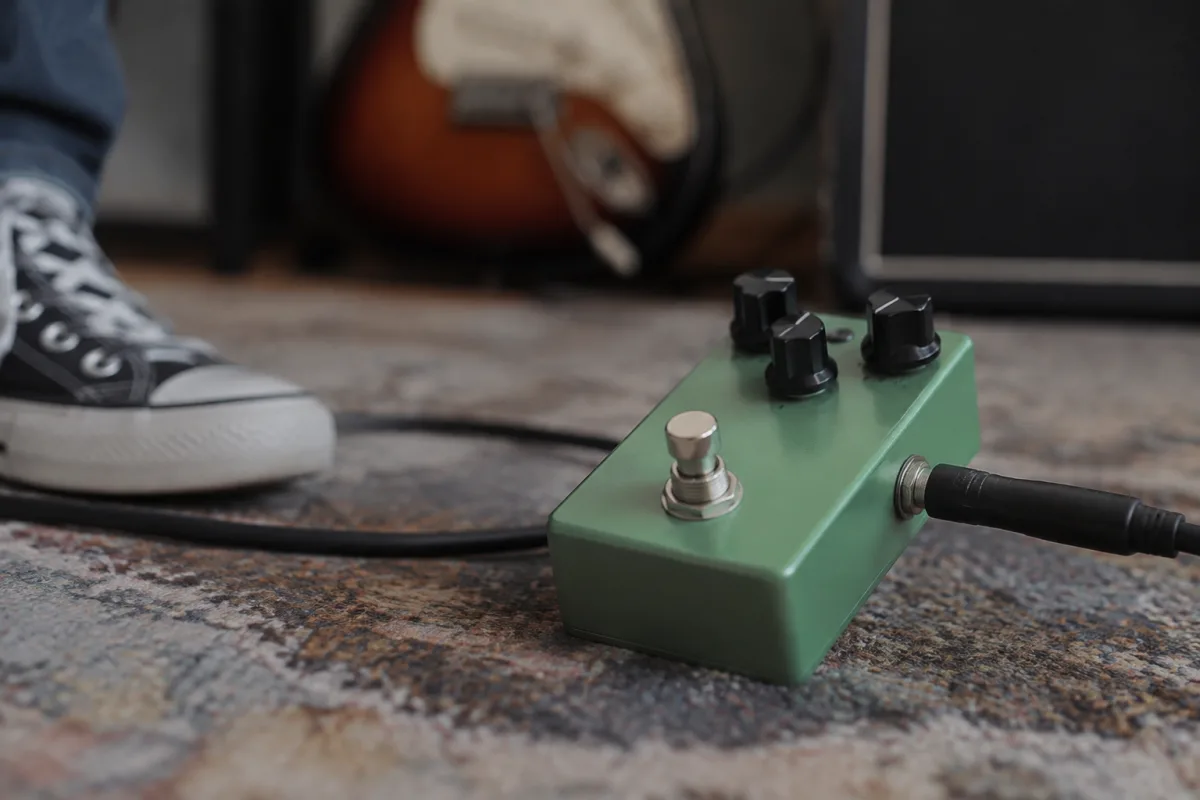
Discovering MXR effects pedals can feel like entering a new world—suddenly your guitar or bass sounds completely different. If you're a nervous beginner thinking about buying your first MXR effects pedal, you've probably felt overwhelmed by the options. This guide is written for you. We'll walk through choosing your first pedal, setting it up without confusion, and understanding why your sound changes when you flip a switch. You're about to discover that MXR effects pedals aren't mysterious—they're genuinely approachable.
Why MXR Effects Pedals are Perfect for First-Time Buyers
MXR effects pedals have built a reputation for reliability and straightforward design. They're not fancy or complicated; they're well-engineered tools that do exactly what they promise. A beginner picking up MXR effects pedals gets an instrument that responds predictably, which builds confidence quickly. You don't need to wonder whether your pedal is broken—MXR makes equipment that just works.
MXR effects pedals also offer tremendous variety at accessible price points. Whether you're exploring overdrives, delays, modulations, or filters, MXR has entry-level options around £50-80 that sound genuinely good. This matters psychologically: excitement about your pedal means you'll experiment more, discover more sonic possibilities, and stay engaged.
Understanding What MXR Effects Pedals Do (Without the Jargon)
Forget technical descriptions. Here's what matters: MXR effects pedals change your tone. That's it. Stepping on a pedal alters your sound—sometimes dramatically, sometimes subtly. The fundamental effects are:
- Overdrive/Distortion: Makes your tone crunchy and aggressive, perfect for rock and metal.
- Delay: Creates repeating echoes, adding spaciousness and depth to your sound.
- Modulation (chorus, flanger, phaser): Bends your tone in rhythmic ways, creating swirling or shimmering effects.
- Compression: Evens out your tone, making quiet notes louder and loud notes slightly quieter—very subtle but genuinely musical.
- Filter: Shapes your tone by emphasising certain frequencies, useful for funk and experimental sounds.
Your first MXR effects pedal should excite you musically. Don't overthink the category—buy a pedal that sounds good to your ears. Excitement is better than perfect categorisation.
Your First Days with MXR Effects Pedals: Setting Everything Up
Connecting MXR effects pedals is straightforward. Your cable runs from your guitar into the pedal's input (usually marked "In"). Your cable runs from the pedal's output (usually marked "Out") to your amp. Turn on the pedal, stomp the footswitch, and you'll hear sound change. That moment—sudden sonic transformation—is genuinely fun every single time.
Start with the pedal turned off whilst you play normal riffs. This establishes your baseline tone. Then turn the pedal on and listen. You'll probably be surprised by how much the sound changes. Beginners often turn effect knobs to extreme settings initially—full distortion, maximum delay, extreme chorus. Resist the urge. Start with subtle settings and gradually explore stronger effects. This approach helps you understand how each knob affects your tone rather than immediately creating unusable noise.
Common First-Timer Mistakes with MXR Effects Pedals
Predictable patterns emerge when beginners start with MXR effects pedals:
- Cranking every knob to maximum. Most MXR effects pedals sound terrible at extreme settings. Start with knobs at halfway and adjust from there. Subtlety usually creates better results than maximum intensity.
- Leaving the pedal on during entire practice sessions. Your ears adjust to constant effects, making them feel normal. Toggle the pedal on and off frequently to hear how it actually changes your tone. This teaches you what the pedal actually does.
- Not checking your battery or power supply. MXR effects pedals run on 9V batteries or external power adaptors. Dead batteries make pedals behave strangely. Always verify power before troubleshooting other issues.
- Assuming all MXR effects pedals sound the same. They don't. A £50 pedal and a £200 model offer different tonal qualities and feature depth. This isn't good or bad—just different. What matters is what your ears hear.
- Trying to use effects to fix bad playing. Some beginners think effects pedals will make their playing sound better. They don't. An effect amplifies what's already there. Clean, musical playing sounds better with effects; sloppy playing just sounds like sloppy playing with effects added.
Exploring Your First MXR Effects Pedal: Methodical Approach
After your first week with MXR effects pedals, start exploring systematically. Spend a practice session focusing solely on one knob—turn it slowly whilst playing and listen carefully to what changes. Understanding individual controls means you'll eventually dial in any tone you want. After a few weeks, your hands will instinctively know where to turn knobs to achieve specific sounds.
Record yourself playing with MXR effects pedals on and off. Hearing playback reveals nuances your ears miss during live playing. You'll notice subtle tone changes you thought were dramatic, and you'll hear unintended noise you missed. This feedback loop accelerates your learning.
Power and Connectivity: Building Your First Rig
Most beginners start with a single MXR effects pedal. The setup is simple: guitar to pedal to amp. As you explore, you might add more pedals eventually. At that point, consider a small pedalboard and power supply. But initially, one pedal and one cable are enough. A 9V battery powers most MXR effects pedals for many hours—perfectly adequate for bedroom practice.
Quality cables matter more than beginners realise. Cheap cables introduce noise and signal loss. You don't need professional-grade cables, but £10-15 cables from reputable brands outperform £2 alternatives noticeably. This investment improves your entire rig's sound.
Learning From Your MXR Effects Pedals
MXR effects pedals teach you valuable lessons about tone shaping. You'll discover that distortion pushes your amp harder; delay makes your playing sound larger; modulation effects personalise your tone. These lessons transfer to other gear and deepen your overall musicianship. A guitarist who understands how effects shape tone plays more thoughtfully.
Spend time with YouTube videos showing MXR effects pedals in action. Seeing musicians use pedals musically (not just creating noise) shows you possibilities you haven't imagined. By month two, you'll have clear opinions about effects you love and effects that don't suit your style.
Maintaining Your MXR Effects Pedals
MXR effects pedals require minimal maintenance. After playing, wipe down the pedal with a soft cloth to remove dust and fingerprints. Store it away from extreme temperature or humidity. Keep the footswitch clean—accumulated dust can make it sticky. If you use the pedal regularly (several hours weekly), clean the battery contacts every few months with a pencil eraser—this prevents corrosion.
Check that all cables are securely connected before troubleshooting. Most beginner problems stem from loose connections, not actual pedal faults. Verify your battery has power. These simple checks resolve 90% of issues.
Moving Forward: Expanding Your Pedal Collection
After 2-3 months with your first MXR effects pedal, you'll know whether you want additional pedals. Some musicians stay with a single pedal forever—perfectly valid. Others build larger rigs combining multiple effects. Both approaches work. Your first pedal has taught you how effects integrate into your playing. Whether you expand or remain content with one pedal, you've learned something valuable.
When you do add pedals, remember that more gear doesn't equal better tone. A single great-sounding effect used musically outperforms a dozen effects used carelessly. For comprehensive information about MXR effects pedals and their specific capabilities, detailed guides exist to help you explore more advanced topics later.
Your journey with MXR effects pedals begins with excitement and simple exploration. Don't overthink the process. Choose a pedal that sounds good to you, set it up, turn it on and off repeatedly until you understand what it does, then gradually explore what's possible. Within weeks, you'll use your MXR effects pedal musically without thinking about it. That's when genuine learning happens—not when you're concentrating on technique, but when technique becomes automatic and you're just playing. Your pedal is the tool making that journey possible.



Comments