
Loop and Effects Pedal article
The Complete Guide to Loop And Effects Pedal
Loop pedals unlock solo bass creativity, enabling layered arrangements and dynamic performances. Pair them with effects for infinite sonic possibilities.
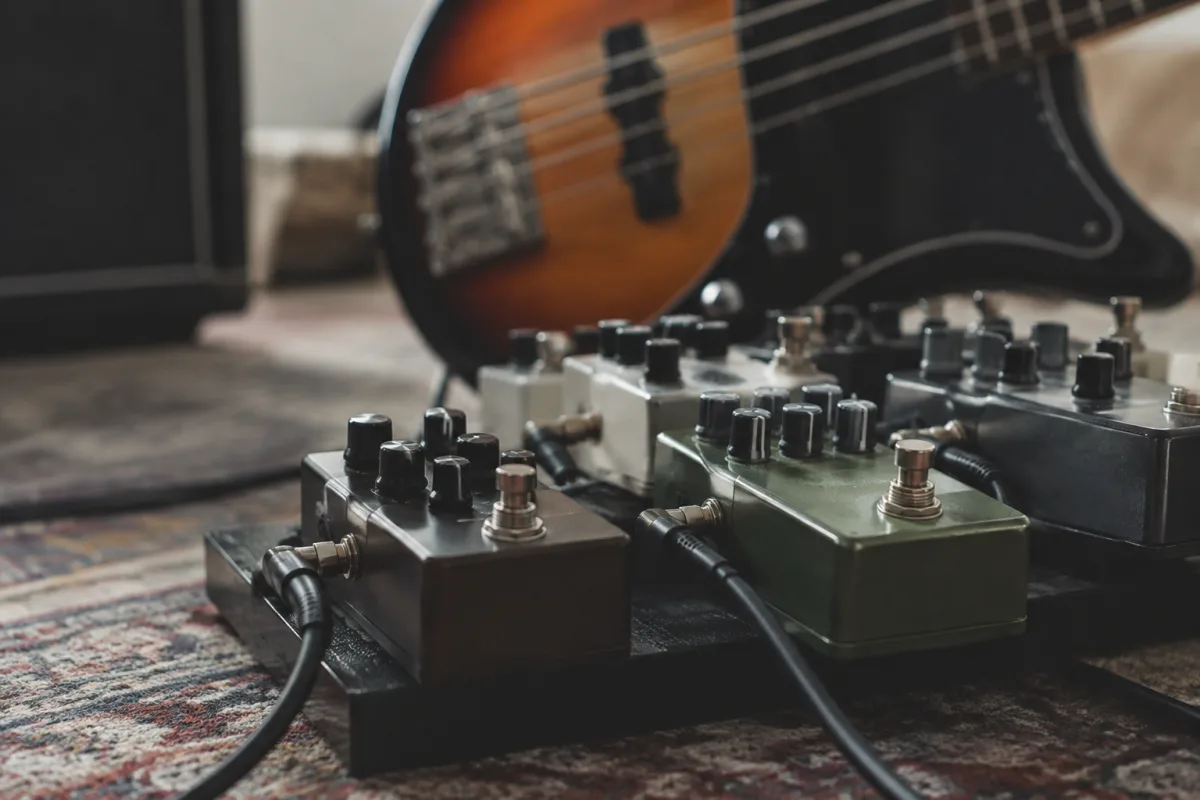
A loop and effects pedal transforms how bass players create music, enabling everything from ambient soundscapes to rhythmic accompaniment when playing solo. Whether you're a live performer, a session musician, a composer or a bedroom experimenter, these pedals unlock creative possibilities that traditional bass-only playing cannot achieve. This guide explores how looping and effects pedals work, which options suit different playing styles, and how to integrate them into your bass setup.
What Is a Loop Pedal and How Does It Work?
A loop pedal (or looper) records your playing in real time and plays it back continuously, allowing you to layer additional tracks on top. Press record, play your bass line, press stop—the bass line loops indefinitely whilst you play new parts over it. Most loop pedals offer variable loop length, overdubbing (recording additional layers), and a stop function that clears the loop and starts fresh. Some advanced loop pedals include rhythm section accompaniment (drums, metronome), multiple loop tracks that can be recorded and switched independently, and USB connectivity for archival.
Loop pedals revolutionised solo bass performance. A bass player can now construct an entire arrangement—rhythm section, harmonies, bass runs, percussion texture—all generated by their own playing. This capability appeals to busking musicians, bedroom composers, experimental artists and anyone seeking to expand beyond traditional band dynamics.
Effects Pedals for Bass: Expanding Your Sonic Palette
Bass effects pedals add colour, texture and character to your instrument's fundamental tone. The most essential effects for bass include:
Overdrive and Distortion
Overdrive and distortion add grit and aggression to your tone. Overdrive produces a warm, slightly saturated sound ideal for rock and blues; distortion creates heavier, more aggressive tones suited to heavy rock and metal. Bass-specific versions maintain clarity and low-end punch that general guitar effects may lose. These effects are foundational for many playing styles.
Compression
Compression evens out dynamic variations in your playing, smoothing aggressive plucking and boosting quieter notes. This creates a more consistent, professional sound, particularly in live settings where microphone placement and room acoustics vary. Compression is subtle but transformative for session work and studio recording.
Fuzz
Fuzz creates a thick, woollen, saturated distortion that sounds almost synthetic. Legendary bass players from the 1970s onward have used fuzz to create iconic tones. Modern fuzz pedals remain popular for experimental playing, reggae, dub and psychedelic styles.
Modulation Effects (Chorus, Flanger, Phaser)
These effects apply subtle, cyclical variations to your signal, creating shimmering or swirling textures. Chorus thickens your tone by simulating multiple bass players slightly out of sync; flangers and phasers create more experimental, spacious effects. These are less common in traditional bass playing but essential for experimental and progressive music.
Delay and Reverb
Delay repeats your signal at intervals, creating echoing effects. Reverb simulates the acoustic character of different spaces. Both effects add atmosphere and dimension. Delays are particularly useful with loop pedals—layered delays create evolving textures over repeating bass lines. Reverb adds depth and space, transforming a dry bass signal into something more ambient.
Synth and Octave Effects
These effects radically transform your bass tone. Octave pedals add frequencies one or two octaves above your playing, creating fuller, more complex tones. Synth effects convert your bass signal into synthesiser-like sounds, ranging from atmospheric to futuristic. These are popular in electronic music, funk, and experimental bass.
Combining Loop and Effects in Your Setup
| Setup Type | Components | Best For | Typical Cost |
|---|---|---|---|
| Looper Only | Single loop pedal | Solo busking, bedroom composition, minimal stage footprint | £60–£400 |
| Looper + Single Effect | Loop pedal + overdrive, fuzz or delay | Live performers wanting creative flexibility with minimal complexity | £120–£700 |
| Looper + Effect Chain | Loop pedal + 3–5 individual effects pedals | Session musicians, experimental performers, studio work | £300–£2000 |
| Integrated Multi-Effects | Single unit with looper and multiple effects built-in | Compact travel setup, simplified interface, streamlined workflow | £200–£1500 |
| Advanced Pedalboard | Dedicated pedalboard with multiple loopers, effects and expression controls | Professional performers, studio musicians requiring extensive sound shaping | £1000–£5000+ |
Choosing the Right Looper Pedal
Budget and complexity are the primary considerations. Entry-level single-loop pedals (£50–£120) record and playback one continuous loop—simple but effective. Mid-range loopers (£200–£600) add features like multiple loop slots, built-in rhythm accompaniment, undo/redo functions and expression pedal support. High-end dedicated loopers (£400–£1200) include extensive editing capabilities, USB connectivity, and professional-grade construction. Many bass players begin with a modest entry-level looper, then upgrade as their creative needs grow. Integrated multi-effects units that include looping (£200–£500) offer good value if you want looping plus effects in a single box, though they typically lack the deep looping features of dedicated loop pedals.
Effects Pedal Ordering and Signal Flow
The order in which effects process your signal matters significantly. Traditional signal flow runs: bass → compression → overdrive/distortion → modulation → delay → reverb → loop pedal → amplifier. However, creative ordering produces different results. Placing reverb before a looper creates evolving, atmospheric loops. Placing a loop pedal before effects means the looped bass line passes through effects each cycle, creating dynamic layering. Experiment with different configurations to discover what suits your music.
Practical Tips for Live Performance with Loopers and Effects
- Practise loop timing — tight, rhythmically accurate loops are essential; sloppy loops sound unprofessional and undermine your entire performance
- Use a footswitch controller — managing multiple pedals with your feet requires practice; many players add expression pedals or multi-pedal controllers for hands-free operation
- Simplify your setup for gigging — the more pedals you use, the more can go wrong; keep essential effects only when performing live
- Understand your amplifier's role — effects colours your tone but your amplifier delivers it; invest in quality amplification that complements your effects
- Use a power supply — battery-powered pedals fail mid-performance; a dedicated power supply keeps everything running reliably
- Protect your pedals — a pedalboard case protects expensive equipment during transport and touring
Studio Applications and Recording with Loop Pedals
Loop pedals aren't just for live performance—they're powerful compositional tools in the studio. Layer bass parts independently, record multiple takes, experiment with effects chains in real time. Many bass players use loop pedals during songwriting to quickly capture ideas, build arrangements and explore sonic possibilities without needing a full band. USB-enabled loop pedals allow direct recording to your DAW, streamlining the workflow and creating a bridge between traditional bass playing and digital recording.
Budget Guidance: From Entry-Level to Professional
A beginner can get started with a basic loop pedal (£60–£100) and explore looping without major investment. An intermediate player seeking creative flexibility might invest in a mid-range looper (£250) plus a quality overdrive or fuzz (£100–£200), totalling under £500. Professional musicians with established sounds and regular performance demands might build comprehensive pedalboards with multiple loopers, effects and expression controllers (£1000+). There's no single "correct" setup—only the configuration that matches your music, budget and creative ambitions.
Conclusion
Loop and effects pedals are transformative tools that expand how you perform, compose and record on bass. Whether you're a solo artist building layered soundscapes, a band member adding texture to your part, or a studio musician exploring sonic possibilities, these pedals offer creative freedom and professional sound quality. Start simple, experiment generously, and build your setup as your skills and artistic vision develop.


Comments