


Ibanez Bass Guitar article
Ibanez Bass Guitars: A Complete Guide
Ibanez has built a formidable reputation for designing bass guitars that prioritise playability and modern aesthetics.
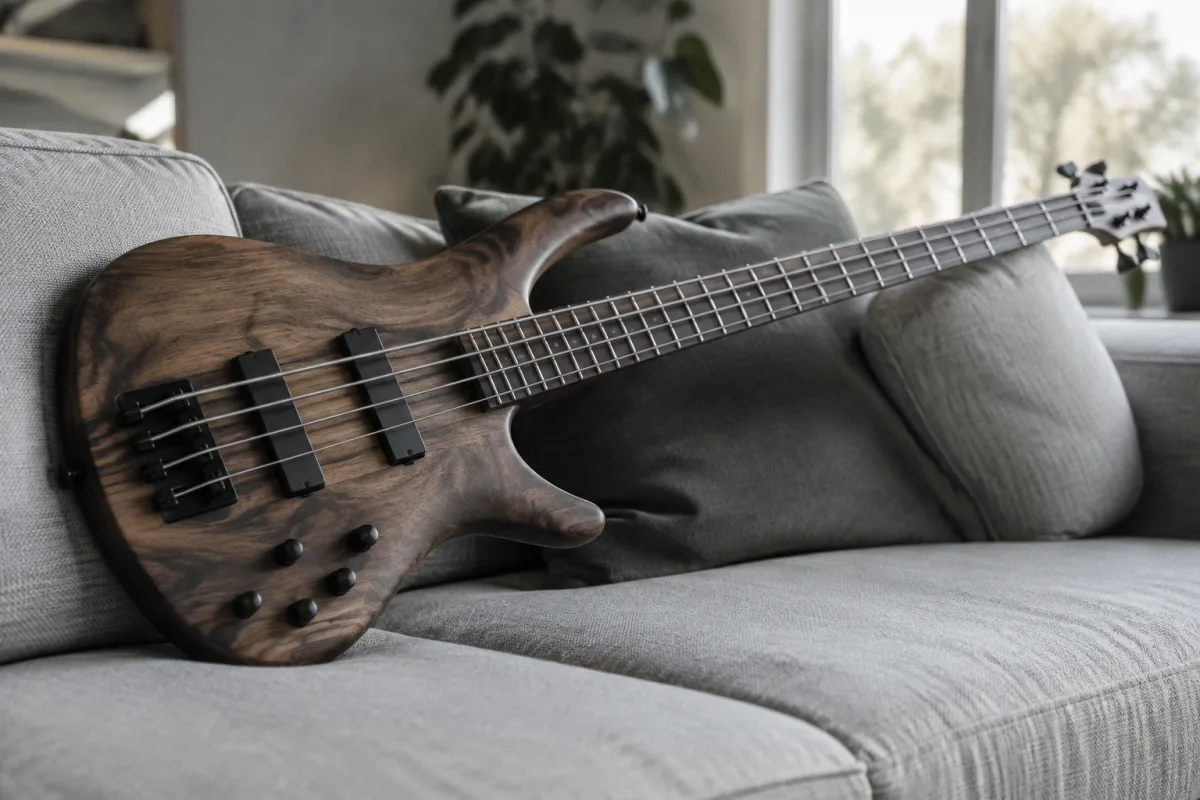
Ibanez Bass Guitar: Modern Design Meets Playability
Ibanez has built a formidable reputation for designing bass guitars that prioritise playability and modern aesthetics. Whether you're a session player, a touring musician, or someone picking up bass for the first time, you've probably encountered Ibanez bass guitars on professional recordings or stages. The brand has earned this respect through decades of focus on what bass players actually need: fast, comfortable necks, clear tones, and instruments that don't weigh a ton.
The Ibanez Bass Philosophy
Ibanez approached bass guitar design differently from heritage brands like Fender. Rather than copying vintage designs, they asked what modern bass players needed. The result was a focus on narrow neck profiles, lightweight body construction, and pickup configurations built for clarity and articulation. This philosophy has defined Ibanez bass guitars since the 1980s and continues today.
The brand divides into several lines. The Soundgear series is their flagship, with countless variations over the decades. The SR (Sound Gear) models feature their signature narrow body and thin neck—features that appeal enormously to players who value speed and comfort. At the budget end, the GSR range offers the Ibanez playability philosophy at genuinely affordable prices.
Body Design and Weight
One of Ibanez's strongest innovations is body design that prioritises comfort without sacrificing tone. Their bass bodies tend to be slightly narrower and considerably lighter than traditional designs. A typical Ibanez bass weighs 3-4 kg, compared to the 4-5 kg common with Fender Precisions. This matters during a three-hour gig when your shoulder starts complaining.
The contoured body shapes mean the bass sits comfortably against your body whether you're sitting or standing. The horn on the upper bout extends reasonably high, which assists when playing in the upper frets. These design choices are subtle, but they accumulate into an instrument that simply feels easier to play for extended periods.
The materials vary by model. Budget models use basswood, which provides adequate tone with decent durability. Mid-range instruments often feature mahogany or alder bodies, both of which produce warmer, fuller tones. Higher-end models may use maple tops on mahogany bodies, improving both tone and visual appeal.
The Signature Narrow Neck
Ibanez's narrow, flat neck profile is either loved or hated—there's rarely an in-between. For players with smaller hands or those coming from electric guitar backgrounds, these necks feel immediately comfortable. You can play faster with less finger stretch, and the reduced width makes bending and vibrato techniques more natural.
Players from a Fender Precision background sometimes find these necks uncomfortably tight initially, though most adapt within a few hours of playing. The neck width on an Ibanez SR is typically around 38-40mm at the nut, compared to 42mm on a Precision. That three-millimetre difference sounds small but significantly affects how the instrument feels.
The neck profile tends to be quite fast and thin front-to-back. This encourages quick position changes and makes complex fingering patterns easier. If you spend hours practising technique, this neck profile rewards your effort with genuine playability advantages.
Pickup Configurations and Tone
Ibanez uses various pickup combinations depending on the model. Entry-level basses often feature single PowerSpan dual coil pickups, which provide decent output and clarity without being particularly warm or coloured. Mid-range models frequently use dual Ibanez Custom or PowerSpan pickups, offering more articulation and definition.
Higher-end Ibanez basses sometimes feature Bartolini pickups, which are renowned for clarity, warmth, and articulation. The tonal character of an Ibanez bass generally leans toward brightness and definition rather than the warm, woody tone associated with Fenders. This suits rock, funk, and modern styles where clarity and punch matter.
Many Ibanez models include a 3-band EQ, giving you control over low, mid, and high frequencies. The active electronics provide a wider range of tonal adjustment than passive systems, though they require a battery. Some players prefer the simplicity of passive circuits, whilst others appreciate the flexibility active electronics provide.
Popular Ibanez Bass Models
The Soundgear SR line is Ibanez's core offering, with countless variations. The SR505 (five-string), SR700 (seven-string), and their counterparts in the SR1000 series sit at the heart of the range. These feature the signature narrow body, thin neck, and pickup configurations designed specifically for clarity. They're available in numerous finishes and pickup combinations to suit different preferences.
The Soundgear Prestige series represents the high end, with premium woods, superior craftsmanship, and premium hardware. These instruments command prices from £2,000 upwards but deliver exceptional playability and tone quality that justifies the investment for touring professionals.
The GSR series provides budget-conscious options, typically priced £300-£600. These retain the Ibanez design philosophy—narrow neck, lightweight body, focused tone—but with simpler hardware and more basic pickups. For beginners or players wanting Ibanez design without the premium price tag, the GSR represents excellent value.
The Talman series offers a different aesthetic with semi-hollow body construction. These provide slightly warmer, more resonant tones than solid Soundgears, appealing to jazz and R&B players wanting the Ibanez playability with a different tonal character.
Ibanez Bass Guitars for Different Styles
Rock and pop players benefit enormously from Ibanez basses. The articulate pickups cut through dense mixes, the lightweight bodies survive hours of gigging without exhaustion, and the playability allows complex patterns to sit comfortably. Whether you're playing punk power chords or intricate progressive patterns, an Ibanez adapts.
Funk players particularly favour Ibanez basses. The narrow neck facilitates precise finger placement for slap technique, and the bright, punchy tone sits perfectly in funk grooves. Many professional funk touring musicians use Ibanez as their primary stage instrument for exactly these reasons.
Metal and alternative players appreciate the aggressive styling of many Ibanez models combined with their playability. The tone character suits both clean and distorted applications, and the instrument's responsiveness helps fast, complex playing sit tight in the mix.
Jazz and fusion players have embraced Ibanez, particularly the higher-end Prestige models and Talman semi-hollow options. The clarity of tone supports jazz's emphasis on articulation, and the playability doesn't hinder complex jazz harmonic exploration.
Playability Across Skill Levels
Beginners starting on an Ibanez bass find the narrow neck and lightweight body encouraging. The instrument feels less tiring to hold for extended practice sessions. The frets are typically well-dressed, and the setup comes acceptable from the factory. This makes initial learning less frustrating than struggling with a poorly adjusted instrument.
Intermediate players discover that the narrow neck opens up new technical possibilities. Techniques like fast position changes and complex fingerings become more natural. The active electronics on many models provide tonal flexibility that rewards experimentation.
Advanced players value Ibanez basses for their responsiveness and precise playability. The instruments don't restrict what you can achieve technically. Professional touring musicians choose Ibanez because the playability never holds them back, even during demanding performances.
Price Points and Value
Entry-level GSR basses start around £300-£400, representing genuinely good value for a quality instrument. Mid-range Soundgear models typically run £700-£1,200, offering superior build quality and tonal flexibility. Upper-level Soundgear basses start around £1,500, with Prestige models exceeding £2,000.
The used market for Ibanez basses is active. You can often find solid second-hand examples for 40-60% of retail prices. Ibanez basses hold up well to regular use, so purchasing used is a sensible way to get more guitar for your money.
Five-string Ibanez basses command a modest premium over four-string models, typically £100-£300 more depending on the range. Six-string options are available at higher price points. If you need a specific configuration, Ibanez likely offers it somewhere in their range.
Comparing Ibanez to Alternative Bass Guitars
Fender Precision basses represent the vintage aesthetic—warmer tone, heavier bodies, thicker necks. If you prefer that classic tone and don't mind the weight, Fenders are brilliant. But if you want modern playability and lighter weight, Ibanez better suits your needs.
Musicman basses occupy similar modern territory to Ibanez, with excellent build quality and playability. Musicmans command premium prices (typically £1,500+) and offer slightly different tonal character—often warmer than Ibanez. If budget allows, auditioning both provides perspective on the subtle differences.
Warwick basses cater to players prioritising tone quality and are known for warm, woody character. Warwicks cost considerably more than comparable Ibanez models and represent a different design philosophy focused on traditional tonal excellence.
Finding Your Ibanez Bass
If you value playability and modern aesthetics, Ibanez basses deserve serious consideration. Start with your budget: GSR models offer Ibanez playability at accessible prices; mid-range Soundgears provide balance between cost and capability; premium Prestige instruments suit touring professionals wanting maximum quality.
Try an Ibanez bass in person if possible. The narrow neck is genuinely distinctive—it either feels immediately right or requires adjustment. Your hand size, playing style, and preferences matter more than any specification. The instrument needs to feel comfortable in your hands and inspire confidence.
Consider whether you need a four, five, or six-string model. Ibanez offers all options, though five and six-string variations cost more. Many modern players appreciate five-string versatility without the complexity of six-strings. Think practically about what you'll actually use.
Maintenance and Durability
Ibanez bass guitars are built to endure professional touring. The construction quality means they resist wear and tear, and the generally lighter weight means less stress on the wood. With proper maintenance, an Ibanez bass remains playable and beautiful for years or decades.
Regular maintenance—cleaning, string changes, occasional fret polish—keeps your Ibanez bass performing optimally. Replacement parts are readily available through music shops and online retailers. The robust used market means finding spares for older models remains straightforward.
Conclusion
An Ibanez bass guitar offers modern playability, thoughtful design, and clear tone at various price points. Whether you're exploring bass for the first time or a touring professional, Ibanez has designed an instrument for you. The signature narrow neck and lightweight body philosophy might seem like a gimmick, but once you experience how these features improve comfort and technique, you'll understand why Ibanez remains a favourite among serious bass players worldwide.





Comments