


Fender Bass Guitar article
Fender Bass Guitar for Beginners: A Complete Guide
Fender Bass Guitar for Beginners: A Complete Learning Guide
The moment I first held my brother's bass guitar and actually played a proper bass line—not fumbling around, but genuinely playing something that sounded like music—I understood why bass players seem to have a secret language. It's not that bass is difficult; it's that once you understand what it's doing, you start hearing music completely differently. You can't unhear the bass line. It becomes the thing holding everything together.
If you're thinking about learning bass guitar, a Fender is a sensible place to start. Not because it's the only choice, but because Fender basses are built by a company that's been thinking about how bass guitars should work for more than seventy years. They're reliable, they sound honest and the playing experience is generally rewarding rather than frustrating. That matters when you're learning.
Starting Out: What You Need to Know
Learning bass isn't the same as learning guitar, even though they look related. Bass has a different role in music. While guitar tends to play chords and melodic lines, bass plays rhythmic patterns that lock together with the drums to form the foundation of a song. The technique is different. The musical thinking is different. And honestly, if you're drawn to bass specifically, that's the kind of player you should be—someone who loves that foundational role rather than someone who couldn't afford a guitar and settled for bass instead.
That mindset matters because it affects your practice and your patience when you're learning. Bass rewards focus on rhythm and locked-in playing more than it rewards spectacular speed or complex melody. If that appeals to you, bass is going to make sense in a way it might not for someone who really wanted to play lead guitar.
Choosing Your First Fender Bass
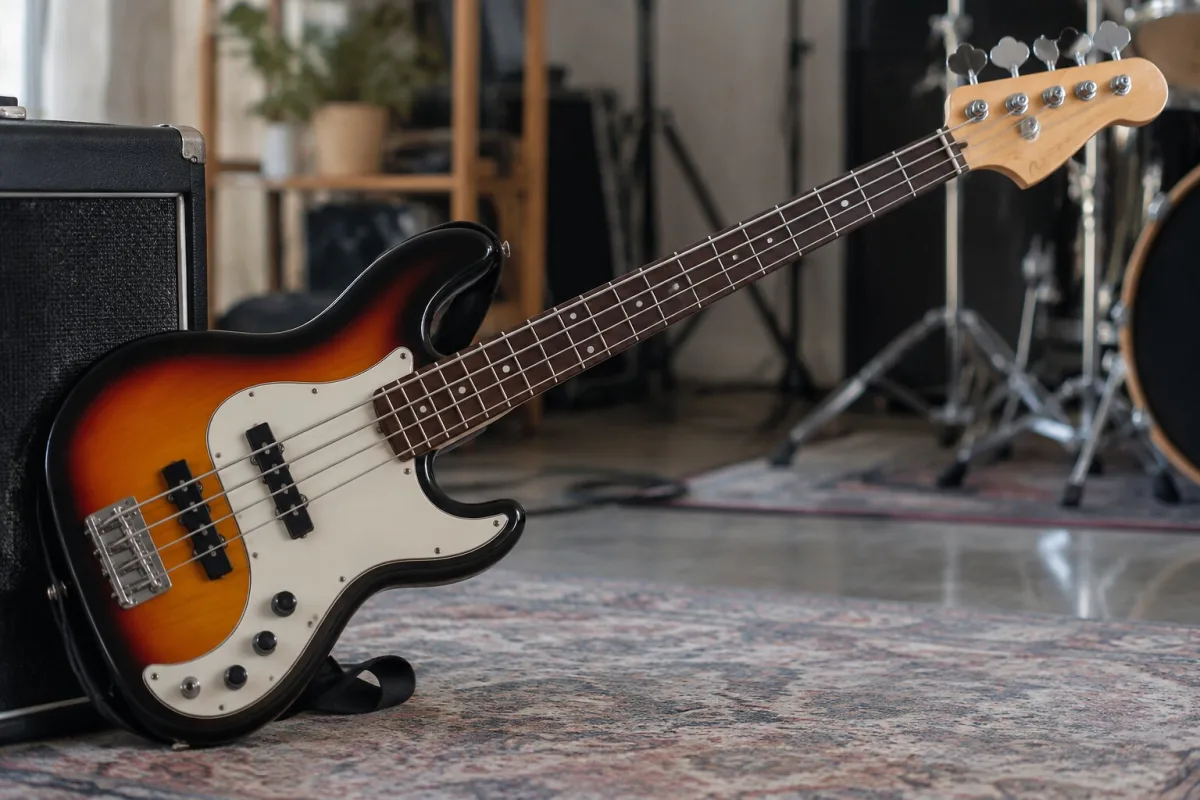
When you're buying your first bass, you have some legitimate options within Fender's range. The Precision Bass is the most straightforward choice. Its split-coil pickup produces a focused, punchy sound that sits perfectly in a band mix. The neck is broader, which some beginners find less comfortable initially, but that extra space between strings actually helps prevent accidentally hitting two strings when you mean to hit one. The controls are simple—just volume and tone—so there's nothing complicated to confuse you.
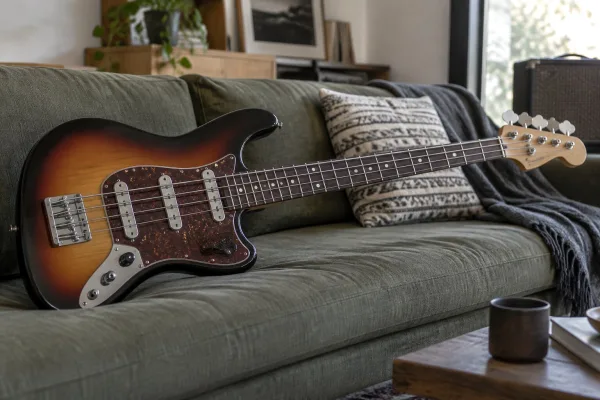
The Jazz Bass offers more tonal flexibility through its two single-coil pickups with separate volume controls. If you're curious about sound design and want to experiment with blending different tones, the Jazz Bass rewards that exploration. The neck is narrower, which some players find more comfortable, though it's not universally true. The pickup switching also means more things to think about while you're learning, which can be either helpful or distracting depending on your learning style.
The Mustang Bass's 30-inch short scale genuinely matters if you have smaller hands or prefer a shorter reach. There's no shame in that; the short scale is a real advantage, not a compromise. The playing feel is more elastic, the reach is more forgiving, and if that's what lets you practise comfortably, that's the right choice for you.
Budget-wise, a Fender Squier bass—the company's entry-level line—costs £150–£250 and is a legitimate starting point. A Player-series Precision or Jazz Bass costs £400–£500 and represents a significant step up in build quality. If possible, save for the Player series; the instrument will encourage you to play more because it actually sounds and feels good.
The Setup That Changes Everything
Here's something that nobody talks about enough: the moment your bass arrives, take it to someone who knows how to set it up properly. You're not buying extra accessories or being sold something you don't need. You're buying playability, and playability is everything when you're learning.
Setup involves adjusting the neck relief—whether the neck is perfectly straight—adjusting the string height (called action), and adjusting the pickup height. A bass with high action is genuinely hard to play; your fingers get tired quickly and you don't develop muscle memory properly because you're fighting the instrument. A properly set up bass practically plays itself by comparison.
Professional setup costs £50–£150, depending on what work is needed. Compare that to the price of quitting bass after three months because your fingers hurt and playing feels impossible. The setup isn't an extra expense; it's the difference between success and frustration.
Building Your Practice Habit
Learning bass is about building a practice habit, not about being naturally talented. Thirty minutes a day, consistently, teaches you more than three hours once a week. Your fingers need time to build calluses and muscle memory. Your brain needs time to internalise rhythm patterns. Consistency beats intensity, every single time.
Start with simple exercises: scales, basic chord shapes, simple bass lines in the styles you want to play. A good teacher or online course (there are genuinely excellent free resources on YouTube) will give you structure. Without structure, practice becomes aimless noodling, which is fun but doesn't build skills.
Expect your fingers to hurt initially. That's not a sign you're doing something wrong; it's just part of building calluses. The pain decreases dramatically after a few weeks. By two months of consistent practice, you'll barely notice the sensitivity at all.
Understanding Your Bass as You Learn
As you practise, you'll start noticing things about how your bass responds. You'll learn that playing with a pick sounds different from playing with your fingers. You'll discover that how hard you hit the strings affects the tone as much as the amplifier settings do. You'll understand why the neck pickup on a Jazz Bass sounds rounder than the bridge pickup. These aren't random details; they're your bass teaching you how to play it.
The more you understand how your instrument works, the more control you have over your sound. A Fender bass makes this learning accessible because it's an honest instrument. It doesn't hide behind complexity or marketing hype. It responds to how you play it, and that direct feedback accelerates your learning.
Your First Amplifier
You'll need an amplifier to hear yourself properly. A modest practice amplifier costs £50–£150 and is all you need to start. Something in the 15–25 watt range with headphone output is ideal; it's loud enough to hear all the details of your playing without deafening your household. As you develop, you might want something more powerful, but for learning, a small practice amp is perfect.
The Bigger Picture
Learning bass is joining a tradition of players who understand that music is built on foundation, not decoration. Every great band has a bass player who got this. That player is probably not the one everyone's watching, but they're the one everyone's listening to, even if they don't realise it. That's the role you're stepping into.
Conclusion
A Fender bass guitar is an excellent starting point for learning bass. Choose a Precision if you want straightforward, authoritative tone; choose a Jazz Bass if you want tonal flexibility; choose a Mustang if you prefer short scale. Budget for the best instrument you can afford, invest in professional setup the moment it arrives, commit to consistent practice and give yourself permission to enjoy the learning process. You're not on a timeline to impress anyone. You're building a skill and a practice that can last a lifetime. Start with a decent instrument, set yourself up properly and enjoy the journey.




Comments