
Fender Bass Guitar Amplifier article
The Complete Guide to Fender Bass Guitar Amplifier
Fender bass amplifiers deliver the powerful, reliable tone that professionals depend on. Learn which model suits your playing style and gigging scale.
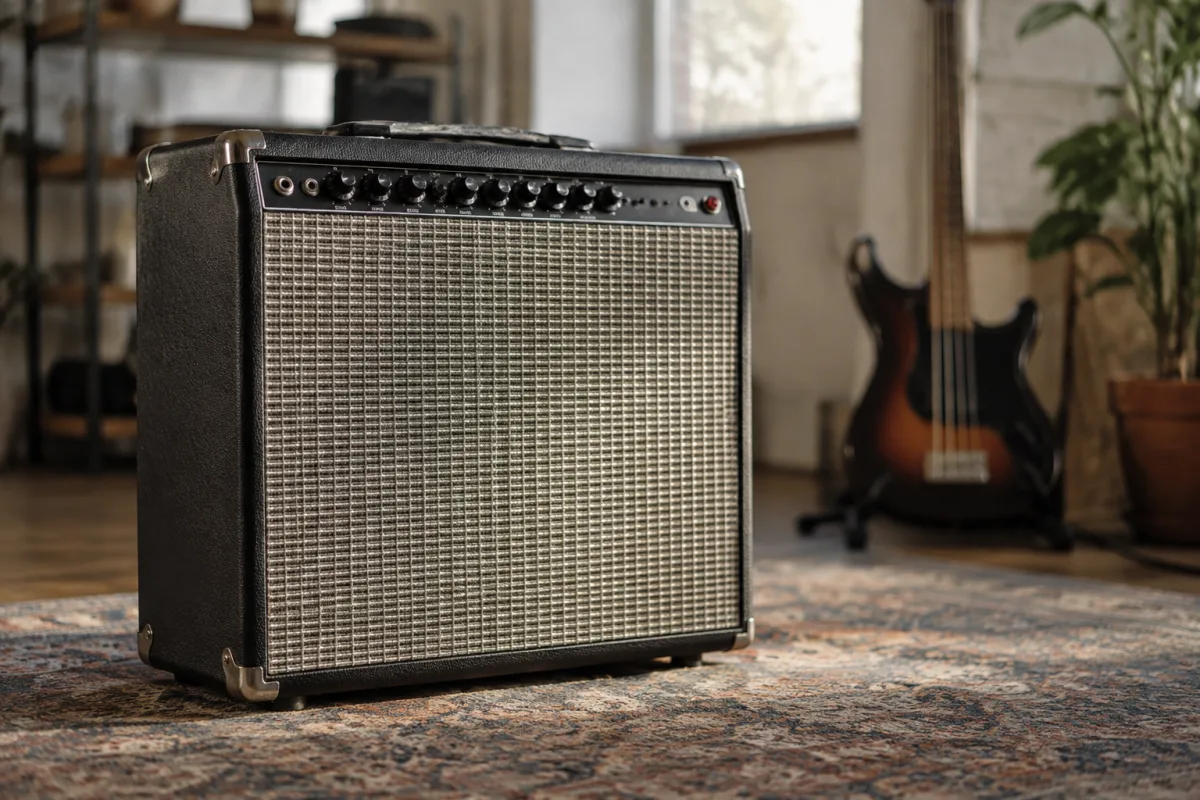
Fender bass amplifiers represent a substantial portion of professional touring and studio bass equipment worldwide. With a heritage stretching back to the company's pioneering work with electric bass amplification, Fender has built a reputation for rugged, reliable amplifiers that deliver the authoritative low end that professional bass playing demands. Whether you're establishing your first gigging rig or upgrading to professional-level equipment, understanding Fender's bass amplifier offerings and what distinguishes them is essential knowledge.
Fender's Bass Amplifier Heritage
Fender's involvement in bass amplification traces back to the early electric bass days when Leo Fender and his team developed amplifiers specifically designed to handle the lower frequencies that electric bass produces. The Fender Bassman, introduced in 1952, became a legendary amplifier—its warm, powerful tone influenced generations of bass players and remains a benchmark against which modern amplifiers are judged.
Today's Fender bass amplifiers build on this heritage whilst embracing modern construction methods and components. The company recognises that modern bass players require amplifiers capable of diverse tonal demands, from aggressive slap-bass punch to warm jazz-fusion tone. Fender's product range reflects this recognition.
Fender's Current Bass Amplifier Models
Fender manufactures bass amplifiers across multiple power and format options. The Rumour series comprises compact, portable amplifiers suitable for smaller venues, practice, and recording. The Bassman series encompasses larger head-and-cabinet configurations for full-scale gigging and touring. The Rumble series occupies the middle ground, offering balanced size and output suitable for working musicians.
Each series comprises several wattage options—Rumble models range from 40W to 500W, allowing players to choose appropriate power for their gigging scale. A 40W model suffices for small clubs and studio work; 100W–200W suits mid-sized venues; 300W+ is appropriate for large theatres and outdoor festivals.
Tube vs. Solid-State Amplifiers
Fender offers both tube (valve) and solid-state bass amplifiers. Tube amplifiers produce warm, fat tones with natural compression at high volumes—the valves' nonlinear response imparts musical character that many bass players find irresistible. Solid-state models deliver clean, accurate amplification with more headroom and reliability, though they typically lack the tonal warmth that tubes provide.
Tube amplifiers require more maintenance—valve replacement every few years and occasional servicing to keep them operating optimally. Solid-state amplifiers are more roadworthy and require minimal maintenance beyond occasional cleaning. Most professional gigging bass players favour tubes despite the maintenance requirements, valuing the tone character and natural compression over reliability.
Combo vs. Head-and-Cabinet Configuration
Fender manufactures both integrated combo units (amplifier and speaker built into a single cabinet) and head-and-cabinet configurations (separate amplifier head connected to one or more external cabinets). Combos offer portability—a single unit provides everything needed for small gigs or practice. Heads and cabinets provide flexibility; you can mix amplifier heads and cabinets from different manufacturers to achieve exactly the configuration desired.
Touring professionals typically favour heads and cabinets because they allow transporting different cabinet combinations depending on venue size. A 500W Fender head can drive a small cabinet for intimate venues or large cabinets for arena shows. This flexibility justifies the increased setup complexity.
Wattage and Sound Pressure
Fender bass amplifier wattage ranges from 40W entry-level models to 500W+ professional configurations. Higher wattage doesn't automatically mean louder sound—speaker efficiency matters equally. A 100W head driving an efficient cabinet might sound louder than a 200W head driving an inefficient one.
For touring, 300W+ provides sufficient headroom to handle dynamic playing without pushing the amplifier to maximum output, which improves tone and reliability. Home use and studio recording require far less power—40W combos deliver adequate volume for bedrooms and small practice spaces.
Tone Controls and Effects Integration
Fender bass amplifiers incorporate a spectrum of tone controls allowing comprehensive tone shaping. Standard three-band EQ controls (bass, mid, treble) are supplemented on many models with contour controls and compression circuits. Many Fender models include on-board effects such as overdrive, distortion, and modulation.
Modern Fender models often include Bluetooth connectivity and USB inputs, allowing direct recording from the amplifier to computer audio interfaces. Some models feature digital amp modelling, emulating the tone character of classic Bassman models or other legendary amplifiers. This technology transforms Fender amplifiers into versatile instruments for both live performance and home recording.
Cabinet Design and Speaker Configuration
The speaker cabinet's design profoundly influences tone and frequency response. Fender manufactures bass cabinets with 1x15-inch, 2x10-inch, 4x10-inch, and 8x10-inch speaker configurations. Larger drivers (15-inch) produce deeper, warmer tones with more sustain. Smaller drivers (10-inch) produce brighter, punchier tones with faster attack.
Experienced bass players often combine different cabinet sizes—pairing a 1x15 cabinet (for warmth and bottom end) with a 2x10 cabinet (for punch and clarity) creates a hybrid configuration that captures both tonal characteristics. Fender offers cabinets at various price points, allowing flexible configuration across budget constraints.
Reliability and Durability
Fender bass amplifiers are famed for durability. Professional touring bassists rely on Fender equipment because it survives years of intensive use—nightly gigs, transport by tour bus, setup/teardown cycles. The power transformers and output transformers (on tube models) are built ruggedly, and the cabinet construction withstands constant physical handling.
Used Fender bass amplifiers maintain excellent resale value and continue functioning reliably decades after manufacture. A 1970s Bassman amplifier is as likely to function perfectly today as it was 50 years ago. This durability partially explains why Fender equipment remains so sought-after—used equipment represents proven reliability.
Comparing Fender to Competitors
Ampeg manufactures bass amplifiers with distinctly warm tonal character, particularly favoured in jazz and funk contexts. Markbass produces ultra-lightweight, compact amplifiers optimised for portability. GK (Gallien-Krueger) manufactures amplifiers emphasising clean, modern tone with exceptional headroom. Fender occupies the middle ground—offering balanced tone, portability, and features at prices competitive with these alternatives.
For many bass players, Fender's heritage and proven touring reliability make the brand an obvious choice. For others, Ampeg's warmth or Markbass's portability represents a better fit. The choice hinges on personal tonal preference and practical requirements.
Conclusion
Fender bass amplifiers deliver the power, reliability, and tone that professional bass players depend on. With a heritage stretching back to electric bass's golden age and modern features addressing contemporary needs, Fender remains an obvious choice for beginning and professional musicians alike. Whether you're gigging small clubs, recording in studios, or playing large venues, Fender bass amplifiers offer the authoritative low end and durability that define professional bass amplification.


Comments