


Direct Box Bass article
The Complete Guide to Direct Box Bass
Direct boxes for bass solve connectivity between high-impedance instruments and low-impedance audio infrastructure. Understand impedance matching, live performance setup, and choosing the right direct box.
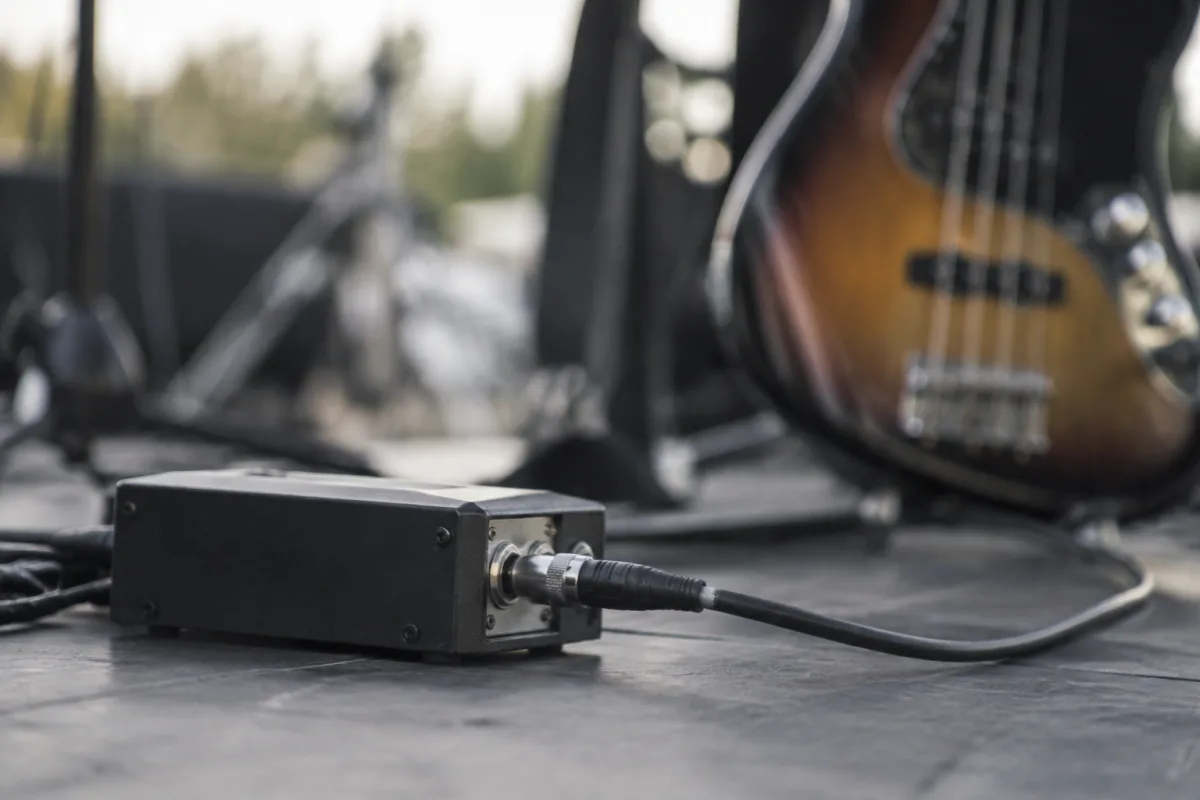
Direct Box Bass: Connecting Bass to the PA System
A direct box for bass allows bass guitarists to connect high-impedance instruments directly to microphone inputs on mixing consoles or interfaces. Direct boxes bridge the impedance mismatch between low-impedance microphone inputs and high-impedance instrument outputs, ensuring optimal signal transmission to the PA system, recording interface, or mixing console. For live performance, studio recording, and rehearsal venues, direct boxes simplify connectivity and ensure clean, powerful bass signal without unwanted distortion or signal degradation.
Understanding Impedance and Signal Compatibility
Bass guitars produce high-impedance signals suitable for instrument amplifiers. Mixing consoles and recording interfaces employ low-impedance microphone inputs designed for dynamic microphones and professional audio equipment. Connecting a bass guitar directly to a microphone input without proper impedance matching risks signal degradation, noise, and lost tonal character.
A direct box contains a transformer that steps down the impedance from instrument level to microphone level. This conversion preserves the bass signal whilst ensuring compatibility with professional audio infrastructure. The result is clean, powerful bass signal ideal for mixing, recording, or reinforcement.
Types of Direct Boxes for Bass
Direct boxes come in several varieties:
- Passive Direct Boxes — Transformer-based designs requiring no power supply. Simple, reliable, and affordable. Passive boxes work excellently with bass, handling high signal levels without breakup.
- Active Direct Boxes — Powered designs using electronic circuitry rather than transformers. Active boxes offer impedance conversion with additional features like low-cut filtering and level control.
- Combo Boxes — Units combining microphone and instrument inputs, useful for recording situations where both signal sources require connectivity.
- Isolation Transformers — Advanced designs offering ground-loop elimination alongside impedance conversion, reducing hum and noise from electrical grounding issues.
- Bass-Specific Direct Boxes — Designs optimised specifically for bass, with tailored frequency response and handling characteristics suited to bass guitar tone.
Why Bass Players Need Direct Boxes
Live performance requires connecting bass to the PA system whilst maintaining stage monitoring through the bass amplifier. A direct box splits the bass signal, sending one feed to the mixing console for house reinforcement whilst leaving the amplifier signal independent. This ensures the bass player hears their monitor mix whilst the audience receives balanced house signal.
Studio recording benefits similarly. Recording interfaces typically offer instrument inputs unsuitable for bass guitar. A direct box provides proper impedance matching and often includes output buffering, ensuring the bass signal reaches the recording interface cleanly and powerfully.
Rehearsal venues often lack proper bass connectivity. A direct box allows any bass to integrate seamlessly with the venue's audio infrastructure.
Key Features for Bass Direct Boxes
Several features distinguish quality bass direct boxes. A ground-lift switch eliminates hum caused by ground loops—critical in live venues where multiple grounded devices create noise. Low-cut filtering removes unwanted subsonic rumble, tightening the bass signal. Output impedance matching ensures optimal signal strength regardless of mixing console impedance.
For bass specifically, robust handling of strong signals matters. Many basses produce high output levels, particularly active models. A quality direct box accepts these levels without compression or distortion, preserving dynamic range.
Bypass switching allows connecting or disconnecting the direct box without stopping playback—useful in live situations where flexibility matters. Some models feature switchable attenuation, allowing level adjustment to match mixing console expectations.
Passive vs Active Direct Boxes for Bass
Passive direct boxes employ transformers, requiring no external power. They handle bass signals excellently, managing high output levels without breakup. Transformers introduce subtle colouration—some players value this added warmth. Passive designs are simple, durable, and reliable.
Active direct boxes offer features passive models cannot: variable input levels, low-cut filtering switchability, and phantom power independence. Electronic circuitry allows precise impedance matching. However, active boxes introduce noise if battery power diminishes.
For bass, many professionals prefer passive designs. The robust handling of high signal levels and transformer warmth suit bass character well. Active boxes excel for versatility and feature richness.
Connection Topology and Live Sound Integration
Stage connection topology typically involves a bass amplifier with an XLR output connected to a direct box or microphone. The direct box's output connects via microphone cable to the mixing console. The bass amplifier signal provides independent stage monitoring whilst the direct box feeds the house system.
Alternatively, some amplifiers include built-in direct outputs eliminating the need for separate equipment. However, true direct boxes offer impedance conversion and feature sophistication that amplifier outputs occasionally lack.
Direct Box Selection for Different Scenarios
Small venues and rehearsal spaces benefit from affordable passive direct boxes. The simple design handles typical scenarios reliably. Large venues require robust direct boxes with ground-lift switches and output impedance matching.
Studio recording particularly values active direct boxes with variable levels and low-cut filtering. These features optimise the recorded bass signal. Touring musicians invest in professional-grade direct boxes with isolation transformers, protecting against electrical grounding issues.
Cable and Connectivity Considerations
Use quality microphone cables connecting the direct box to mixing consoles. Thin or poor-quality cables introduce noise and signal degradation. Professional-grade cables maintain signal integrity over long runs.
Instrument cables connecting the bass to the direct box should be shielded to minimise noise. Shorter runs reduce noise susceptibility. Ground the bass amplifier and mixing console properly—this eliminates ground loop hum that no direct box can entirely resolve if grounding remains improper.
Balancing Direct Signal and Amplifier Tone
The direct box feeds the house system whilst the bass amplifier provides independent monitoring. This dual approach allows tonal independence—the amplifier can prioritise punchy stage tone whilst the direct box captures the bass purely. Many professionals adjust EQ differently between the direct signal and amplifier output, optimising each for its intended purpose.
Budget Considerations and Investment
Quality direct boxes range from £50 for basic passive models to £200+ for professional-grade isolation transformers. Entry-level passive boxes handle most situations reliably. Professional touring situations justify investment in robust, feature-rich models.
The Bottom Line
Direct boxes for bass solve connectivity challenges between high-impedance instruments and low-impedance audio infrastructure. Whether performing live, recording, or rehearsing, a quality direct box ensures clean, powerful bass signal transmission. The investment in proper connectivity equipment pays dividends through improved sound quality and simplified, reliable operation across diverse performance situations.



Comments