
DI Guitar Box article
The Complete Guide to Di Guitar Box
A DI guitar box converts your guitar signal for professional audio equipment, enabling quality recording and live performance. Discover how DI boxes work and how to integrate one into your setup.
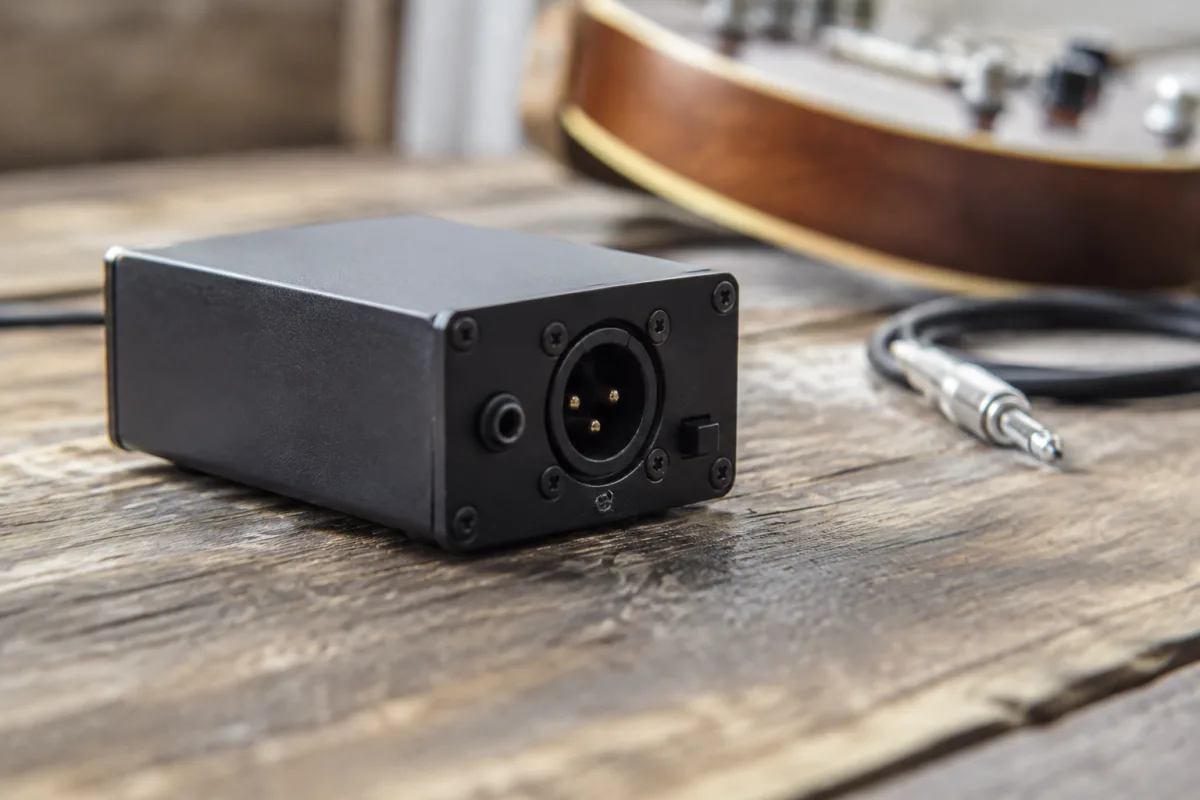
A DI guitar box—Direct Injection box—is an essential tool for guitarists and bass players who record in studios, perform live on modern sound systems, or need to connect their instruments directly to mixing consoles and audio interfaces. A DI guitar box converts a high-impedance guitar signal into a low-impedance signal suitable for balanced XLR cables and professional audio equipment, ensuring clean transmission over long distances and seamless integration with studio and live sound systems. Whether you are a session musician, working guitarist, or anyone recording at home with quality sound in mind, understanding DI guitar boxes will improve your recording and performance setup. This guide explores what a DI guitar box is, how it works, and how to choose one that suits your needs.
What Is a DI Guitar Box?
A DI guitar box is a small electronic device that sits between your guitar (or bass) and a mixing console, audio interface, or amplifier. Guitar signals are high-impedance signals that travel poorly over long cable runs and do not interface well with professional audio equipment, which expects low-impedance, balanced signals. A DI guitar box performs impedance transformation, converting your high-impedance guitar output into a low-impedance signal compatible with XLR cables and professional gear.
The result is cleaner signal transmission, less susceptibility to noise and interference, and the ability to send your guitar signal to multiple destinations simultaneously. Many DI guitar boxes also include amplifier emulation and tone-shaping features, adding versatility beyond basic impedance matching.
Impedance and Signal Quality
Understanding impedance helps explain why a DI guitar box matters. A guitar's output is high-impedance (typically 10,000 ohms or higher), which means the signal is relatively weak and degrades over long cable runs. Professional audio equipment—mixing consoles, preamps, and audio interfaces—expect low-impedance, balanced signals (typically 50 ohms). Sending a high-impedance signal into low-impedance equipment causes signal loss, noise, and sonic degradation.
A DI guitar box steps down the impedance through a transformer or active circuitry, delivering a clean, strong signal suitable for professional equipment. This transformation is essential for quality recording and live sound.
Passive vs. Active DI Guitar Boxes
A passive DI guitar box uses a transformer to handle impedance conversion without requiring batteries or external power. Passive DI guitar boxes are simple, reliable, and do not introduce noise or distortion. However, they may require input from a reasonably hot signal (loud guitar or bass) to deliver full output level.
An active DI guitar box uses battery or phantom power to amplify the guitar signal during impedance conversion. Active units offer more flexible level control, greater output, and cleaner tone on instruments with weak signals. They also typically include additional features like low-cut filters and gain adjustment.
For bass guitar, an active DI guitar box is often preferred because it provides additional control and head room. For electric guitar, either passive or active works, depending on your specific setup and preferences.
DI Guitar Box Features and Specifications
A quality DI guitar box includes several key features. A ground lift switch eliminates hum caused by ground loops between your guitar cable and the XLR output. An input pad allows you to reduce the level of a hot signal if needed. A low-cut (high-pass) filter removes rumble and low-frequency noise that can muddy your tone in a mix.
Output metering—via an LED or VU meter—lets you see signal level and verify you are sending an appropriate level to the mixing console or audio interface. Some DI boxes include thru-outputs, which allow you to send your original guitar signal to an amplifier whilst simultaneously sending the DI'd signal to a mixing console. This split approach lets you maintain your amplifier tone while capturing a studio-quality signal.
Mono vs. Stereo DI Guitar Boxes
Most DI guitar boxes are mono, accepting a single guitar or bass input and producing a single balanced XLR output. Some stereo DI guitar boxes accept two independent instruments, allowing a guitarist and bass player to share a single DI box on stage or in the studio. Stereo models are less common and typically more expensive, but offer convenience if you regularly work with multiple instruments simultaneously.
Using a DI Guitar Box in the Studio
In a recording studio, a DI guitar box connects your guitar or bass directly to an audio interface's microphone preamp via an XLR cable. The DI guitar box sits near your instrument, whilst the audio interface (with the XLR input) sits at your computer. This approach eliminates the need to mic an amplifier, reducing noise and giving you full control over your tone after recording through re-amping or amp simulation plugins.
Many session guitarists and producers capture both an amplifier microphone and a DI signal simultaneously. The DI signal serves as a backup, allows tone adjustment in post-production, and provides flexibility if the amplifier mic picks up unwanted noise.
Using a DI Guitar Box Live
On stage, a DI guitar box sends your signal to the front-of-house (FOH) mixing console, allowing the sound engineer to balance your tone with the rest of the band. A DI thru-output lets you run your amplifier independently, so you hear your tone in your own monitor whilst the audience hears the DI'd signal through the main speakers.
This setup decouples your on-stage amplifier from the main sound system, giving the sound engineer complete control over what the audience hears without requiring you to move or adjust your amplifier. Many professional touring musicians use this approach.
DI Guitar Box and Amplifier Combinations
Some DI guitar boxes include built-in amplifier emulation—digital modelling of classic amplifiers and cabinets. These combination units allow you to send a processed, amp-like signal to a mixing console whilst feeding your instrument's raw signal to your on-stage amplifier. This hybrid approach captures authentic amplifier tone on stage whilst providing a clean, controllable signal to the front-of-house system.
Choosing a DI Guitar Box
When selecting a DI guitar box, consider whether your primary use is studio recording, live performance, or both. For studio, a passive DI is often sufficient; for live use, an active DI with ground lift and input metering provides more control. Verify that the DI guitar box includes features relevant to your setup: thru-outputs if you run an amplifier, input pad if you use hot instruments, and low-cut filter if you want to remove unwanted low frequencies.
Budget options exist for under £50, whilst professional-grade units run £100–300. The investment in a quality DI guitar box pays immediate dividends in signal quality, flexibility, and reliability, especially if you record regularly or perform live.
DI Guitar Box as a Studio and Live Essential
A DI guitar box is a fundamental tool for modern musicianship. Whether recording at home, in a professional studio, or performing at a venue using a sound system, a quality DI guitar box ensures your instrument's signal arrives clean, professional, and ready to integrate seamlessly with modern audio equipment. It is an indispensable piece of gear for serious guitarists and bass players.


Comments