
Cool Guitar Pedals article
The Complete Guide to Cool Guitar Pedals
Cool guitar pedals go beyond the basics, unlocking creative possibilities for your tone. From modulation to pitch shifting, explore the effects that transform how you play.
What Makes a Guitar Pedal Cool?
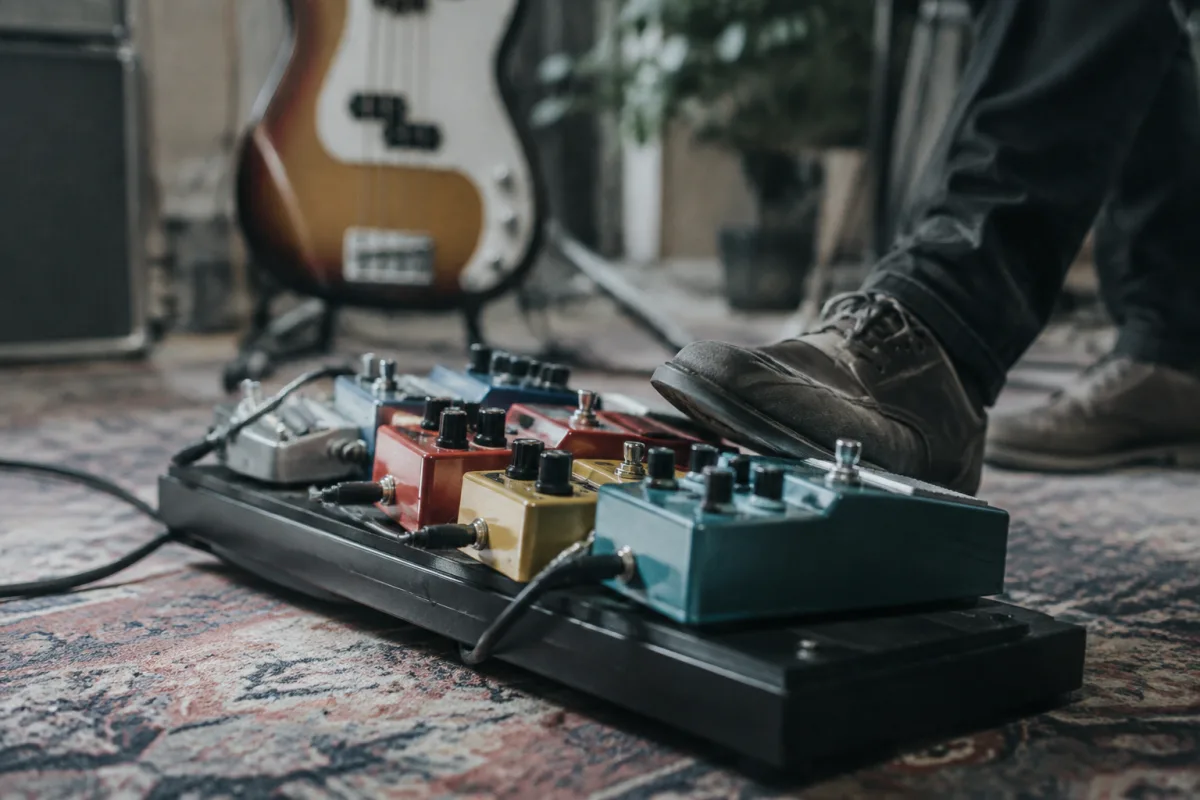
Cool guitar pedals are the modern musician's secret weapon—the effects that go beyond the obvious and unlock a world of sonic creativity. Whilst every bass guitarist knows about distortion and reverb, cool guitar pedals are the ones that make listeners pause and ask, "What was that sound?" They're the pedals that sit on professional pedalboards not just for utility, but for the sheer joy of exploration.
The difference between a standard pedal and a cool guitar pedal comes down to character. A cool guitar pedal does something distinctive, something that shapes your tone in unexpected ways or opens doors you didn't know existed. Whether it's a modulation effect that breathes life into your sustain, a pitch shifter that doubles your voice, or a quirky utility that solves a real problem, cool guitar pedals reward curiosity.
Modulation Effects: The Foundation of Cool
Modulation pedals are where many musicians first discover that cool guitar pedals exist. A chorus pedal—perhaps the most common modulation effect—takes your signal and creates a shimmering, dimensional sound by layering in a slightly detuned copy of your tone. It's the pedal that transforms a thin practice rig into something that sounds genuinely musical. Cool guitar pedals in this family include vintage-style versions with true analog circuitry, giving you that warm, organic sweep you hear on classic records.
Flanger and phaser pedals push modulation into more textured territory. A flanger creates a sweeping "jet" sound—perfect for adding movement to single notes or chords. A phaser is subtler, creating a sense of motion without the drama. Both are cool guitar pedals because they add character without overwhelming your core tone. The best ones let you dial in the rate, depth, and feedback to shape exactly how much movement you want.
Tremolo—the rhythmic variation of volume—is another essential modulation effect. Cool guitar pedals here can sync to your tempo, either via tap or a connected metronome, turning a simple volume wobble into a rhythmic performance tool. Pair tremolo with reverb and you've created an entire sonic landscape.
Distortion and Overdrive: Breaking the Rules
Every bass guitarist uses distortion, but cool guitar pedals in the distortion family are the ones that do something different. Some overdrive pedals push an amp's natural breakup into something more aggressive. Others colour your tone in ways that transform your attack and sustain completely. A well-chosen distortion pedal should feel like an extension of your playing, not a thin layer on top of it.
What separates cool guitar pedals from ordinary distortion pedals? Tone shaping controls that let you sculpt the character. A three-band EQ built into a distortion pedal gives you control over the low-end rumble, the midrange punch, and the high-end sizzle. Filters and sag controls add responsiveness and dynamics. These aren't gimmicks—they're tools that let you dial in exactly the tone you hear in your head.
Some of the coolest guitar pedals combine distortion with other effects. A distortion pedal with built-in modulation, for example, or one that responds to your playing dynamics like a real amplifier would. These multi-feature cool guitar pedals appeal to musicians who want depth without sacrificing board space.
Delay and Reverb: Creating Space
Space effects—delay and reverb—are where cool guitar pedals really shine for creating atmosphere. A quality delay pedal lets you set the time to match your song's tempo, giving you rhythmic repeats that lock in perfectly. Feedback controls let the repeats decay gradually or build into a wash of sound. Cool guitar pedals in this category often include options for analogue, digital, or tape-emulated delay, each with its own character.
Reverb pedals range from spring reverb emulation—capturing the boing and swim of vintage tube amps—to lush, cathedral-sized spaces that sound more like an actual room than a digital effect. Cool guitar pedals here include controls for decay time, colour, and sometimes pre-delay, letting you build everything from subtle ambience to vast, dreamy soundscapes.
The best cool guitar pedals in the space category let you layer delay and reverb together, creating complex environments for your tone. Some even include modulation within the reverb tail, turning it into a living, breathing effect rather than a static wash.
Pitch and Octave: Expanding Your Range
Pitch-shifting cool guitar pedals are game changers for many musicians. An octave up pedal thickens your tone instantly, doubling your note an octave higher and creating an effect that sounds almost like a second instrument playing along. Octave down pedals add sub-bass rumble that transforms your tone into something heavier and more powerful.
More sophisticated cool guitar pedals offer true pitch shifting and harmonization, creating chords from single notes. These pedals work by analysing your playing and generating harmonic voices to accompany your melody. The best ones track cleanly and respond quickly, though they do work best with clear, articulate playing.
Transpose pedals shift your entire signal up or down by whole steps or semitones, perfect for matching specific keys without retuning. Some cool guitar pedals combine these effects, giving you octave layers, pitch shift, and harmony creation all in one box.
Utility and Innovation: The Unexpected Gems
Some of the coolest guitar pedals don't fit neatly into effects categories. Compressor pedals shape your dynamics, controlling how much the loudest parts stand out from the quiet parts. A good compression pedal tightens your attack and adds sustain, making your playing feel more controlled and powerful. Cool guitar pedals here often include makeup gain controls and variable attack settings, letting you dial in everything from subtle tightening to dramatic squash.
Volume pedals are elegantly simple but invaluable. Cool guitar pedals in this category often double as expression pedals that control other effects, or include tuner circuitry so you can mute to check tuning without powering down. Expression pedals themselves let you control parameter sweeps in real time—pedal down slowly opens up a filter, pedal up sweeps a wah effect, all seamlessly integrated into your performance.
Looper pedals have transformed how musicians work, allowing you to record and layer multiple passes. Cool guitar pedals here can sync to a tempo, let you undo individual overdubs, and even save and recall loops. They're not just practice tools—they're serious performance instruments in experienced hands.
Building Your Cool Pedal Collection
The key to discovering cool guitar pedals that suit you is experimentation. Start with effects that align with the music you want to make. A blues player might gravitate toward vintage-style overdrive and reverb. An experimental player might prioritise pitch shift and modulation. A bassist looking for cool guitar pedals adapted for bass needs effects with strong low-end handling and faster tracking.
Quality matters more than quantity. One great, characterful cool guitar pedal beats five mediocre ones every time. Look for pedals from brands with strong reputations—Strymon, Boss, Elektron, EarthQuaker Devices, and countless boutique makers build cool guitar pedals with genuine personality and build quality that lasts decades.
Remember that cool guitar pedals are tools for your voice, not replacements for it. The best pedal is one that inspires you to play more, explore more, and express yourself more fully. Start small, listen carefully to how each pedal colours your tone, and build from there. The cool guitar pedals you love today will shape the player you become tomorrow.


Comments