


Bass Wah article
Bass Wah for Beginners: A Complete Guide
Bass wah is one of the most fun, approachable effects for beginners. Unlike many pedals, it sounds instantly satisfying the moment you step on it. Here's how to get started and sound good quickly.
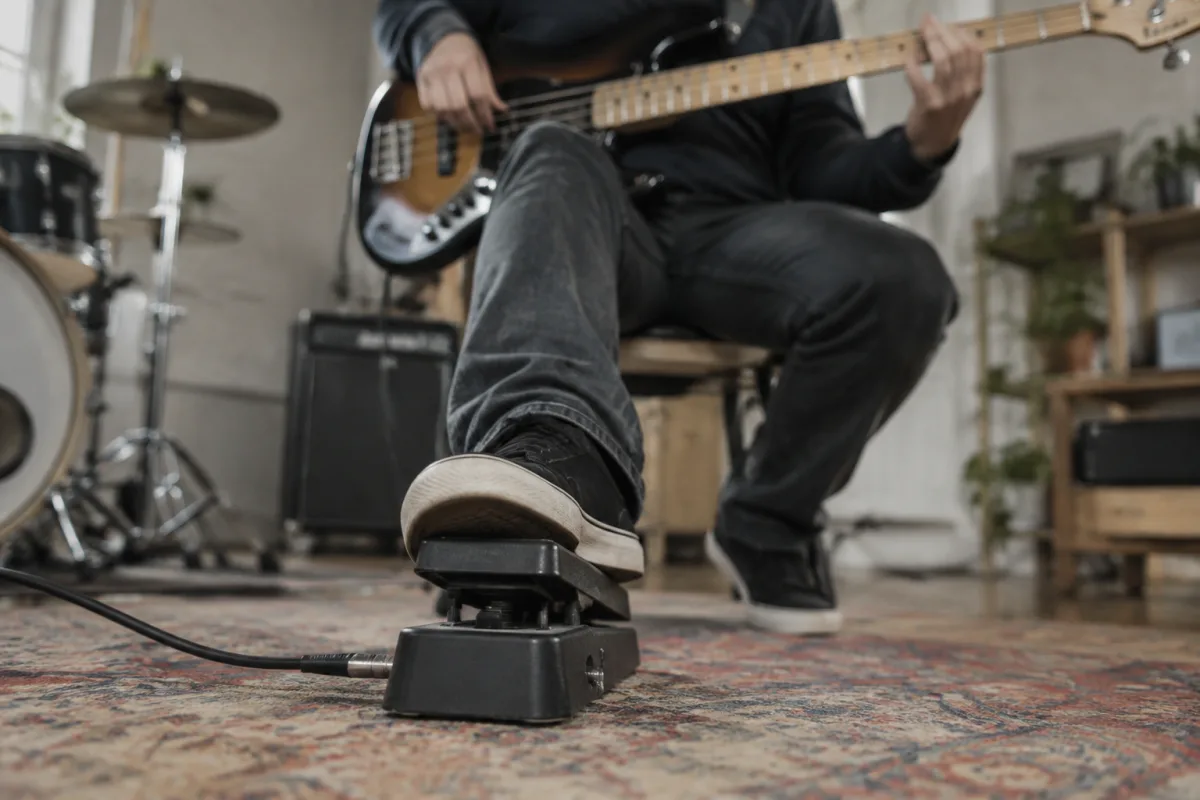
If you're learning bass, you've probably heard that legendary funky sound—a sweeping, vowel-like effect that seems to make the bass guitar talk. That's bass wah, and it's one of the most fun, approachable effects for beginners to explore. Unlike many pedals that require hours of tweaking to sound good, a bass wah sounds instantly satisfying the moment you step on it. Here's how to get started without overthinking it.
What Bass Wah Actually Does (And Why It's Brilliant for Beginners)
A bass wah pedal sweeps a filter across your bass's frequency range as you rock the pedal back and forth. Move it forward and the sound gets brighter; rock it back and it darkens. The result is that characteristic vowel-like effect—almost like the bass is singing. It's expressive, dynamic, and genuinely fun to play with.
For beginners, bass wah is special because it's immediately intuitive. You don't need to understand circuits or learn complex settings. Rock the pedal, hear the effect change in real time, and adjust based on what sounds good. It's musical feedback at its most direct, which makes it perfect for players still building confidence in their sound.
Early funk and rock bass lines made bass wah famous, but it works brilliantly in modern genres too—anywhere you want to add personality and movement to a bass line. Even one good bass wah moment in a song can elevate it from flat to memorable.
Choosing Your First Bass Wah: Keep It Simple
You'll find bass wah pedals ranging from £20 bargain models to £300+ boutique units. As a beginner, you don't need to wade through that complexity. Here's what matters:
- Reliability above all else – Does the pedal feel solid? Does the foot switch click confidently? Does the sweep feel smooth? Test it if you can; a cheap pedal that feels cheap might frustrate you into abandoning bass wah altogether.
- Bypass options – Make sure you can switch the effect on and off cleanly mid-song. True bypass (complete circuit disconnection when off) is nice but not essential. Just make sure switching doesn't introduce noise.
- Adjustable range (optional) – Some bass wah pedals let you narrow the sweep range. This is useful but not critical for beginners. Most players start with whatever comes preset and adjust later if needed.
- Built-in or separate power – Check if it needs batteries or a power supply. Batteries are convenient; powered pedals integrate better into multi-pedal setups (you'll probably add more effects later).
That's it. Budget-to-mid-range bass wah pedals (£30–£100) do everything a beginner needs. Save boutique upgrades for later when you've decided bass wah is central to your sound.
Your First Bass Wah Session: What to Expect
When your bass wah arrives, here's how to get playing immediately.
Step 1: Unbox and Connect
Place the pedal in front of you. Connect your bass to the input, and run the output to your amp. If it has a power requirement, sort that out. If it takes batteries, load them up. This takes five minutes tops.
Step 2: Bypass and Listen
Before stepping on the pedal, toggle it on and off (usually with a foot switch) and listen. You should hear a clear difference: with bass wah off, your bass sounds normal; with it on, you should hear the effect active. If not, check your connections.
Step 3: Rock the Pedal Slowly
Play a simple bass line—just one or two notes—and slowly rock the bass wah pedal forward and backward. Listen to the tone sweep. This is the core experience: your foot controls tone, creating a singing, talking quality. Exaggerate the motion at first. You'll get subtlety later.
Step 4: Experiment with Timing
Try sweeping the pedal in time with the music. Rock it on the beat, between beats, or hold it in one position. Notice how different timings create different feels. This is where bass wah becomes musical rather than just noisy.
That's genuinely all you need to start. Twenty minutes with a bass wah and you'll understand why it's been a staple effect for decades.
Common Beginner Mistakes with Bass Wah
Learning bass wah properly means knowing what not to do:
- Overusing the effect in every song – Bass wah is brilliant but it's not a permanent fixture. Use it for specific moments that benefit from expression. Restraint makes it more powerful.
- Always using extreme sweeps – A slow, subtle filter sweep can be more musical than wild back-and-forth motion. Experiment with staying in a narrow range for sophistication.
- Forgetting to bypass it cleanly between songs – If your pedal introduces noise or clicks when switching, it breaks the performance. Practice clean foot work.
- Ignoring your amp settings – A bass wah on a thin, trebly amp sounds harsh. On a warm, full amp, it sounds rich. Dial your amp in for a pleasant midrange tone before adding bass wah.
- Playing too fast with bass wah – It's harder to control the effect at very high tempos. Slow to moderate speeds let you hear what's happening and build confidence.
Avoid these, and you'll sound professional with bass wah immediately.
Building Confidence with Bass Wah
The best part of bass wah for beginners is how quickly you can sound good. Unlike some effects that require careful tuning and experience, bass wah rewards enthusiasm. Play a simple line, add bass wah motion in the right moments, and you sound immediately more expressive and interesting.
Start by adding bass wah to one section of a song you already know. Maybe the pre-chorus or a solo moment. Feel how it changes the vibe. Once you're comfortable there, try it in other contexts. Before long, you'll have developed your own bass wah voice—the way it fits your playing style and tone preferences.
Next Steps After Your First Wah Experience
Once you're playing bass wah confidently, you might want to explore deeper: different models with alternate sweep profiles, combining bass wah with other effects, or using it in genres beyond funk. Our complete guide to bass wah covers all of that in detail—the history, technical specs, and creative possibilities.
But honestly? If you've followed the advice here, you already know enough to have fun with bass wah. It's an effect that invites experimentation, rewards boldness, and makes you sound more musical the moment you switch it on. That's rare in bass gear. Enjoy it.



Comments