


Mustang Bass Guitar article
Fender Mustang Pj Bass Guitar Explained
The Mustang bass guitar combines short-scale comfort with distinctive tone and practical design. Learn why this underrated Fender bass has become a cult favourite among modern players.
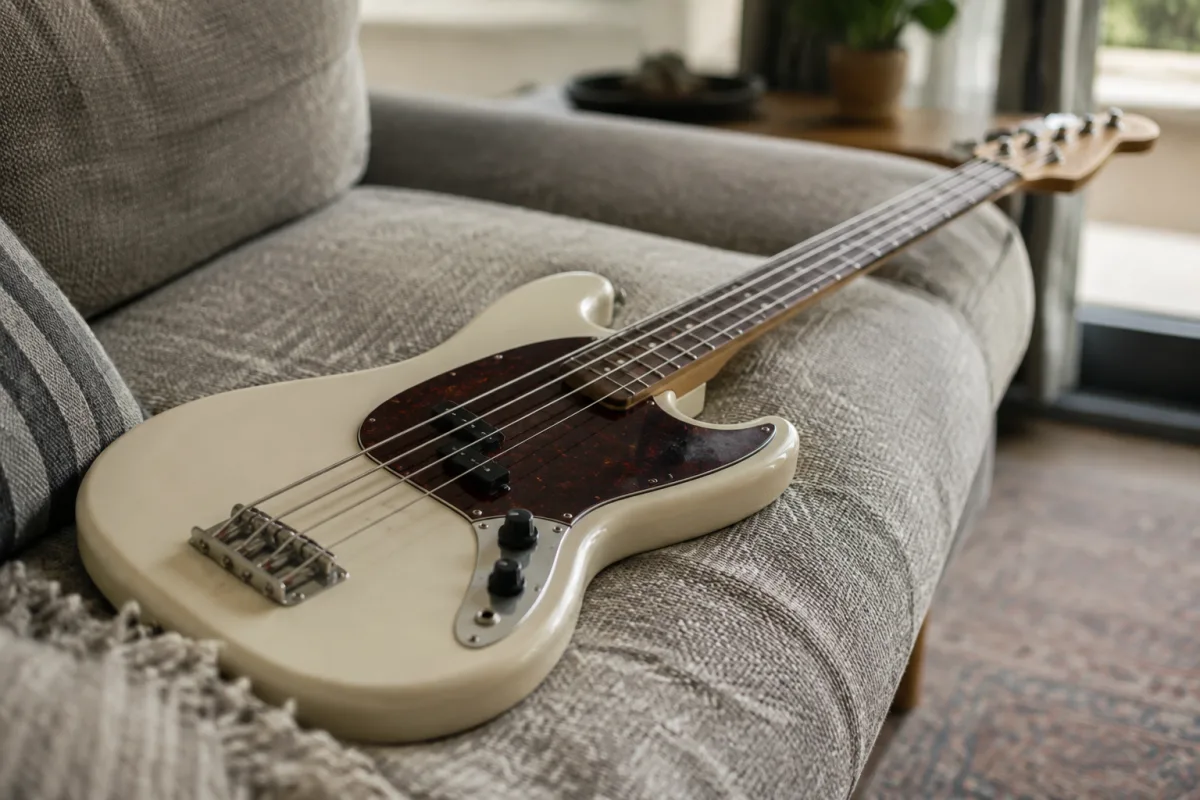
The Fender Mustang bass guitar stands as one of the most characterful and underrated instruments in modern playing. Launched in 1966, this short-scale bass has developed a devoted cult following among players seeking a distinctive tone and comfortable playability. The Mustang bass guitar combines vintage charm with practical design, making it an excellent choice for beginners and experienced players alike.
History of the Mustang Bass Guitar
Fender introduced the Mustang bass guitar in 1966 as a shorter, more accessible alternative to the full-size Precision and Jazz Bass models. The short scale meant that players with smaller hands could navigate the fretboard more easily, and the lighter body weight made extended playing sessions considerably more comfortable. The Mustang bass guitar quickly became a favourite among session musicians and touring bassists who appreciated the practical advantages.
The Mustang bass guitar experienced its golden age during the 1970s and 1980s, when punk and new wave bassists embraced its punchy, articulate tone. The instrument then spent decades in relative obscurity before enjoying a revival in recent years as modern players rediscovered its charms. Today, the Mustang bass guitar occupies a unique position in the market—neither vintage collectible nor mainstream choice, but a compelling option with genuine substance.
Body Design and Build Quality
The Mustang bass guitar features a compact, symmetrical body design that differs markedly from traditional bass shapes. The distinctive offset waist gives the Mustang bass guitar an aggressive, modern aesthetic whilst maintaining excellent ergonomics. Sit down with a Mustang bass guitar and you'll notice the body nestles comfortably against your chest, with the neck positioned naturally for both sitting and standing playing.
Modern Mustang bass guitar models typically feature solid ash or alder bodies with a polyester finish. The short-scale design (approximately 30 inches compared to the standard 34 inches) significantly reduces the physical effort required to play complex passages. This makes the Mustang bass guitar particularly appealing for younger players or musicians with hand or wrist concerns.
Build quality on recent Mustang bass guitar instruments has improved considerably. Current production models offer solid construction at reasonable prices, though vintage Mustang bass guitar specimens from the 1970s command premium prices among collectors.
Pickup Configuration and Tone
The classic Mustang bass guitar features a dual-pickup setup, typically positioned in split positions along the neck. This configuration gives the Mustang bass guitar remarkable tonal versatility. With both pickups engaged, the Mustang bass guitar produces a warm, full-bodied tone that cuts through dense mixes beautifully. Soloing the neck pickup yields a deeper, more mellow character; the bridge pickup alone delivers brightness and articulation.
Some Mustang bass guitar models, particularly the newer PJ variant, combine a Precision-style neck pickup with a Jazz-style bridge pickup. This Mustang bass guitar configuration appeals to players seeking the classic split-position sound with even greater versatility. The PJ layout on a Mustang bass guitar gives you warm, fat lows combined with snappy highs.
The pickups on most Mustang bass guitar instruments are wound for clarity and punch rather than thick, boomy warmth. This characteristic makes the Mustang bass guitar ideally suited to styles demanding definition—punk, funk, alternative rock and post-punk all benefit from the Mustang bass guitar's inherent crispness.
Neck and Playability
The Mustang bass guitar neck represents one of the instrument's strongest features. The shorter scale translates directly to reduced finger stretch required between frets, making the Mustang bass guitar exceptionally comfortable for rapid passage work. For beginners transitioning from guitar or players with smaller hands, a Mustang bass guitar offers a gentle entry point into bass playing.
Fender typically equips the Mustang bass guitar with a 1.5-inch nut width, slightly narrower than the 1.625-inch standard on full-size basses. Combined with a well-crafted 20-fret neck, the Mustang bass guitar feels intimate and responsive under the hands. The short scale also means you can use lighter string gauges on a Mustang bass guitar without sacrificing tone or feel—a real benefit for players with finger sensitivity.
Modern Mustang bass guitar necks feature solid construction with minimal playability issues on new instruments. Used or vintage Mustang bass guitar specimens occasionally require professional setup attention, but the fundamental design is sound and reliable.
Specifications and Variants
Modern Mustang bass guitar offerings include several distinct variants. The classic Mustang bass guitar retains the original dual-pickup configuration. The Mustang bass guitar PJ model substitutes a Precision-style neck pickup for one of the original split pickups, offering greater tonal breadth. Some Mustang bass guitar limited editions feature upgraded hardware, better electronics, or alternative finishes.
| Mustang Bass Guitar Variant | Scale Length | Pickups | Best For |
|---|---|---|---|
| Classic | 30 inches | Dual split | Vintage tone, punk, new wave |
| Mustang Bass Guitar PJ | 30 inches | Precision + Jazz | Versatile tone, modern styles |
| Player Series | 30 inches | Dual split or PJ | Budget-conscious players, beginners |
| Vintage Edition | 30 inches | Original configuration | Collectors, period-correct tone |
Who Should Choose a Mustang Bass Guitar
The Mustang bass guitar excels for specific player profiles. First, musicians with smaller hands find the short scale of a Mustang bass guitar tremendously comfortable. Second, players who value distinctive character appreciate how the Mustang bass guitar's offset design and tonal palette stand apart from conventional instruments. Third, players in alternative, punk and indie styles benefit from the Mustang bass guitar's crisp, articulate tone.
The Mustang bass guitar also suits players seeking an affordable, reliable instrument without compromise. Current Mustang bass guitar prices sit well below comparable Jazz or Precision Bass models, offering genuine value.
Compared to Other Fender Bass Models
The Mustang bass guitar occupies a unique position in Fender's bass lineup. Unlike the full-size Precision Bass, the Mustang bass guitar prioritises accessibility and articulation over low-end weight. Unlike the Jazz Bass, the Mustang bass guitar favours punch over tonal smoothness. The Mustang bass guitar carves its own niche, and that specificity is exactly what makes it appealing to the right players.
For traditional jazz or classic funk, the Precision or Jazz Bass remains the conventional choice. For players seeking lighter physical demands, greater comfort and a more distinctive voice, the Mustang bass guitar delivers in ways those traditional instruments cannot.
Setup and Customisation
A well-set-up Mustang bass guitar plays beautifully and reliably. Most players benefit from a professional setup visit upon purchase—bridge intonation adjustment, nut conditioning and action refinement are standard procedures that transform the playing experience on any Mustang bass guitar.
The Mustang bass guitar responds well to hardware upgrades. Replacing stock tuning machines with higher-end variants improves tuning stability. Better bridge hardware can enhance tonal clarity. A new pickguard or control plate offers cosmetic personalisation. These modifications allow players to refine their Mustang bass guitar experience without major investment.
Conclusion
The Mustang bass guitar represents a distinctly different approach to bass design—one that prioritises player comfort, tonal character and accessibility over conformity. Whether you're a beginner seeking an approachable instrument, an experienced player hunting for something characterful and unconventional, or a musician playing styles where articulation and punch matter, the Mustang bass guitar deserves serious consideration. The combination of short-scale comfort, distinctive tone, and reasonable pricing makes the Mustang bass guitar an intelligent choice that punches well above its market position.





Comments