


Hartke Bass Guitar Amplifiers Buying guide
Hartke Bass Guitar Amplifiers: A Complete Buyer's Guide
A practical guide to buying Hartke bass guitar amplifiers. Understand wattage, cabinets, price tiers, key features and common mistakes to avoid when choosing amplification for bass.
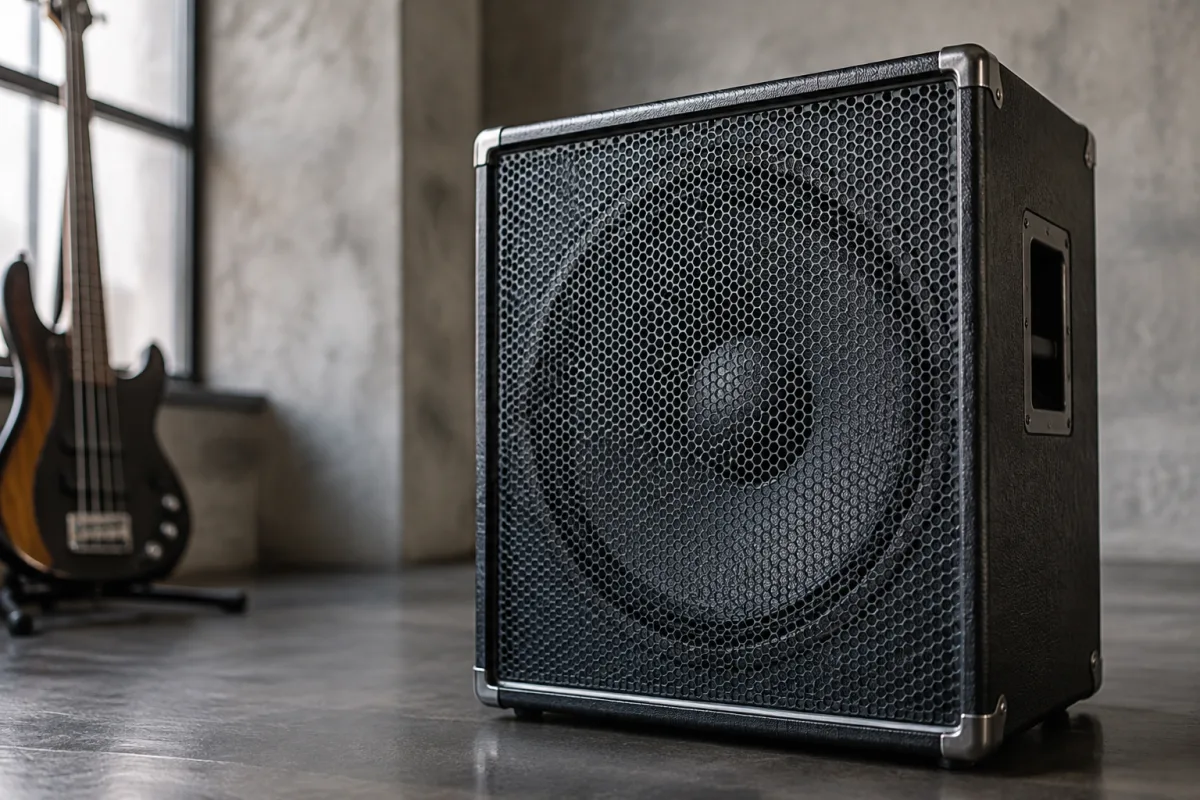
Choosing a Hartke bass guitar amplifier requires understanding what separates the various tiers and what specifications genuinely affect how you'll play. Hartke has built a reputation in bass amplification through straightforward gear that reliably amplifies low-end frequencies with clarity and punch. If you're serious about bass performance—whether rehearsals, recording, or live gigs—knowing what a Hartke bass guitar amplifier offers at different price points helps you invest smartly in equipment that serves you for years.
Why Hartke Bass Guitar Amplifiers Stand Out
Hartke bass guitar amplifiers are designed specifically for bass frequencies, not guitars adapted for bass duty. The speaker design, cabinet construction, and amplifier voicing prioritise low-end response and projection. A bass player needs an amplifier that reproduces frequencies below the guitar range with clarity and depth. Hartke bass guitar amplifiers deliver this reliably. They're practical instruments built by bass players for bass players—no marketing hype, no unnecessary complexity.
Hartke's reputation stems from consistency. A Hartke bass guitar amplifier from 1995 sounds and functions similarly to modern models from the same tier. This longevity appeals to bass players who invest in gear expecting it to serve for decades. Used Hartke bass guitar amplifiers hold value well and remain fully functional, making them attractive both as new purchases and on the resale market.
Understanding Hartke Bass Guitar Amplifier Power and Wattage
Wattage indicates amplifier power, but it's only one factor in how loud an amplifier sounds. A 100-watt Hartke bass guitar amplifier sounds roughly twice as loud as a 25-watt Hartke bass guitar amplifier, but not twice as loud as a 50-watt model. Power doubles while perceived loudness increases more subtly.
Budget rehearsal use requires 30–50 watts minimum. A Hartke bass guitar amplifier at this power handles rehearsal spaces reliably and pushes enough volume to be heard over drums and guitar. Small venues and intimate recording typically need 50–100 watts. Professional touring and large venues require 100–300+ watts. Match wattage to your intended use rather than chasing maximum specs.
Cabinet Configuration and Speaker Design
Hartke bass guitar amplifiers pair with cabinets that dramatically affect tone and portability. A single cabinet combo unit (amplifier and speaker built together) is portable and convenient. Separate head and cabinet setups offer flexibility—you might use a compact 1x15 cabinet for rehearsal and a larger 2x15 or 4x10 cabinet for gigs. Hartke offers both configurations.
Speaker configuration affects tone. A single 15-inch speaker emphasises warmth and low-end thump; 10-inch speakers offer clarity and mid-range punch; combinations of both balance response. Aluminium cone design (which Hartke pioneered) differs from paper or other materials in how it reproduces frequencies—some players love the brightness and durability, others prefer traditional materials' warmth.
Hartke Bass Guitar Amplifier Price Tiers
| Price Range | Typical Features | Best For |
|---|---|---|
| £200–£500 | 25–50 watts, basic EQ, single cabinet, entry-level construction | Bedroom practice, quiet rehearsals, beginners |
| £500–£1,200 | 50–100 watts, more sophisticated EQ, XLR out, decent build quality | Regular rehearsals, small gigs, serious amateurs |
| £1,200–£2,500 | 100–300 watts, professional-grade components, multiple speaker options, tour-ready | Professional musicians, touring, recording studios |
| £2,500+ | 300+ watts, high-end components, custom configurations, master-grade build | Full-time touring professionals, specialised applications |
Key Features to Evaluate in a Hartke Bass Guitar Amplifier
Equalisation (EQ) controls shape your tone significantly. Beginner Hartke bass guitar amplifiers offer basic 3-band EQ (bass, middle, treble). Mid-range models add more sophisticated tone shaping with variable mid frequencies and graphic EQs. Advanced Hartke bass guitar amplifiers offer parametric EQ and effects. Deeper control costs more but lets you adapt your tone to different venues and situations.
Output options matter for flexibility. A basic Hartke bass guitar amplifier has only a speaker output. Better models include line-level outputs (XLR) for connecting to mixing boards or recording equipment, and impedance switches for running multiple cabinets. These features matter if you plan to use your Hartke bass guitar amplifier in recording or complex live setups.
Headphone output is surprisingly useful on Hartke bass guitar amplifiers. It lets you practice silently through headphones, which is invaluable for late-night sessions or listening to backing tracks. Many mid-range Hartke bass guitar amplifiers include this.
Cooling and reliability in a Hartke bass guitar amplifier depend on power dissipation design. Higher-wattage units need good ventilation. Check that a Hartke bass guitar amplifier you're considering has proper cooling fans and isn't positioned where vents will be blocked.
Common Pitfalls in Hartke Bass Guitar Amplifier Buying
Buying based purely on wattage misleads many players. A 100-watt Hartke bass guitar amplifier doesn't sound twice as loud as a 50-watt model. Match wattage to actual use rather than assuming higher is automatically better.
Neglecting cabinet quality is another mistake. A Hartke bass guitar amplifier sounds only as good as its speakers and cabinet. Cheap construction collapses top-end clarity and muddles low-end response. Invest in quality at every tier.
Ignoring impedance matching is technical but important. A Hartke bass guitar amplifier rated for 4-ohm output connected to an 8-ohm cabinet runs inefficiently. Verify your amplifier's impedance output and match it to your cabinet configuration before connecting.
Many bass players buy Hartke bass guitar amplifiers expecting to play stadium-level volumes through a single cabinet. Unrealistic expectations lead to disappointment. Stack cabinets, add power, or accept that a single Hartke bass guitar amplifier combo has volume limits beyond which quality degrades.
New vs. Used Hartke Bass Guitar Amplifiers
Used Hartke bass guitar amplifiers often represent exceptional value. A Hartke bass guitar amplifier from five years ago functions identically to a new one at the same specs, but costs significantly less. The used market for Hartke bass guitar amplifiers is robust and reliable—these amplifiers don't fail prematurely.
When buying used, verify that all controls work smoothly, that the amplifier powers on, and that it makes sound. Bring headphones and test it. Ask about maintenance history. Hartke bass guitar amplifiers age well if treated properly.
Integration With Your Bass Setup
Your Hartke bass guitar amplifier works with your bass guitar, cables, and any effects pedals you use. Lower-impedance (higher gauge) cables from bass to amplifier preserve tone. Quality cables cost more but audibly improve clarity. Similarly, a Hartke bass guitar amplifier sounds better when fed from a quality bass guitar and properly set up.
For deeper context on bass amplification and Hartke's role in that world, read the complete guide to Hartke bass guitar amplifiers, which covers the brand's history and evolution in bass gear.
Buying a Hartke bass guitar amplifier is an investment in reliable, straightforward amplification. Choose based on your genuine volume needs, verify speaker quality, and plan for upgrade path as you grow. A well-chosen Hartke bass guitar amplifier becomes a trusted workhorse you'll return to session after session.


Comments