


Bass Guitar Wah Pedal Buying guide
Bass Guitar Wah Pedal: A Complete Buyer's Guide
Bass guitar wah pedals are different from guitar wahs. This buying guide covers frequency specs, impedance, durability, price tiers, and common mistakes so you choose the right pedal for your bass rig.
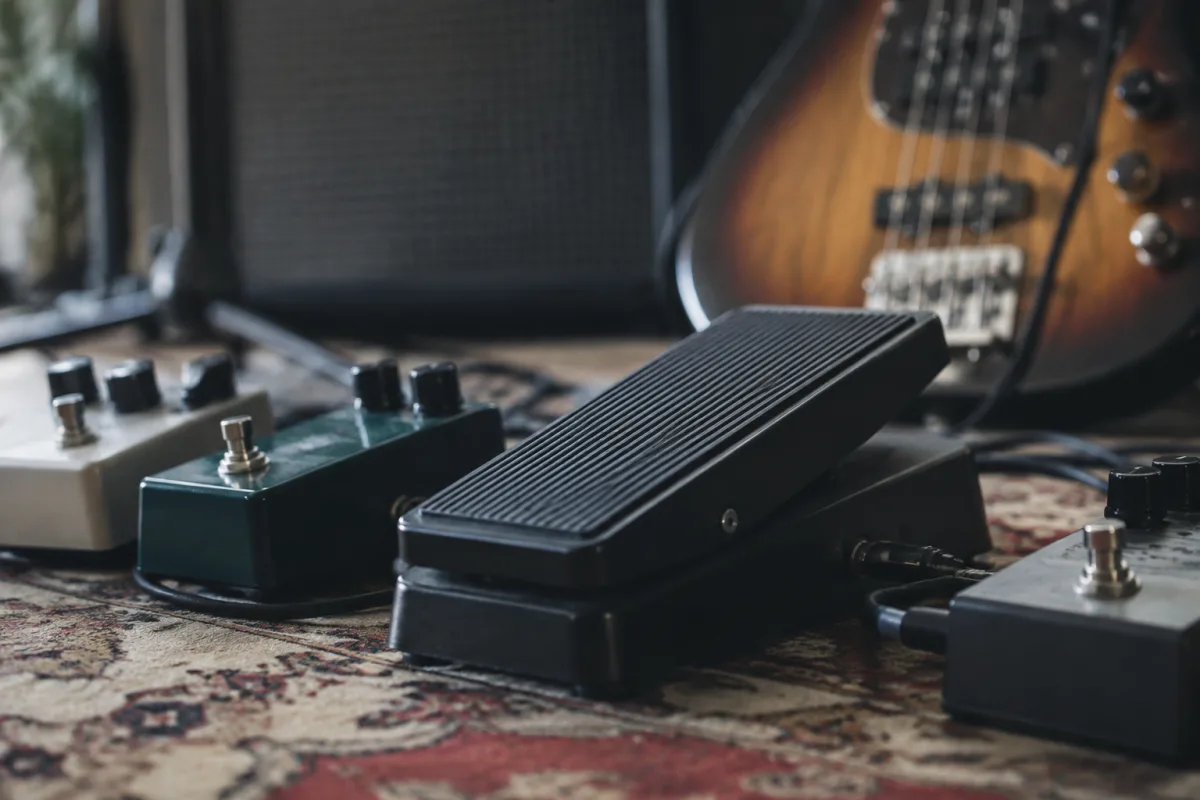
A bass guitar wah pedal is one of the most expressive effects you can add to your tone, but buying the wrong one wastes money and leaves you frustrated. Standard guitar wah pedals don't cut it for bass—they can't handle the low frequencies or the dynamics of a bass rig. This buying guide walks you through the specs that matter, the pitfalls to avoid, and the price tiers so you can choose the right bass guitar wah pedal without overpaying or settling for cheap gear that'll fail mid-gig.
Bass Wah vs. Guitar Wah: The Critical Difference
This is the most important thing to understand before shopping: a guitar wah pedal and a bass guitar wah pedal are not interchangeable. Guitar wah pedals are optimised for frequencies between 100 Hz and 5 kHz, which is where guitar tone lives. Bass lives lower—30 Hz to 1 kHz is critical bass territory. If you use a standard guitar wah pedal with your bass, the effect will feel thin, lose definition, and barely respond to your playing dynamics. Bass guitar wah pedals have wider frequency sweeps, better impedance matching for bass rigs, and heavier construction to handle the physical stress that bass players dish out. They're built differently because they need to be. When shopping, always specify "bass wah pedal" or "bass guitar wah pedal." This single specification eliminates most of the confusion and ensures you're looking at gear actually designed for your instrument.
Frequency Range and Sweep: The Specs That Matter
When checking a bass guitar wah pedal's specs, look at the frequency range first. Quality bass wah pedals sweep from around 30 Hz to 1.5 kHz or higher—a wider range than guitar wahs. This wider sweep gives you more sonic territory to explore: deep, subby lows when you push the pedal forward, and punchy mid-range presence when you pull it back. A bass guitar wah pedal with a narrow range (say, 60 Hz to 1 kHz) will feel limited and less expressive. Also look for the "Q" specification, which controls how narrow or wide the sweep is. Higher Q values (8 or more) create a more pronounced, "pokey" wah sound; lower Q values (4-6) are subtler and less aggressive. Your style determines which suits you: funk players often prefer higher Q for dramatic sweeps, while jazz players might prefer lower Q for smoother tone shaping. Don't blindly trust marketing—check the actual Q rating.
Passive vs. Active Circuitry: Power Considerations
Passive bass guitar wah pedals use no batteries or power supply and are typically cheaper and more reliable for touring. However, they naturally attenuate your signal—you'll lose volume when the pedal is engaged unless your pedalboard has active buffers downstream. Active wah pedals use onboard circuitry or external power (USB or 9V) to maintain your signal level and add characteristics that passive wahs lack. For bass, active circuitry is often worth the extra cost because bass signals are weaker and shorter-range than guitar signals. An active bass guitar wah pedal keeps your tone consistent whether you're using it or not. If your rig already includes a boost pedal or active power distributor, passive wah is fine. Otherwise, active is the safer bet.
Build Quality and Durability for Bass Rigs
Bass players are harder on equipment than guitarists—bigger gear, stronger strikes, more volume, and more road miles. A flimsy bass guitar wah pedal will fail. Look for all-metal housings (not plastic), solid footswitches with plenty of travel distance, and quality potentiometers inside. The sweep mechanism—the thing that makes the pedal's sound change as you rock it—should feel smooth and responsive, not scratchy or loose. Test it in a shop if you can. A dry, sticky sweep is a red flag. The knobs should be sturdy and difficult to accidentally turn. Cheap bass guitar wah pedals sometimes have easily-turned knobs that shift during a set, ruining your tone settings mid-song. Professional brands like Morley, Dunlop, and Boss build bass wah pedals to withstand years of use. Budget brands occasionally surprise with reliability, but it's rarer. Read user reviews specifically mentioning durability and long-term use before settling on an unknown brand.
Input and Output Impedance: Bass-Specific Electronics
This is technical, but it matters. Bass rigs typically run longer cable runs and higher impedances than guitar rigs. A bass guitar wah pedal needs to handle this without losing tone or introducing noise. Look for pedals with 500k-1M ohm input impedance (higher is better for bass). Output impedance should be under 10k ohms so the pedal plays nice with other effects downstream. Pedals with poor impedance specs will sound thin, lose bass frequencies, or introduce hum when used with certain amp combinations. This is why buying a bass-specific pedal matters—manufacturers have already solved these matching issues. A generic effects pedal rated for "guitar and bass" often cuts corners on impedance specs to keep costs low.
Bass Guitar Wah Pedal Price Tiers and What You Get
| Price Tier | Range | Build Type | Best For | Trade-offs |
|---|---|---|---|---|
| Budget | £40–90 | Plastic housing, basic passive | Hobbyists, bedroom players | Signal loss, narrow frequency range, questionable durability |
| Mid-range | £90–180 | Metal housing, passive or active option | Regular gigging musicians | Solid reliability, good sound, may require buffers |
| Professional | £180–400+ | All-metal, active circuitry, premium components | Touring, studio, session work | Excellent durability, best tone, high cost |
Budget bass guitar wah pedals are tempting, but you'll feel the limitations quickly. Frequency response is narrow, and the sweep feels artificial. Mid-range models from trusted brands are where most bass players find their sweet spot. You get real bass wah character without paying for premium boutique branding. Professional models earn their cost through superior materials and circuitry—they last longer and respond to your playing nuances better. If you're gigging regularly, a mid-range to professional bass guitar wah pedal is an investment that pays back in reliability and tone.
Key Features Worth Checking
- Bypass Type: True bypass is standard and protects your tone when the pedal is off. Look for true bypass on any bass guitar wah pedal above £80.
- Minimum Volume Control: Some pedals lose volume even in bypass mode. A minimum volume knob compensates for signal loss and keeps your level consistent.
- Tuner Output: A built-in tuner output on your bass guitar wah pedal saves you buying a separate tuner pedal. Useful, but not essential.
- Decay Control: Lets you adjust how quickly the wah effect decays after you release the pedal. More control over your sound shape.
- Pedal Travel Distance: Longer travel gives more control; shorter travel feels tighter. Personal preference, but test in a shop if possible.
- Footswitch Sensitivity: Adjustable sensitivity lets you control how much foot movement changes the wah intensity. Professional pedals always include this.
Common Buying Mistakes to Avoid
The biggest mistake is buying a guitar wah pedal for bass. We've said it once; we'll say it again. The second mistake is ignoring impedance specs and frequency range. You end up with a pedal that doesn't sound like a wah when you play bass—it's thin, weak, and disappointing. Third, underestimating durability. Bass players are tough on gear. A pedal that survives light bedroom use might fail after six months of gigging. Fourth, buying a pedal without trying it first. Wahs are personal—how they respond to your foot pressure and how they sound with your bass matters enormously. Try before you buy if at all possible. Finally, assuming a high price guarantees the right pedal for you. A £300 professional model might feel overly complicated or reactive if you just want a simple, subtle wah tone.
Where to Buy and Setup Tips
Specialist bass shops and major online retailers often have return policies that let you try a bass guitar wah pedal for two weeks. This is invaluable—you can test it in your actual rig before deciding. General music shops sometimes stock bass wahs, but their selection is limited and staff knowledge varies. Online can be cheaper, but you lose the chance to test before buying. Whichever route you choose, budget for a quality heavy-duty pedalboard and isolation strips to protect your bass guitar wah pedal during transport. A £100 pedal won't do you much good if it's smashed in a flimsy board.
A bass guitar wah pedal is a long-term investment in your tone and expression. Choose one designed specifically for bass, check the frequency range and impedance specs, and prioritise build quality for your gigging style. Mid-range models offer the best balance of tone, reliability, and cost for most players. With the right bass guitar wah pedal, you'll add expressiveness to your playing that transforms your sound. For detailed frequency charts and side-by-side comparisons with other bass effects, see our complete guide to bass guitar wah pedals.


Comments