
Bass Guitar Case article
The Complete Guide to Bass Guitar Case
A quality bass guitar case protects your instrument from damage, temperature changes, and transport hazards. Learn which type suits your lifestyle—soft cases for local gigging or hard cases for touring—and what features matter most.
Why a Bass Guitar Case Matters
A bass guitar case is far more than storage—it's your instrument's insurance policy. Bass guitars are expensive investments that take abuse on tour, in studios, and during transport. The right bass guitar case protects against impact, temperature changes, humidity fluctuations, and accidental damage. It also makes your bass portable, practical, and comfortable to travel with.
Many bass players overlook the bass guitar case until they're dealing with a cracked headstock or warped neck. Investing in a proper bass guitar case early prevents heartbreak and repair costs far exceeding the case price. A quality case keeps your bass safe and ready to perform.
Soft Cases vs. Hard Cases
The fundamental choice when selecting a bass guitar case is between soft and hard protection. Each approach balances portability, protection, and cost differently.
Soft bass guitar cases use padded nylon or canvas exteriors with foam interiors. They're lightweight, affordable, and easier to carry than hard cases. Soft cases work well for local gigging, studio sessions, and general storage. The trade-off is reduced protection against heavy impacts—a soft case cushions drops but won't survive being sat on or crushed under flight luggage.
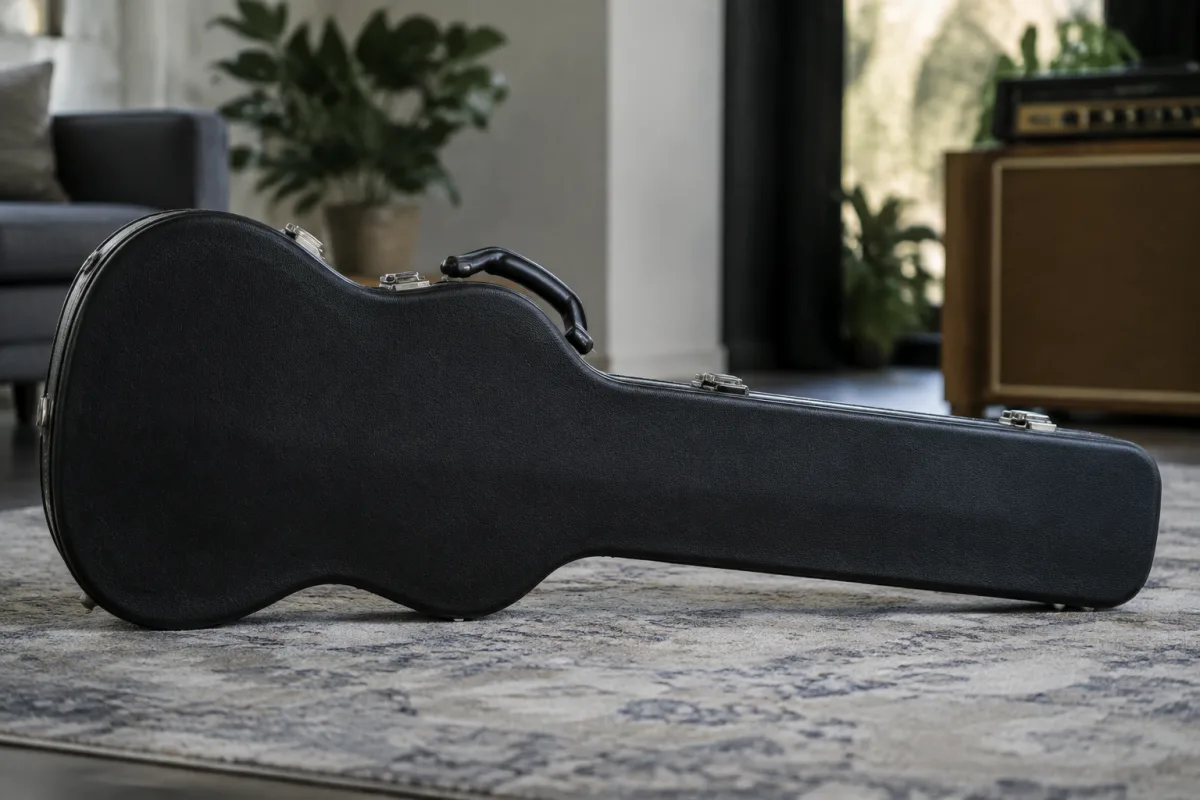
Hard cases—typically ABS plastic, moulded fibreglass, or wood—provide maximum protection against impact, crushing, and environmental damage. They're heavier and more expensive but ideal for touring, air travel, and long-term storage. A hard bass guitar case will survive almost anything except direct attacks with tools. Professional touring musicians use hard cases as standard.
Flight cases add reinforced corners, metal hardware, and locking latches. These professional-grade bass guitar cases can endure years of airport baggage handling and venue transportation. They're the premium option for serious touring musicians.
Key Features in a Quality Bass Guitar Case
Beyond soft or hard construction, several features distinguish a truly protective bass guitar case. Interior padding thickness matters—aim for at least 10–15mm of foam throughout. The neck support is critical because the headstock is the most vulnerable part; a case with dedicated neck padding prevents damage during transport.
Look for cases with multiple interior compartments to store cables, tools, tuners, and accessories. This keeps your bass secure and prevents rattling items from bouncing around. Exterior pockets accommodate music sheets, set lists, and other essentials.
Hardware quality affects durability. Solid brass or metal latches, hinges, and handles last longer than cheap plastic hardware. A bass guitar case is only as strong as its weakest component—cutting corners on hardware means the case fails when you need it most.
Pressure relief valves in hard cases help them withstand altitude changes during air travel. This prevents internal pressure from warping the case structure. If you fly regularly with your bass, a case with pressure relief is valuable.
Sizing Your Bass Guitar Case
Bass guitar cases come in standard sizes for standard basses, but short-scale and extended-range bass guitars need different protection. Standard four-string basses fit most conventional cases. Five-string and six-string bass guitars require longer cases designed for extended neck length.
Measure your bass—from the tip of the headstock to the bottom of the body—before purchasing a case. A case that's too small forces your bass into unnatural angles, stressing the neck and bridge. A case that's too large allows movement during transport, defeating protective padding.
Specialty instruments like fretless basses sometimes require custom cases. If your bass has unusual dimensions, measure carefully and contact manufacturers to confirm compatibility before purchasing.
Temperature and Humidity Protection
Wood responds to temperature and humidity changes. A quality bass guitar case buffers your instrument from environmental extremes. Hard cases with thick padding maintain more stable internal conditions than thin soft cases. If you live in a climate with dramatic seasonal shifts, investing in a hard case or a humidity-controlled storage solution protects your bass's neck and body.
Silica gel packets inside your case absorb excess moisture during humid seasons. During dry winters, a small humidifier device maintains optimal moisture levels. These inexpensive additions prevent costly repairs from warping and cracking.
Transport and Comfort Considerations
Carrying a bass guitar case should be practical for your lifestyle. Soft cases with padded shoulder straps work well for walking to rehearsals or short distances. Hard cases with handles and wheels suit players driving to gigs. Some hard flight cases have retractable handles and wheels for airport travel—worth the investment if you fly regularly.
Weight matters if you're carrying your bass into venues regularly. A hard case adds 10–15 kg, whilst soft cases typically weigh 2–4 kg. This difference accumulates over dozens of gigs. Professionals accept the weight trade-off for protection; beginners might prefer soft cases until they're gigging frequently.
Budget Considerations
Budget soft bass guitar cases start around £30–60. Mid-range soft cases offer better padding and hardware for £60–120. Hard cases begin around £80–120 for basic ABS plastic, with premium options reaching £200–400. Flight cases for serious touring run £300 and upward.
The most practical approach is matching your case to your actual lifestyle. Local rehearsal and occasional gigging suits a soft case. Regular touring demands a hard case. The price difference is insurance against expensive repair or replacement.
Consider depreciation: a bass guitar case is one of the few accessories that doesn't significantly lose value. Selling a quality used case recovers 50–70% of purchase price. Investing in quality pays dividends.
Specialty Case Options
Gig bags sit between soft cases and hard cases. They offer more protection than soft cases with less weight than hard cases. The trade-off is slightly reduced protection during impacts. Gig bags work well for studio musicians and local gigging.
Travel cases designed specifically for air travel include reinforced locking systems, pressure relief, and TSA-compliant features. If flying internationally with your bass, a travel-rated case is essential.
Roadrunner and other premium brands offer bass guitar cases with unique features like superior weatherproofing and integrated stands. These specialised options cost more but deliver features that justify the investment for touring professionals.
Maintenance and Care
A bass guitar case requires minimal maintenance but benefits from occasional attention. Wipe down the exterior monthly with a soft cloth. Check hardware for corrosion, especially if storing near water or salt air. Inspect padding for wear; if it's compressing, interior protection is declining.
Store your case in a cool, dry location. Extreme temperatures and humidity damage both the case and the bass inside. Sunlight fades case exteriors and can warp plastic or wood components. A closet or climate-controlled storage is ideal.
Replace latches or hinges if they break rather than abandoning a case. Most hardware can be replaced affordably, extending your case's life by years. With basic care, a quality bass guitar case lasts a decade or longer.
Conclusion
Selecting the right bass guitar case depends on your playing frequency, travel habits, and budget. Local players doing occasional gigs can use a quality soft case. Touring musicians need a hard case or flight case for reliable protection. Whatever you choose, invest in a bass guitar case that inspires confidence your instrument will arrive safely. Your bass—and your wallet—will thank you.


Comments