
Amplifier Bass Guitar article
The Complete Guide to Amplifier Bass Guitar
The amplifier bass guitar remains the cornerstone of professional bass tone, delivering the low-end punch that defines modern music and transforms your instrument's natural output into controlled, powerful sound.
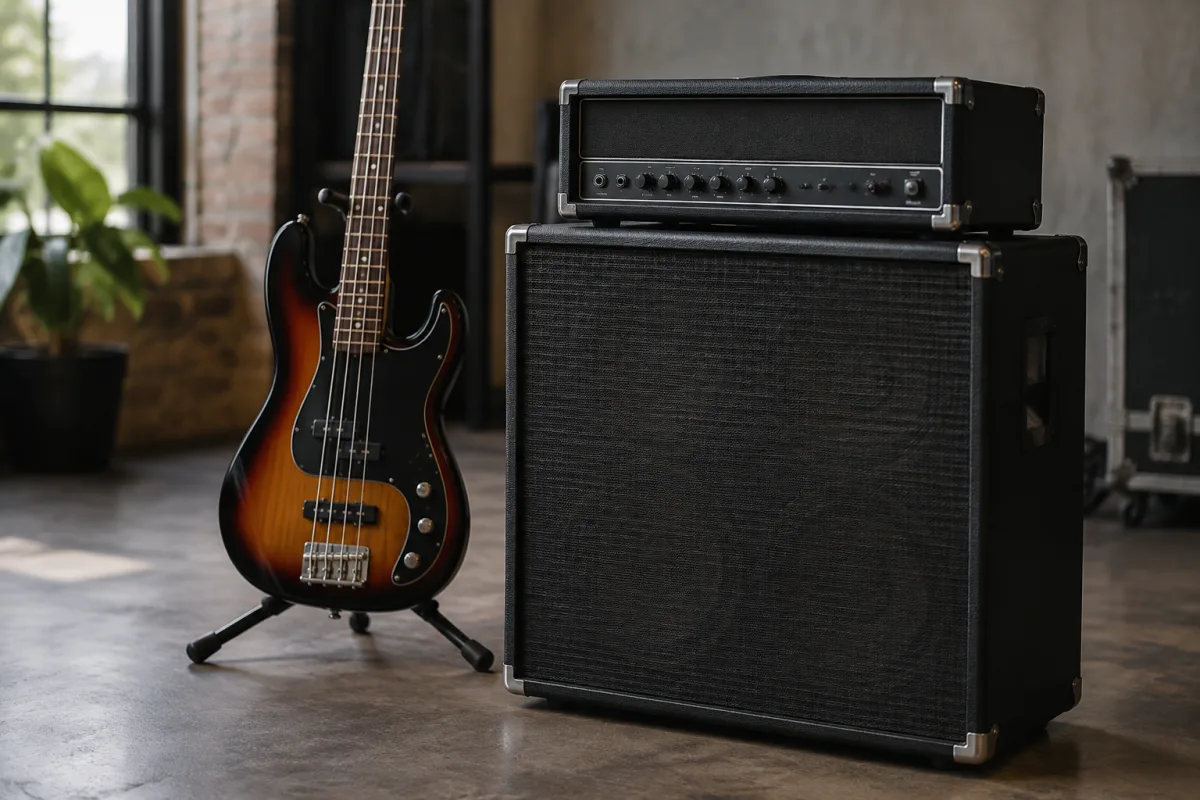
The amplifier bass guitar remains the cornerstone of professional bass tone, delivering the low-end punch that defines modern music. Whether you're playing intimate venues or large festivals, selecting the right amplifier bass guitar setup shapes your entire sonic character. An amplifier bass guitar rig transforms your instrument's natural output into controlled, powerful, and unmistakably yours.
Understanding Bass Guitar Amplifiers
A bass guitar amplifier consists of two essential components working in concert: the amp head, which contains the preamp and power amp electronics, and the speaker cabinet, which moves air to create actual sound. Unlike guitar amplifiers, which often prioritise overdrive and tonal colouration, an amplifier bass guitar focuses on clean, accurate tone with sufficient headroom to preserve note clarity and definition.
Bass frequencies demand more power than mid and high frequencies to achieve comparable volume levels. This is why bass amplifier bass guitar systems typically require higher wattage ratings than equivalent guitar setups. A 200-watt head represents the modern minimum for gigging professionals, though studio players and bedroom enthusiasts thrive with 50-100 watts.
Valve Versus Solid State: Choosing Your Amplifier Bass Guitar Type
The amplifier bass guitar market divides into two fundamental technologies, each offering distinct tonal characteristics:
- Valve amplifiers deliver warm, musical compression and natural harmonic saturation. Favourite among vintage enthusiasts and tone purists, valve amplifier bass guitar heads provide superior sustain and responsive dynamics. The trade-off is weight—valve combos and heads are significantly heavier than solid-state alternatives and require periodic maintenance.
- Solid-state amplifiers offer reliability, portability, and clean headroom at lower cost. Modern solid-state amplifier bass guitar technology rivals vintage valve tone, particularly in the midrange and upper frequencies. Professional touring musicians frequently favour solid-state for their durability and consistent performance night after night.
Digital modelling amplifiers represent a hybrid approach, offering both valve and solid-state simulations with flexibility that traditional amplifier bass guitar designs cannot match.
Wattage Requirements for Your Amplifier Bass Guitar
Choosing appropriate wattage depends entirely on your playing environment. A 50-watt amplifier bass guitar head suffices for studio recording and rehearsal spaces. Small clubs and coffee shop performances need 100-150 watts to cut through without excessive stage volume. Festival stages and large venues demand 300+ watts to ensure your low-end presence reaches the back of the room without distortion.
Perceived volume doesn't scale linearly with wattage—doubling power from 100 to 200 watts increases perceived volume by roughly 3 decibels, which is audible but subtle. This is why professional touring rigs often exceed 500 watts, providing sufficient headroom for dynamic playing without pushing the amplifier into distortion zones.
Cabinet Configuration and Speaker Selection
Your amplifier bass guitar cabinet choice profoundly affects tone and portability. Standard configurations include:
- 1x15 cabinets deliver deep, full lows with natural compression. Popular for jazz and blues, where rounded warmth matters more than precision.
- 2x10 cabinets offer enhanced midrange clarity and articulation, ideal for slap bass and modern funk styles.
- 4x10 cabinets provide a balanced middle ground, with strong lows and defined mids that cut through mix. The industry standard for general-purpose gigging.
- 2x12 cabinets combine reasonable portability with depth and punch, increasingly popular for professional touring.
Modern amplifier bass guitar cabinets often include variable EQ and ported designs that enhance low-frequency response without sacrificing portability.
Combo Amplifiers Versus Separate Heads and Cabinets
A combo amplifier bass guitar integrates the head and cabinet into a single unit, prioritising convenience and simplicity. Combos suit bedroom practice, local rehearsals, and smaller venues where portability matters. Disadvantages include limited upgrade flexibility—if you outgrow the speakers, you must replace the entire combo.
Separate head and cabinet systems provide modularity—upgrade your cabinet later without replacing the amplifier bass guitar head, or use multiple cabinets for larger venues. Professional touring musicians almost universally prefer this flexibility, though the initial investment is higher.
Key Features in Modern Bass Amplifiers
Contemporary amplifier bass guitar designs incorporate features that earlier models lacked. Look for:
- Variable low-pass filters for taming excessive sub-bass rumble
- Parametric or graphic EQ for precise tone shaping
- Compression circuits for consistency across dynamic playing
- DI outputs for clean mixing console connections
- Headphone outputs for silent practice
- Effects loops for external processors
- Lightweight construction using Class-D power amp technology
Legendary Amplifier Bass Guitar Brands and Their Character
Several manufacturers have defined bass amplifier bass guitar tone throughout decades. Ampeg originated the classic warm, punchy character that defined 1960s and 1970s bass tone. Hartke popularised lighter-weight aluminium speaker cones. Eden brought modern voicing and reliability. Markbass revolutionised compact design without sacrificing headroom. Each brand imparts characteristic tonal flavour—experienced players often identify the amplifier bass guitar brand by ear alone.
Setting Up and Optimising Your Amplifier Bass Guitar Rig
Proper setup maximises your amplifier bass guitar performance. Position your cabinet on a stand rather than the floor, angling it slightly upward to address your ear level—low-frequency response changes dramatically based on cabinet positioning. Experiment with EQ settings in various venues; an amplifier bass guitar that sounds perfect in your bedroom may need adjustment in a live room with different acoustics.
Avoid excessive gain staging. The cleanest tone comes from lower preamp gain with more volume control, not cranked preamp gain that colours the tone with harmonic distortion.
Conclusion
Your amplifier bass guitar selection ultimately reflects your playing style, venue requirements, and tonal preferences. Whether you favour warm vintage valve character or modern solid-state reliability, contemporary options exist at every price point and wattage rating. The perfect amplifier bass guitar rig is one you'll actually use consistently, remaining dependable through touring and studio work alike. Invest in quality equipment matched to your current needs, leave room for future expansion, and your amplifier bass guitar will serve your musical ambitions for decades.


Comments