


Bass Bridge article
Everything You Need to Know About Bass Guitar Bridges
A bass bridge is critical to tone, playability and intonation. Understand bridge types, materials, setup and maintenance for optimal bass performance.
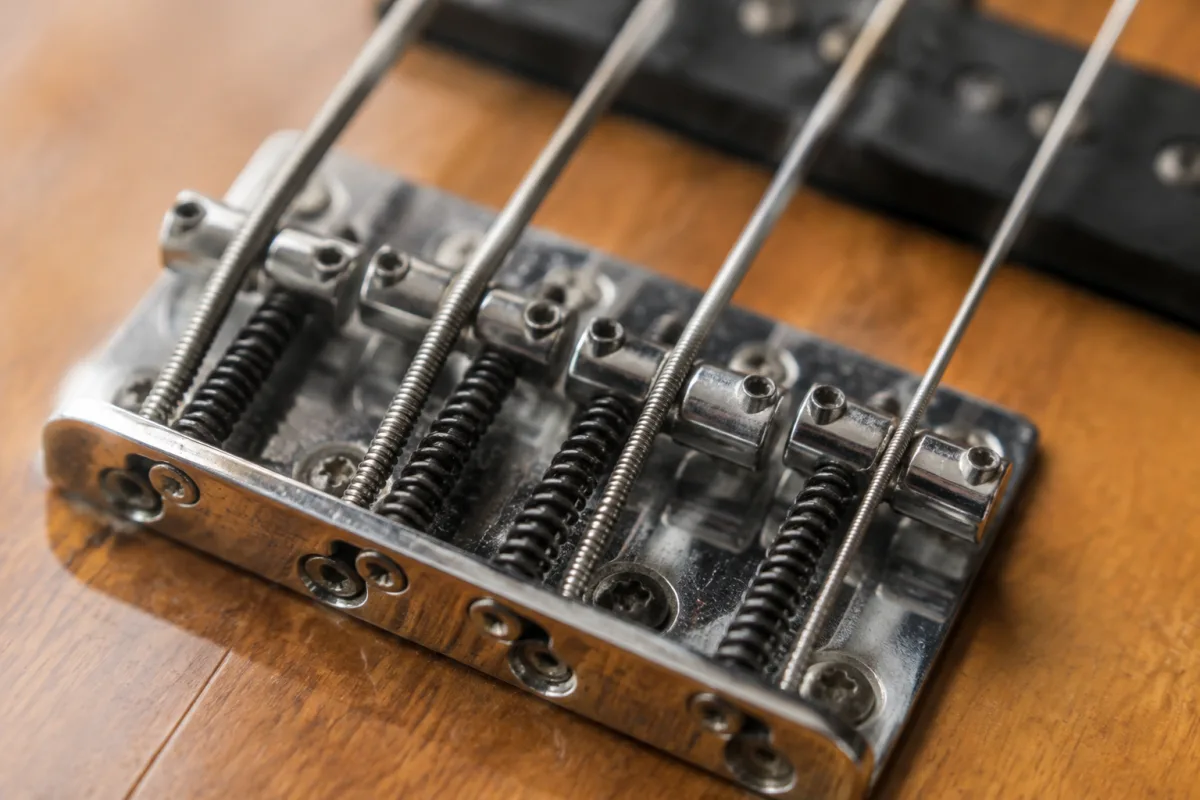
A bass bridge is far more than a simple component holding strings in place — it's a critical interface between the instrument's vibrating strings and its body resonance. Understanding bass bridge construction, materials and setup can substantially improve your instrument's tone, playability and long-term durability. Whether you're troubleshooting intonation issues or upgrading your bass guitar, knowing what to look for in a bass bridge is essential knowledge.
What Does a Bass Bridge Do?
The bass bridge serves three primary functions. First, it transfers string vibrations to the body, directly influencing tone and sustain. Second, it positions the strings at the correct height and angle over the fretboard, affecting playability and comfort. Third, it anchors the strings securely whilst allowing precise intonation adjustment. A quality bass bridge performs all three duties elegantly; a poor one compromises on all fronts.
Bass Bridge Types and Designs
Bass bridges vary considerably in design, reflecting different playing styles and sound preferences:
Solid Mass Bridges
These bridges feature a large, unified body of metal or composite material. They transfer vibrations efficiently, producing punchy, focused tones with strong attack and definition. Solid mass bridges suit aggressive playing styles and modern music genres. The weight and density contribute to improved sustain.
Lightweight / Open-Design Bridges
These utilise minimal material between individual string saddles, allowing the body to resonate more freely. They produce warmer, more organic tones with emphasised mid-range and low-frequency character. Jazz and funk players often prefer this design for its expressiveness and natural tone.
Adjustable-Bridge-Pin Bridges
A traditional design featuring individual bridge pins that hold strings in place. Each string can be adjusted for height and forward/backward positioning. This approach offers flexibility in setup but requires periodic maintenance and careful adjustment.
Fixed-Saddle Bridges
Modern bridges often feature fixed saddles at precise factory heights with intonation adjustment screws underneath. This design is cleaner, more stable and easier to maintain than bridge-pin systems.
Bridge Materials and Their Impact
Material choice significantly affects tone and durability:
| Material | Tonal Character | Durability |
|---|---|---|
| Brass | Bright, focused, punchy | Excellent, resists corrosion |
| Zinc alloy | Warm, smooth | Good, can corrode in damp conditions |
| Composite (resin/plastic) | Warm, organic, resonant | Fair, can wear under string pressure |
| Wooden saddle | Warm, traditional, rich | Requires maintenance, can crack |
Premium bass bridges typically employ solid brass or high-grade zinc alloys for optimal performance. Composite materials offer cost savings but sacrifice some tonal refinement and durability.
Intonation Adjustment
One of a bass bridge's critical functions is enabling precise intonation correction. Most quality bass bridges feature saddles positioned at the bridge's back edge, with adjustment screws underneath that move the saddle forward or backward to compensate for the string's natural intonation errors.
Proper intonation requires measuring each string's harmonic at the 12th fret against its fretted note and adjusting saddles accordingly. For flat intonation, you move the saddle backward; for sharp intonation, forward. This simple mechanism ensures your bass plays in tune across its entire fretboard.
Height and Action Setup
Bass bridge height directly determines action — the clearance between strings and frets. Most bridges allow height adjustment, either through shim systems underneath or adjustable bridge posts. Standard action heights range from 2.0–2.5mm on the bass side and 1.8–2.3mm on the treble side, though personal preference drives final adjustment.
Lower action enhances playability and reduces finger fatigue, but too-low action causes buzzing. Higher action improves tone projection and feels more comfortable for aggressive playing but demands more finger strength. Finding the sweet spot requires experimentation and careful setup.
String Spacing and Width
Bass bridges position strings at precise spacing that affects both playability and tone. Standard spacing for four-string basses centres around 19–20mm between string centres, accommodating plucking techniques and slap playing. Five-string bridges typically narrow this slightly to 16–18mm to keep overall width manageable.
Narrow spacing aids percussive playing and slap techniques; wider spacing suits fingerstyle and tap approaches. Your chosen bridge width should match your playing style and hand size.
Vibrato and Bridge Movement
Some bass guitars feature vibrato systems (whammy bars) that move the bridge to alter pitch. These systems require bridges designed specifically for controlled movement and return to original pitch. Proper setup involves ensuring the bridge returns to centre without resistance and maintains intonation even after vibrato use. Quality vibrato systems add considerable sophistication but require more maintenance than fixed bridges.
Upgrading Your Bass Bridge
Replacing a worn or poor-quality bridge can revitalise an instrument. Modern aftermarket bridges offer improved materials, precision engineering and tonal refinements. A quality upgrade typically costs £50–£200 and requires removing the old bridge, potentially drilling new mounting holes, and careful setup to ensure optimal playability and intonation.
Professional bridge installation is recommended unless you're experienced with bass setup. The investment in a quality replacement bridge often pays dividends in improved tone, sustain, and playability that make your bass feel like a different instrument.
Maintenance and Care
Keep your bass bridge clean by wiping it regularly with a dry cloth. Avoid allowing moisture to sit on metal bridges, as this encourages corrosion. Periodically check intonation and re-adjust saddles if string gauge changes. For bridge-pin systems, ensure pins fit snugly and replace any that crack or wear. Wooden saddles benefit from occasional conditioning with linseed oil to prevent cracking.
Conclusion
A bass bridge is an underrated component that profoundly influences your instrument's performance. Quality construction, appropriate materials for your tonal preferences, and careful setup create the foundation for excellent playability and inspiring tone. Whether you're working with your bass bridge's existing setup or considering an upgrade, understanding its role and capabilities empowers you to optimise your instrument and get the most from your playing.






Comments