


Bass Book Buying guide
Bass Book: A Complete Buyer's Guide
A buying guide for bass instruction books covering categories, skill levels, teaching approaches, and how to select materials matching your goals.
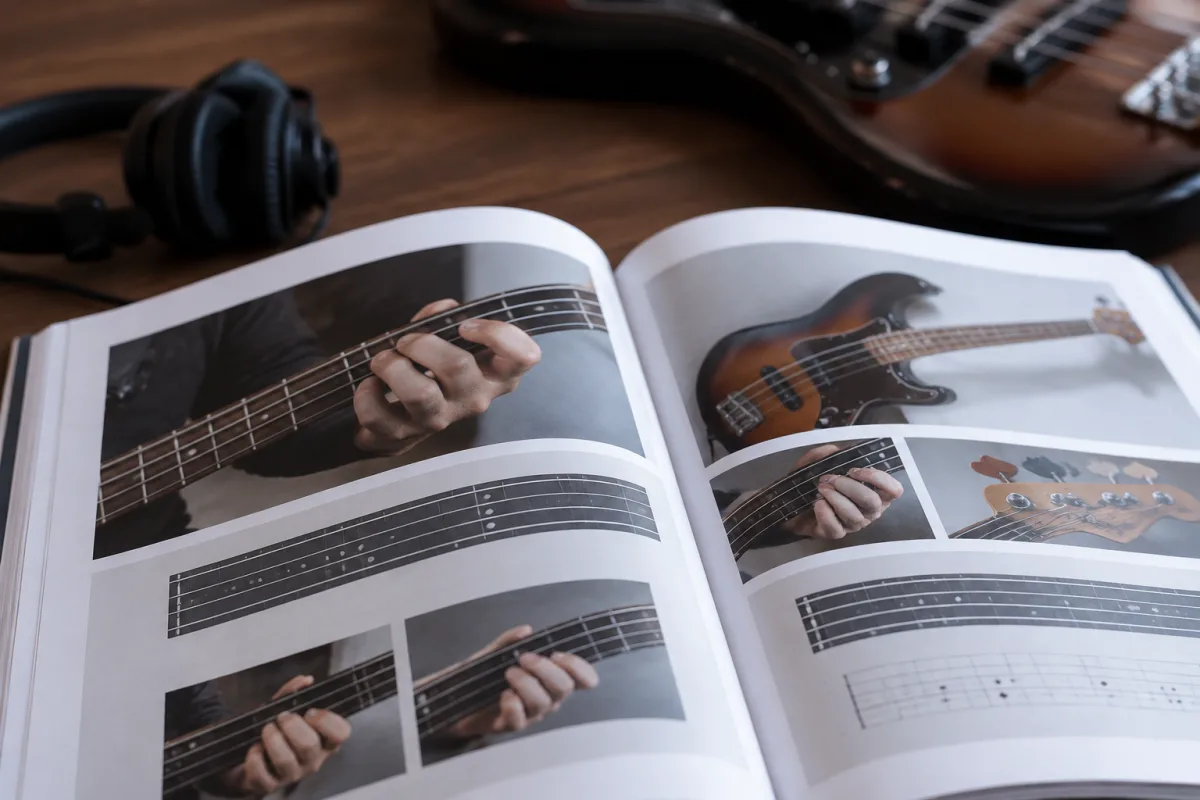
Selecting quality bass instruction books remains one of the most economical investments a bassist can make. Unlike video tutorials requiring subscriptions or online courses demanding commitments, a single well-chosen bass book provides structured, accessible learning material you control entirely. This guide focuses on purchasing decisions: distinguishing quality instructional books from mediocre alternatives, understanding different teaching approaches, identifying books matching your skill level and musical goals, and avoiding the pitfalls that lead most bassists to abandoned purchase decisions.
Bass Book Categories and Teaching Approaches
Bass instruction books fall into distinct categories, each serving different learning needs and musical goals. Fundamentals and technique books (typically £15-25) teach hand position, fingering mechanics, and basic musicianship, usually structured for complete beginners. Genre-specific books (£18-30) focus on jazz, funk, rock, or classical bass styles, assuming prior understanding of basic technique. These books excel at developing stylistic fluency and genre-appropriate phrasing but require foundational knowledge. Transcription books (£12-20) present transcribed bass lines from professional recordings with notation and tab, useful for studying specific players' approaches. Theory and composition books (£20-35) emphasize harmonic understanding and bass line composition. Ear training and fretboard knowledge books (£15-25) develop practical skills often neglected in other instruction methods. Understanding which category matches your current needs prevents purchasing inappropriate materials.
Notation and Tab: Critical Considerations for Purchasing
Most bass books use some combination of standard musical notation and guitar tablature. Beginning bassists often assume tab (simplified numerical representation of frets) eliminates the need for notation literacy—this assumption creates problems. Notation conveys rhythm, dynamics, and phrasing information that tab cannot express; many bass books heavy on tab lack rhythmic precision. Choose books offering both notation and tab, using tab for initial position reference but prioritising notation for accurate learning. Books using notation exclusively suit musicians with prior reading ability or those committed to developing this skill. Evaluate sample pages before purchasing to confirm notation presentation clarity and tab accuracy.
Budget Brackets and Quality Indicators
Bass instruction books range from budget alternatives (£8-12) to premium editions (£35-50+). Budget books often feature small print, unclear photographs, and inadequate space for practical exercises—many bassists abandon these after weeks of frustration. Mid-range books (£15-25) typically offer reasonable clarity, adequate illustration, and structured progression. Premium editions (£25-50+) feature larger formats, professional photography, detailed illustrations, and comprehensive content. Price alone doesn't guarantee quality; many excellent books cost under £20, whilst some expensive editions disappoint with poor organisation and dated approaches. Read customer reviews from experienced bassists before purchasing; user feedback reveals strengths and weaknesses that cover descriptions obscure.
Author Credentials and Teaching Philosophy
The most critical purchasing factor involves evaluating the author's credentials and teaching philosophy. Bass instruction books authored by professional working bassists typically offer practical, applicable information reflecting real-world playing. Authors teaching at respected music conservatories bring academic rigour and structured methodology. Conversely, books authored by amateur enthusiasts or self-published works often contain inaccurate information and incomplete methodology. Research the author's professional background and reputation within the bass community before committing to purchase. Teaching philosophy matters significantly: some authors emphasize technique above musicality (appropriate for fundamentals); others prioritise ear development and song understanding (better for intermediate musicians). Matching the book's philosophy to your learning preferences determines whether the purchase proves valuable.
Identifying Books That Match Your Skill Level
Purchasing books mismatched to your current ability derails learning progress. Beginner books addressing absolute fundamentals frustrate experienced players; advanced theory books overwhelm newer musicians. Evaluate your current skills honestly: can you read basic notation, understand fretboard geography, and play simple riffs? If yes, fundamentals books waste your investment; select intermediate genre-specific or technique-focused materials instead. Do you struggle understanding how bass lines work within harmonic contexts? Theory books provide essential foundation. Many publishers classify books clearly by difficulty level; utilise these categorisations to avoid inappropriate selections. When uncertain, contact the publisher or experienced bassists for guidance rather than guessing.
Physical Format and Durability Considerations
Bass instruction books undergo substantial wear during practice; cheap paper, thin binding, and poor construction degrade quickly. Premium books feature hardcover construction, quality paper, and sturdy binding surviving years of daily reference. Spiral binding allows books to remain open during practice; many bassists find this more practical than traditional perfect binding. Lightweight books reduce hand fatigue during extended practice sessions. Large-format books (typically 9x12 inches or larger) display notation and photographs more clearly than compact versions. Evaluate physical characteristics alongside content quality; a comprehensive teaching method becomes useless if pages fall out after months of use.
Supplemental Materials and Digital Access
Many contemporary bass instruction books include supplemental audio/video materials, online forums, or digital access codes. These extras significantly enhance learning when the material proves engaging and professionally produced. Some books include companion videos demonstrating techniques described in text—these substantially improve technique book effectiveness. Interactive online communities allow readers to discuss material with other students and occasionally the author. Evaluate supplemental material quality before purchasing; poorly-produced videos or inactive forums waste digital access. Confirm any included access codes or download instructions before finalising purchase; digital materials often require initial registration or account creation.
Evaluating Specific Recommendations and Reviews
For additional comprehensive information on bass instruction methods and book comparisons, explore our complete guide to bass books, which covers detailed reviews of classic and contemporary instruction texts.
Research books thoroughly before purchasing. Request sample pages from publishers if available. Read multiple customer reviews from verified purchasers on retail sites. Consult experienced bassists within your musical community regarding their favourite instruction materials. Many local music libraries stock bass instruction books allowing free preview before purchasing. This research investment prevents frustrating, wasted purchases of inappropriate materials.
Common Pitfalls When Selecting Bass Books
Most bassists make predictable mistakes when choosing instruction materials. First, many select expensive books assuming price correlates with quality; numerous affordably-priced books outperform premium-priced alternatives. Second, bassists frequently purchase books targeting the "wrong" level, expecting materials to bridge skill gaps; books teach forward, not backward. Third, many select books emphasising the wrong musical style; a jazz theory book provides little value for aspiring rock bassists. Fourth, purchasers often ignore physical format issues, discovering binding failures or illegible notation after the return window closes. Fifth, many expect books alone to create proficiency, neglecting the 1-2 hour daily practice these materials require. Bass books provide structured learning guidance; they cannot substitute for consistent practice.
Conclusion
Selecting quality bass instruction books remains one of the most economical learning investments available. Prioritise books authored by professional working bassists with strong community reputation. Choose materials matching your current skill level and musical goals honestly. Emphasise both notation and tab for comprehensive learning. Evaluate physical format for durability; premium construction supports years of use. Read multiple customer reviews from experienced players. Supplement book learning with consistent daily practice—materials provide guidance; your playing provides results. Budget £20-30 per book anticipating 6-12 months of active use, creating a personal library of trusted reference materials supporting lifelong musical development.



Comments