


6 String Bass Tuning Buying guide
6 String Bass Tuning: A Complete Buyer's Guide
Choosing a 6-string bass means prioritising tuning stability. This guide covers hardware quality, what to look for when you're buying and how to avoid instruments that drift out of tune.
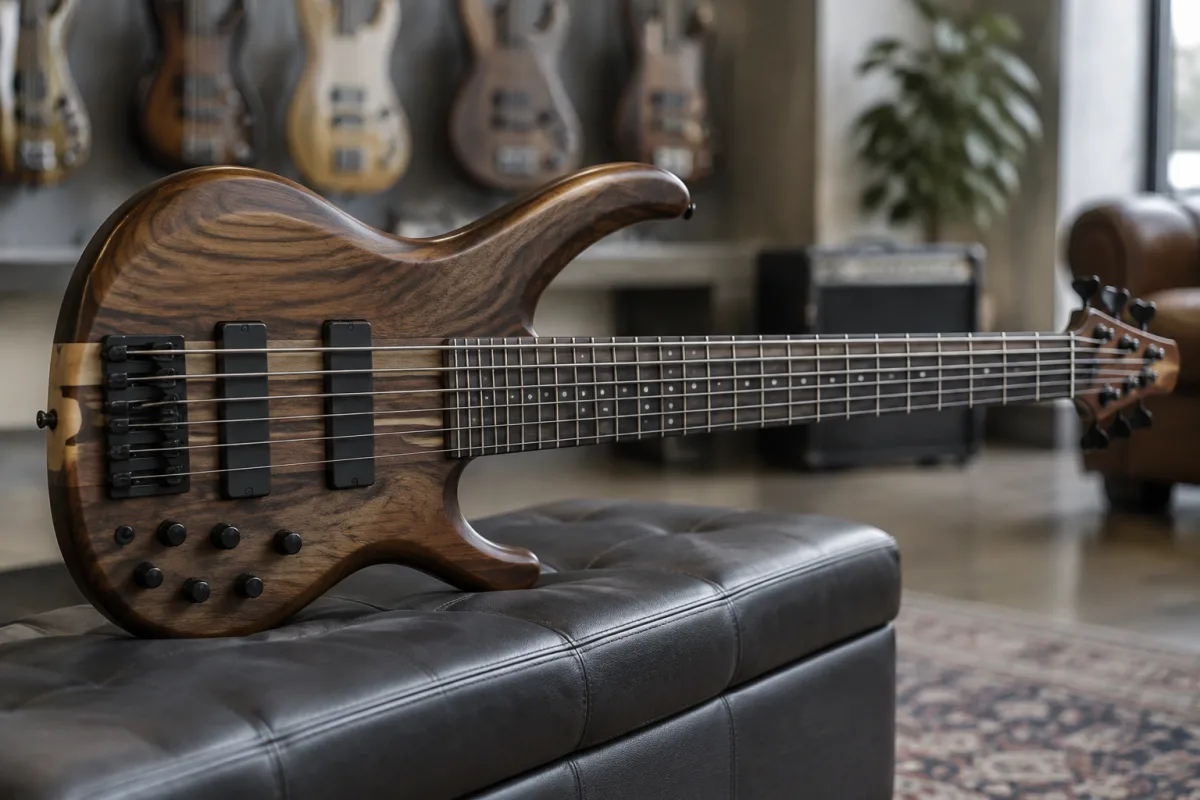
A 6-string bass is an attractive choice for players who want the flexibility of a wider range and more tonal options than a traditional four-string bass. But when you're buying a 6-string bass, tuning stability is one of the most critical factors to evaluate. A poorly designed 6-string bass that doesn't hold its tuning will frustrate you constantly. This guide cuts through the noise and focuses on exactly what matters when you're choosing and buying a 6-string bass—with particular attention to tuning stability, hardware quality and value for money.
Understand Why Tuning Matters More on a 6-String Bass
A standard bass has four strings. A 6-string bass adds two extra strings (usually a high C and a low B). Those extra strings, combined with higher tension, place extra stress on the headstock and tuning hardware. A poorly made 6-string bass will go out of tune quickly. The strings won't hold pitch. You'll spend your session retuning instead of playing.
A quality 6-string bass is built to handle this stress. Heavy-duty tuning machines, a reinforced headstock and premium hardware all contribute to tuning stability. When you're buying a 6-string bass, this is not a luxury feature—it's a fundamental requirement. Visit our complete guide to 6-string bass tuning if you want to understand tuning theory and technique. This buying guide focuses on choosing a 6-string bass that will actually hold its tuning in real-world use.
Key Hardware Features That Determine Tuning Stability
Tuning Machine Quality
Budget 6-string bass guitars often have cheap tuning machines—the gears slip, they're inconsistent, and they create tuning instability. When you're buying a 6-string bass, look for tuning machines with a high gear ratio (at least 20:1). This means each turn of the knob provides precise control. Cheap machines have low ratios and you overshoots the note.
Quality brands like Gotoh, Schaller and Hipshot are industry standards. A 6-string bass with quality tuning machines costs more upfront but holds tuning far better. This is worth the investment.
Headstock Design and Reinforcement
The headstock—where the strings attach at the top of the 6-string bass—experiences tremendous stress from six strings pulling at different angles. A poorly reinforced headstock will warp, causing tuning instability. Budget 6-string bass guitars often have weak headstocks.
When you're buying a 6-string bass, look for one with a solid, thick headstock. Some manufacturers add a reinforcement truss rod or multiple wood laminations. A quality 6-string bass headstock feels solid and shows no sign of flex when you pull gently on the strings.
Bridge Hardware
The bridge (where the strings rest on the body of a 6-string bass) affects tuning stability. A flimsy bridge that rocks or flexes will cause tuning drift. Quality 6-string bass guitars have heavy, rigid bridges. Mass-produced budget models often have thin, wobbly bridges.
Brands like Badass, Hipshot and Graph Tech make premium bridges. Some 6-string bass guitars come with these as standard; budget models don't. If you're buying a 6-string bass with a cheap bridge, budget extra money to upgrade it (£100–£200).
Common Types of 6-String Bass Tunings (and What They Tell You)
Low B Standard (B-E-A-D-G-C)
The most common tuning for a 6-string bass. The low B note is much deeper than a four-string bass. This gives you the extra range without sacrificing the familiar four-string tuning in the upper strings. When you're buying a 6-string bass, this is the standard tuning you can assume—unless the bass has a shorter scale or is specifically designed for a different tuning.
High C Tuning (E-A-D-G-B-E)
Less common, but some 6-string bass players prefer a high C on top instead of a low B on the bottom. This keeps the bass's four-string range intact and adds a brighter upper register. A 6-string bass set up for high C tuning requires different string gauges. When you're buying a 6-string bass, confirm which tuning it's designed for—you don't want to force a bass into the wrong tuning.
Practical Buying Checklist for a 6-String Bass
- Tuning machines: Check the brand and gear ratio. Gotoh, Schaller and Hipshot are premium. Cheap unknowns are a red flag.
- Headstock: Hold the 6-string bass and gently pull on the strings at the headstock. Does it flex? Does it feel solid? Flex is a problem.
- Bridge: Look at the bridge hardware. Is it heavy and rigid or thin and light? Press on it gently. Does it rock?
- Neck: A 6-string bass puts extra stress on the neck. Look for one with a thick neck, multiple reinforcement rods and no obvious flex.
- String compatibility: Confirm the nut width and bridge spacing. A 6-string bass should accommodate standard 6-string bass strings (usually .130–.032 gauge for B-E-A-D-G-C).
- Test before buying: Play the 6-string bass for 10 minutes, then check each string's tuning. Does it stay on pitch? Does any string drift?
- Ask about setup: When you buy a 6-string bass, ask if it comes with a professional setup (action adjustment, string height, intonation check). Budget £50–£100 for this if not included.
Price Tiers and What You Get
Under £400
Budget 6-string bass guitars from lesser-known brands. Tuning stability is often mediocre. The hardware is cheap. If you're buying here, expect to spend extra on upgrades (better tuning machines, bridge) to get playable tuning stability. Only buy at this level if you're just experimenting with 6-string bass.
£400–£800
Solid entry-level territory. Brands like Ibanez, Yamaha and Squier offer 6-string bass guitars with decent tuning stability in this range. Not perfect, but genuinely playable. A quality 6-string bass here will hold tuning well enough for most situations.
£800–£1,500
Professional-grade 6-string bass guitars. Fender's premium models, ESP, Warwick entry-level 6-string bass guitars. Tuning stability is excellent. Hardware is quality. These are instruments built to handle touring and heavy use. Most serious players buy at this level.
Above £1,500
High-end boutique 6-string bass guitars. Custom shops, hand-made instruments, exotic wood. Tuning stability is exceptional. You're paying for craftsmanship and customisation. Only buy here if you have deep experience and specific tonal requirements.
Common Pitfalls When Buying a 6-String Bass
- Buying based on looks or brand alone, ignoring tuning hardware. A beautiful 6-string bass that doesn't hold tuning is useless. Always inspect the tuning machines, headstock and bridge before buying.
- Assuming all 6-string bass guitars hold tuning equally well. They don't. Quality matters enormously. A £300 6-string bass might go out of tune every 10 minutes. A £600 model from a reputable brand might stay in tune for hours.
- Not testing the 6-string bass before buying. Play it for at least 10 minutes, then check the tuning. Play it again and check again. This tells you if tuning stability is acceptable.
- Ignoring the neck quality. A 6-string bass's neck works harder than a four-string's. A weak neck will twist or warp over time, destroying tuning stability. Inspect the neck carefully.
- Forgetting to budget for setup. A new 6-string bass should be professionally set up. Budget an extra £50–£100 for this. A properly set-up bass holds tuning far better than one straight out of the box.
Final Word
The best 6-string bass is one that holds its tuning reliably and inspires you to play every day. Don't compromise on tuning stability—it will haunt you. Spend a bit more upfront on quality hardware, a solid headstock and good tuning machines. Test before you buy. And when you find a 6-string bass that stays in tune and feels great in your hands, you've found the right instrument. Quality tuning stability is not a luxury—it's the foundation everything else is built on.


Comments