


Acoustic Archtop Guitar Buying guide
Acoustic Archtop Guitar: A Complete Buyer's Guide
Acoustic archtop guitar buying guide: understand arched construction, listen critically, inspect structural integrity, and evaluate specialised craftsmanship.
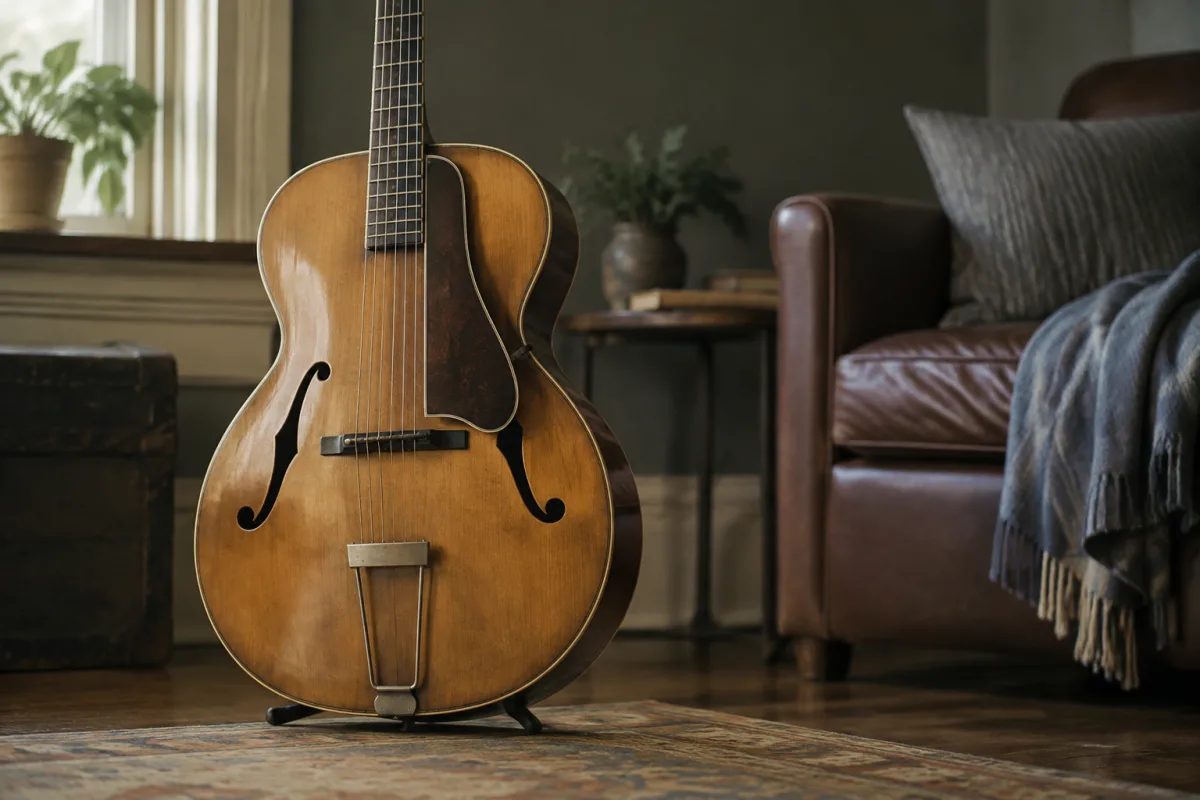
An acoustic archtop guitar sits at the intersection of specialised craftsmanship and serious investment. If you're shopping for an archtop—whether for jazz, classical, or personal musical expression—you're evaluating an instrument whose construction, materials, and playing characteristics differ fundamentally from standard flat-top acoustics. This buying guide cuts through the specialised terminology and focuses on what genuinely matters: understanding archtop construction, assessing tonal quality and playability, identifying common issues, and ensuring you're making a justified investment at your price point. Unlike mass-produced acoustics, archtops demand meticulous evaluation.
Understanding Archtop Construction and Why It Matters
Archtop guitars feature curved (arched) top and back plates, distinctive f-holes (similar to violins), and usually heavier construction than flat-top acoustics. This arching isn't decoration—it fundamentally affects how the instrument resonates and projects sound. Arched plates are stiffer than flat plates, producing brighter, more defined tone with excellent projection. This is why archtops dominate jazz contexts where cutting through amplified instruments matters.
Construction quality varies dramatically. Hand-carved archtops represent professional-grade instruments built to last decades. Factory-made archtops using curved moulds offer more affordable options with acceptable playability. Understanding which construction method your candidate uses reveals realistic expectations for tonal character and durability.
Tonal Character and Listening Assessment
Play any archtop candidate through its full range, listening specifically for projection and sustain. Archtops should ring clearly across all registers without dead spots or muddiness. The treble should be bright and defined, the bass should punch clearly without blooming excessively. Jazz archtops particularly emphasise percussive attack and articulation—notes should speak instantly without lag.
Compare by playing identical passages on different archtops. You'll hear tonal differences immediately: some offer warm, smooth character; others sound aggressive and cutting. Your preference is legitimate—choose based on what excites your ears musically, not theoretical specifications. Recording 10-second samples of different instruments helps you compare later when memory fades.
Wood Selection and Aging Characteristics
Archtops typically use spruce for the top and maple for the back and sides—these hardwoods resonate predictably and age beautifully. Examine the wood grain and colour. Vintage archtops show distinctive amber or brown patina from decades of string vibration and oxidation. Newer instruments appear lighter. This visual difference doesn't indicate quality—it's simply age expressed through colour.
Request information about wood sourcing if available. Older instruments using European or aged tonewoods sometimes offer subtle advantages in resonance, though these are marginal and subjective. Modern makers using carefully selected contemporary woods build equally excellent instruments. Don't assume vintage wood automatically means superior tone.
Construction Integrity and Structural Assessment
Examine the top carefully for cracks, particularly radiating from the sound hole or bridge area. Fine surface checking (hairline cracks throughout the finish from age and humidity cycling) is acceptable on vintage archtops but undesirable on new instruments. Major cracks indicate either accidental damage or climate stress requiring professional repair.
Check the seam where the top meets the sides—it should be perfectly glued with no gaps or lifting. Similarly, examine the back seam. Any separation suggests either age-related glue failure or poor construction. The neck joint (where neck attaches to body) is critical—any gaps or movement indicates structural compromise requiring professional evaluation.
Bridge Condition and Setup
The archtop bridge is typically a floating wooden piece resting on the top, held in place by string tension alone. It should sit perfectly straight and perpendicular to the top. Bridges tilting or leaning indicate either top deformation or improper fitting. A bridge that's visibly damaged, cracked, or misshapen should be replaced (typically £50–150 for a quality bridge).
Inspect bridge positioning—it should sit at precisely the correct location for intonation. Bridges moved forward or backward indicate either accident or past repair attempts. Verify that the bridge feet contact the top properly with no rocking or movement.
Fret Condition and Playability
Archtops typically have narrower, more closely-spaced frets than flat-top acoustics. Sight down the fretboard checking for uniform fret height—they should form a perfectly straight line with no visible high or low spots. Play every fret on the E and B strings listening for buzzing or dead spots. Fret wear on vintage archtops is often significant and may require refrets (expensive, typically £400–600).
Action should feel comfortable—measure at the 12th fret (typically 2–2.5mm for archtops). High action makes playing difficult; low action causes buzzing. Proper archtop setup balances playability against tonal resonance—forcing low action sometimes compromises tone.
Pricing Across Archtop Categories
Budget factory-made archtops run £300–800 new, offering adequate playability but limited tonal refinement. Mid-range archtops (£800–2,500) from respected makers deliver genuine musical playability and satisfying tone. Professional-grade hand-carved archtops command £3,000–10,000+. Vintage archtops vary enormously: genuinely excellent instruments from the 1920s-1950s may cost £2,000–5,000, whilst exceptional examples fetch significantly more.
Price should reflect construction quality, tonal character, and condition. Don't assume expensive means better—evaluate the specific instrument critically. A well-maintained budget archtop often outperforms a neglected expensive instrument.
Common Issues and Pitfalls
The most frequent problem: humidity damage causing top or back warping. An archtop stored in fluctuating humidity may develop ripples or waves in the top. This doesn't necessarily doom the instrument but affects both playability and tone. Have a professional evaluate any warping before committing.
Another issue: loose linings or internal bracing. Because archtops support significant string tension through their curved construction, internal bracing is critical. Listen for rattling or buzzing that persists across multiple frets and strings, suggesting internal movement. This requires professional disassembly to address properly.
Avoid any archtop showing major cracks, significant fret wear without documentation of recent refrets, or visible water damage. These represent restoration projects rather than playable instruments worth purchasing.
Professional Inspection and Setup
Given archtop guitars' price point and specialised construction, professional inspection before purchase is worthwhile. A skilled luthier (typically charging £75–150 for evaluation) can assess internal condition, predict maintenance requirements, and advise whether the specific instrument represents good value. This expense often saves thousands by identifying hidden problems.
Budget for professional setup after purchase—typically £100–200 for archtops due to their specialised requirements. Setup optimises playability, verifies bridge positioning, and ensures the instrument performs at its potential.
For comprehensive information about acoustic archtop guitar specifications and construction, refer to the complete guide to acoustic archtop guitars, which explores detailed construction methods and tonal characteristics in depth.
Making Your Purchase Decision
Choose an acoustic archtop based on tonal character, playability, and construction integrity. Evaluate multiple candidates if possible, recording samples to compare later. Ensure professional setup fits your budget, and don't commit until you're genuinely confident the specific instrument meets your needs musically. An archtop is a significant investment—take your time evaluating carefully before purchasing.


Comments