


Wah Pedal article
Wah Pedal Explained: Features, Types and Tips
Wah Pedal Explained: Features, Types and Tips
A wah pedal is one of those effects that's immediately recognizable but a bit mysterious if you haven't looked under the hood. It's also one of the few pedals you'll use with your foot, which makes it different from everything else on your board. If you've heard that vocal-like "wah wah" sound in rock, funk or blues music, you've heard a wah pedal at work. And if you've ever wondered exactly what's happening when a player rocks that pedal back and forth, this is the guide for you.
What Is a Wah Pedal, Really
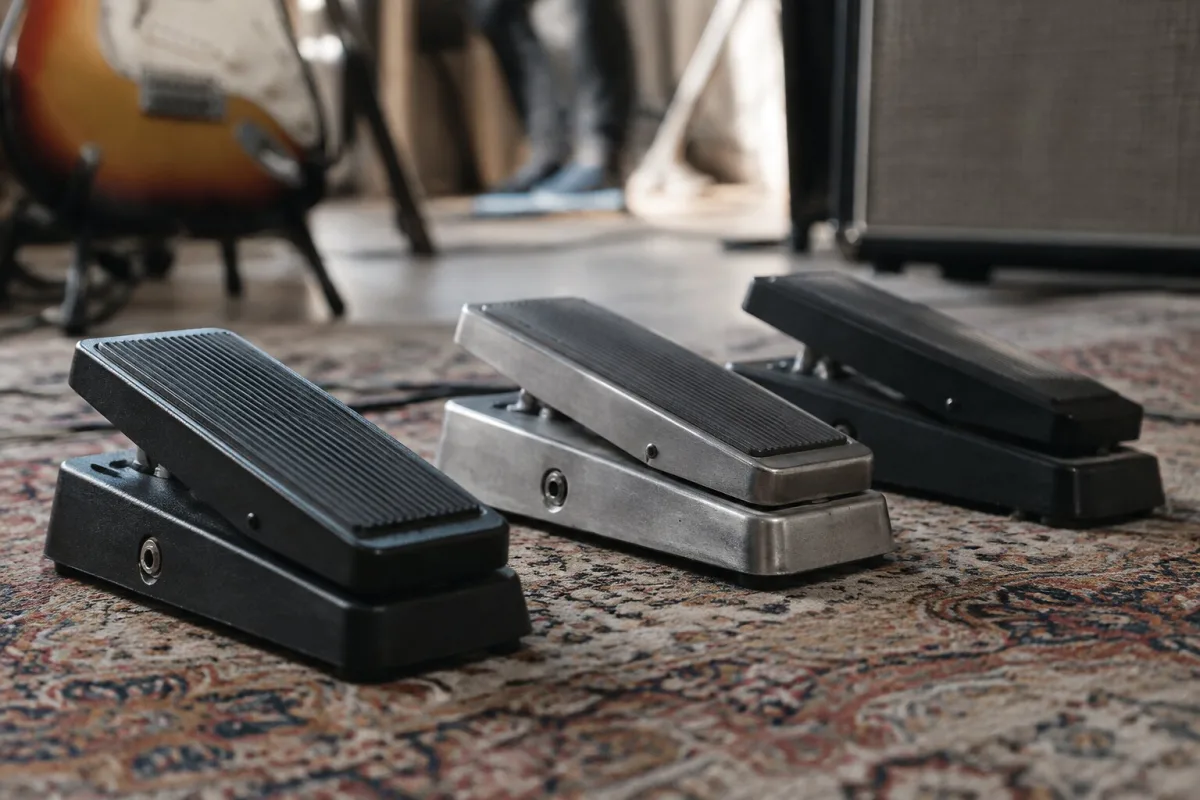
Technically, a wah pedal is a foot-controlled resonant filter. That might sound complicated, but the basic idea is straightforward. When you step on a wah pedal and rock the treadle, you're moving a filter that emphasizes different frequencies of your guitar signal. As the treadle moves, the filter sweeps from darker, lower frequencies (heel-down) to brighter, higher frequencies (toe-down), creating that distinctive vocal sound.
The pedal itself consists of a few key components: a treadle you press with your foot, an on/off switch, a filter circuit and a potentiometer that changes where the filter is focused. When you step on a wah pedal, that potentiometer shifts the filter's center frequency in real time. The filter isn't simply turning bass up or treble up—it's emphasizing a specific band of frequencies and moving that emphasis up and down the spectrum as you rock the treadle.
Think of it like this: the wah pedal takes a narrow slice of your guitar's tone and moves that slice around. That moving slice is what creates the "wah" sound. It's the same principle that gives a muted trumpet that vocal quality, which is where wah pedals got their inspiration back in the 1960s.
Vox Versus Cry Baby
If you're looking at wah pedals, you'll bump into two main families: Vox-style wahs and Cry Baby models. Understanding the difference matters because they sound different and feel different to play.
Vox-style wahs, like the classic V846, have a smoother, more vocal character. The resonant peak sits in the midrange, which gives them a warmer, more singing quality. A lot of players prefer this character for solos and lead work because it sounds natural and musical without being aggressive.
Cry Baby pedals, which started with the Thomas Organ version in 1967 and are now made by Dunlop, encompass a broader range. You can find vintage-style Cry Babies that are relatively subtle, but you'll also find modern versions with higher-gain voicings that can cut through heavy distortion and dense arrangements. The Cry Baby sound tends to be more aggressive and cutting than a Vox-style wah pedal.
Neither is objectively better. A Vox-style wah pedal might be perfect for blues or classic rock, while a Cry Baby might suit someone playing metal or funk where you need more presence and punch. Test both if you can, because the choice really depends on what you're playing and what sound you're after.
Understanding the Controls
Modern wah pedals come with more options than they did decades ago, and it's worth knowing what they do.
Frequency range: This determines how low and how high your wah pedal sweeps. A lower-range wah sounds fuller and less piercing. A higher-range model can cut through distortion and heavy arrangements more effectively. If you're playing clean or lightly overdriven, you've got more flexibility. If you're playing high-gain, you might want a wah pedal with a higher frequency range.
Q or resonance: Q describes how sharp and concentrated the resonant peak is. Higher Q means the wah pedal creates a narrower, more pronounced and more vocal sweep. Lower Q tends to sound broader and smoother. If you like the classic, aggressive wah sound, higher Q is what you're after. If you want something more subtle, lower Q might suit you better.
Bypass options: True bypass means the signal is routed around the pedal when it's off, which can reduce any unwanted coloration from an inactive circuit. Buffered bypass keeps the pedal electronically active, which can be useful with long cable runs. For most setups, the difference is minor, but if you've got a large pedalboard or notice tone loss, it's worth considering.
Switching: Some wah pedals use a conventional toe switch under the front of the treadle. Others have a separate footswitch, which lets you activate the effect without needing to press hard on the treadle. Switchless activation engages when you step on the pedal and disengages when you lift your foot. Each approach has fans; it's mostly down to personal preference.
How a Wah Pedal Works in Practice
The real magic of a wah pedal is in how you use it. The most common approach is to rock the treadle in sync with your playing. If you're playing eighth notes, move the wah pedal with those eighth notes. If you're playing triplets, match the triplet rhythm. This synchronization is what makes the effect musical rather than just a gimmick.
Here's a key insight: you don't always have to sweep the entire range. Try parking the wah pedal at a halfway position and leaving it there. This is called "half-wah," and it creates a fixed, nasal, midrange-forward sound. A lot of players use this technique for rhythm parts and solos because it can add character without the full sweep.
Placement in your signal chain matters too. If you put the wah pedal before distortion or fuzz, the distortion responds to the changing frequency emphasis, which sounds aggressive and vocal. If you put it after, the sweep becomes more obvious and can sound more controlled or synthetic. Most players put it before distortion, but there's no universal rule. Experiment and see what works for your rig.
Practical Considerations
When you're shopping for a wah pedal, keep these points in mind. First, start by listening to the wah pedal with a clean or lightly overdriven sound. This lets you hear the full movement without the masking effect of heavy distortion. Once you understand the pedal's character, then try it through your own amp and gain settings.
Second, don't assume a wah pedal will work the same through every amplifier. A frequency range that sounds excellent through one amp might become harsh or indistinct through another. If possible, try the wah pedal with the equipment you'll actually use.
Third, pay attention to how the treadle feels. A loose treadle lets you make fast sweeps but can be hard to hold at a precise position. A tight treadle is easier to park at a fixed position but feels slower. Some pedals allow you to adjust treadle resistance, which is a useful feature.
Finally, check the power requirements before you buy. Most wah pedals use a 9-volt battery or an external 9-volt supply, but polarity and current draw can vary. Always verify the manufacturer's specs to avoid damaging the pedal.
Getting the Most from Your Wah Pedal
Once you've got a wah pedal, here are some practical tips. Start with slow heel-to-toe sweeps and gradually synchronize the movement with your picking patterns. Use short, deliberate movements rather than sweeping through the entire range on every note. For lead guitar, try parking the wah pedal near the upper-mid portion of the sweep instead of continuously moving it. And with high gain, reduce the resonance if the sound becomes shrill or produces an unpleasant peak.
If the wah pedal produces a big volume jump, test a lower-resonance setting, try a different position in your signal chain, or look for a model with an output-level control. Every rig is different, and what works for one setup might need tweaking for another.
A wah pedal is a tool, and like any tool, you get the most from it by understanding how it works and practising how to use it. It might take a bit of time to find the right one for your playing style, but once you do, it's a pedal you'll probably keep for years.





Comments