


Bass Wah Pedal article
Bass Wah Pedal for Beginners: A Complete Guide
Your first guide to playing bass wah pedal: selecting an entry-level pedal, mastering basic technique and developing natural-sounding expression.
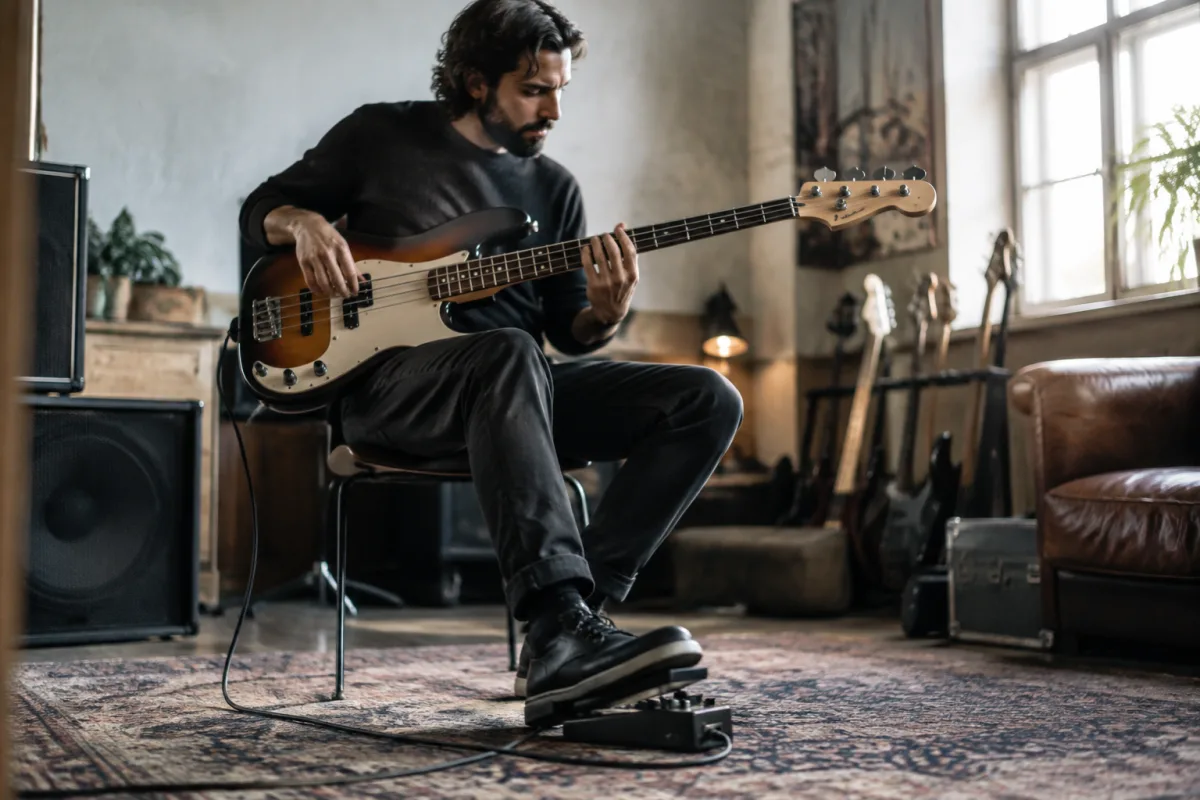
A bass wah pedal can sound incredibly cool, but figuring out where to start can feel overwhelming if you've never used one. This beginner's guide strips away the mystery and shows you how to get a bass wah pedal sounding good immediately—without needing expensive gear or years of experience.
What a Bass Wah Pedal Actually Does (And Why You Want One)
A bass wah pedal is a footswitch effect that sweeps a filter across your bass tone, creating a vocal "wah" sound. When you rock the pedal forward, the filter moves higher; rock it back, and it moves lower. The movement is the whole point—a bass wah pedal is about expression and groove, not just tone colouration.
For beginners, the appeal is immediate: a bass wah pedal transforms a boring half-note into something that sounds present and funky. You'll hear a bass wah pedal in funk (Bootsy Collins, Victor Wooten), metal (low-tuned riffs), and modern rock. A bass wah pedal is one of those effects that sounds like it requires mastery but actually works well with just a few minutes of practice.
Entry-Level Bass Wah Pedals: What to Look For
Good beginner bass wah pedals cost £40–£120. Here's what matters when you're choosing your first one:
- Bass-specific design: A standard guitar wah pedal sounds thin on bass. A bass wah pedal is tuned to sweep through frequencies that actually matter on lower strings—thicker, more pronounced, more musical. Get a bass wah pedal, not a guitar wah.
- Easy heel/toe range: Some bass wah pedals have a narrow sweep (annoying to control precisely); others have a huge range (tiring to operate). A balanced bass wah pedal lets you control expression without straining your foot.
- Good peak clarity: The best part of a bass wah pedal is the peak—the brightest point of the sweep. Budget bass wah pedals sometimes have a dull peak. Listen to demos; if the peak is thin or muted, skip that model.
- Sturdy housing: A bass wah pedal lives on your pedalboard and takes footsteps. Cheap plastic cracks. Spend enough on a bass wah pedal to get metal or reinforced housing.
Powering Your Bass Wah Pedal
Most bass wah pedals run on a 9V battery or USB power. A battery lets you set up anywhere, but a bass wah pedal battery dies faster than you'd expect—plan on replacing it monthly if you practise often. A USB power adapter (or pedalboard power supply) costs £20–£40 and saves money long-term if you're using your bass wah pedal regularly.
Starting Small: Your First Bass Wah Pedal Sounds
Plug your bass into your bass wah pedal, then into your amp. Start with the bass wah pedal sitting still (not being rocked). You'll notice the bass wah pedal changes tone even when stationary—it adds a slight boost and compression. That's normal.
Now slowly rock the bass wah pedal forward and back. Move it smoothly; jerky, fast movements sound sloppy. A good bass wah pedal responds to small foot movements, so subtle rocking produces big tone changes. That responsiveness is why a bass wah pedal feels satisfying immediately.
Spend a week just experimenting with how the bass wah pedal feels under your foot. Play scales, simple riffs and grooves while rocking the pedal. Don't overthink it—a bass wah pedal teaches you through feel, not theory.
Dialling In Bass Wah Pedal Tone: The Settings
Most bass wah pedals have two or three controls:
Frequency range / Center frequency: This shifts where the bass wah pedal's sweep happens—higher means brighter, lower means darker. For funk grooves, set your bass wah pedal's center frequency to the midrange (around 2–4 kHz). For metal or industrial sounds, push the bass wah pedal's sweep lower.
Depth / Intensity: How extreme the bass wah pedal's filter change is. Beginners usually start at 50–70% depth on their bass wah pedal; it gives you dramatic effect without sounding alien. Turn up more once you're comfortable.
Output level / Volume: A bass wah pedal can boost or cut volume. Set your bass wah pedal's output to match your bypassed tone level, so switching on your bass wah pedal doesn't create volume jumps.
Common Beginner Mistakes with Bass Wah Pedals
Using a guitar wah pedal on bass. Don't. A guitar wah pedal's sweep is designed for higher frequencies and sounds thin on bass. A bass wah pedal is specifically engineered for low-end response. The difference is immediately obvious.
Overusing the bass wah pedal. Beginners often play every note with the wah pedal. Restraint is magic—use your bass wah pedal as a punctuation mark, not constant texture. A funky groove with the bass wah pedal on one measure, then clean bass on the next, sounds professional. Non-stop bass wah pedal is exhausting.
Not locking your bass wah pedal down on your pedalboard. A bass wah pedal that shifts during play drives you and your band crazy. Get a pedalboard clamp or velcro your bass wah pedal down firmly.
Forgetting to compensate for level changes in your bass wah pedal. Most bass wah pedals boost volume when engaged. Adjust your amp gain or bass wah pedal output so you don't startle yourself or your neighbours.
Playing Styles That Shine with a Bass Wah Pedal
Your bass wah pedal works best in certain contexts. Funk grooves are the obvious choice—the effect feels like a natural extension of your playing. A bass wah pedal also works brilliantly in:
- Reggae and dub: Roots reggae bass lines with a subtle bass wah pedal add hypnotic movement.
- Metal and hard rock: Low-tuned, heavy riffs with bass wah pedal down-sweep create aggression.
- Modern pop: Precise bass wah pedal movements on the beat sound modern and polished.
- Jazz fusion: Expressive bass wah pedal work in solos sounds sophisticated.
Building Consistency: Practice with Your Bass Wah Pedal
The hardest part of learning a bass wah pedal isn't understanding the effect—it's developing foot control. Your foot doesn't have finger-like precision naturally. Here's how to build consistency:
Pick one simple groove (12-bar blues in F, for example) and play it at a steady tempo using only your bass wah pedal on the same beat each time. Do this for 10 minutes. You'll feel your foot control improving immediately. After a week of daily practice, your bass wah pedal movements will feel natural.
Then move to more complex rhythms. A bass wah pedal is easiest to control on strong beats (1 and 3, typically); subtle off-beat bass wah pedal work comes later.
Layering Bass Wah Pedal with Other Effects
Once you're comfortable with your bass wah pedal alone, consider pairing it with compression or overdrive. Compression before your bass wah pedal makes the effect more responsive; overdrive after your bass wah pedal adds aggression. But start with your bass wah pedal by itself. Master one tool before adding others.
Frequently Asked Questions
Do I need a special amplifier for a bass wah pedal? No. Any bass amp handles a bass wah pedal fine. The effect works anywhere your bass tone goes.
Will a bass wah pedal work with a passive bass or only active electronics? Both. A bass wah pedal works with any bass. You might get slightly more punch from an active bass, but passive basses sound excellent too.
How do I keep my bass wah pedal sounding clean and not muddy? Avoid using extreme depth settings and only engage the pedal on intentional moments. Constant, full-sweep bass wah pedal work sounds muddy; controlled, rhythmic use sounds professional.
Can I use a bass wah pedal with distortion? Yes, in any order. Bass wah pedal before distortion gives you a clear sweep; distortion before bass wah pedal adds aggression. Experiment to find what suits your sound.
Is a bass wah pedal hard to control live? Not if you practise. Set your bass wah pedal on your pedalboard with clear tape marks showing where heel-down sits. Mark your grooves during rehearsal so you know exactly when to move your foot.
How do I know if my bass wah pedal is good quality? Listen to demo videos from other bass players with the same model. A quality bass wah pedal has clear peak response, good tracking at both extremes of the sweep, and smooth operation. Cheap bass wah pedals often have a dull peak or scratchy movement.


Comments