


Universal Audio Pedal article
Universal Audio Pedal for Beginners: A Complete Guide
Expression pedals add realtime control to your effects. This guide covers what they are, which entry-level models work best, and how to get started with foot-based expression.
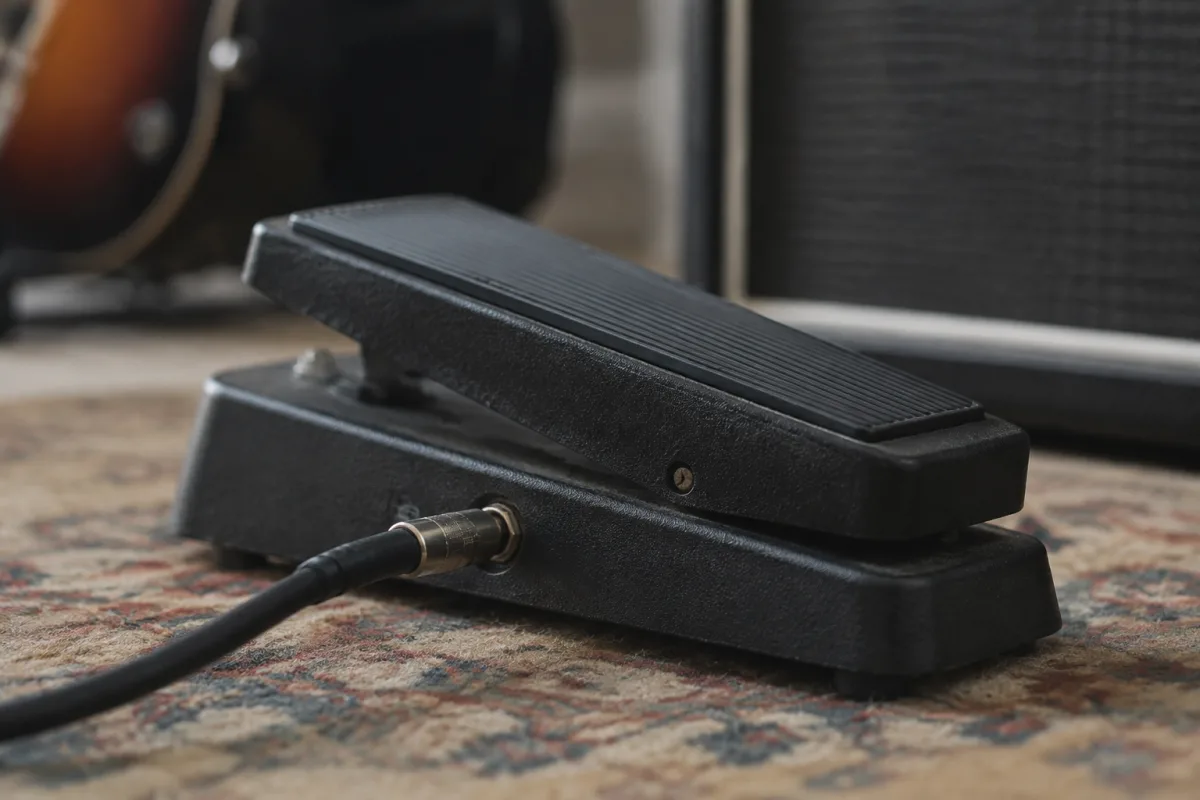
Universal Audio Expression Pedals for Beginners: Adding Realtime Control
A universal audio pedal (expression pedal) lets you control effects parameters in real-time with your foot. Instead of pressing a pedal on and off, you move your foot to sweep through a parameter—volume swell, wah movement, filter modulation—all while your hands stay on the guitar. Universal audio pedals unlock expressiveness and professionalism in your playing. This guide is for beginners curious about expression pedals, covering what they do, how they connect, and which models won't overwhelm you.
What is a Universal Audio Expression Pedal?
A universal audio pedal is a footpedal that transmits variable data to other pedals via expression control. Unlike a wah pedal (which has a built-in effect), an expression pedal is an input device. You use it to control other gear—adjust an amp's volume, sweep a wah effect in a multi-effects unit, or modulate delay time on a delay pedal. The "universal" part means it typically works with most modern pedals and multi-effects devices. Plug it in, and suddenly your feet are part of your sound design.
Why Start with an Expression Pedal?
Many beginners underestimate how much a universal audio pedal improves expression. Learning to swell a note (fade in volume), sweep a filter, or dance with a delay creates dynamic, human-sounding effects. It separates bedroom players from performers. You don't need one immediately—learn the guitar first. But after six months of playing, adding a simple expression pedal opens creative doors and makes you sound more intentional.
How an Expression Pedal Works
A universal audio pedal has a footpedal that rocks back and forth. As you move it, the pedal sends a continuous signal (typically 0–100%) to the connected device. That device then interprets the signal—if connected to a volume pedal function, the signal controls volume; if connected to a wah, it controls the wah sweep; if connected to delay time, it modulates the repeat duration. The pedal itself doesn't contain the effect—it's just a controller. This flexibility is powerful.
Connection Types: Expression In, MIDI, or CV
A universal audio pedal can connect via:
- Expression input (1/4-inch jack) — The simplest and most common. Plug a TRS (three-ring) cable from the pedal into a device's expression input.
- MIDI — More advanced. MIDI pedals transmit data to MIDI-compatible gear. Overkill for beginners.
- USB — Some pedals connect to computers or software. Also advanced.
Entry-Level Universal Audio Pedals
Boss EV-5 and Mission Engineering M-Gear are affordable, intuitive expression pedals around £60–100. They're simple: plug one in, move the pedal, control happens. No menus, no confusion. If your other pedals support expression input, these work. Avoid fancy $300 expression pedals when starting; save that money for pedals to control.
What You Can Control
With a universal audio pedal connected, you can:
- Control a wah effect's frequency sweep
- Swell a reverb's decay time (short snappy reverb to long ambient)
- Fade volume in and out (classic swell effect)
- Modulate delay time or feedback
- Sweep a filter's resonance
- Control amp channel switching or gain
Building Your First Expression Setup
| Step | Action | Cost |
|---|---|---|
| 1 | Get a device with expression input (Strymon pedal, Boss multi-effects, etc.) | £150–500 |
| 2 | Buy a universal audio expression pedal (Boss EV-5 or Mission) | £60–100 |
| 3 | Get a TRS expression cable | £10–20 |
| 4 | Connect and assign an expression function in the connected device | £0 (read manual) |
Common Beginner Mistakes
Don't buy an expression pedal before you have a device to control. An expression pedal is useless alone—it needs a target. Don't assume MIDI or USB expression pedals work with your gear; confirm compatibility first. Don't ignore the pedal's sensitivity settings; some expression pedals let you invert the sweep (heel up = high, heel down = low) to match your intuition. And don't overcomplicate—a single expression control (like volume swell) mastered is better than six controls half-learned.
The Swell Effect: Your First Technique
The most intuitive expression control for beginners is volume swell. Set a reverb or delay to ambient settings, then use the expression pedal to control volume. Heel down (soft or mute), play a note, then rock the pedal heel-up to swell the volume in. It sounds professional and musical—like a violinist drawing a bow. Master this technique, and you've unlocked expression pedal potential.
Playing Dynamics and Expression
An expression pedal teaches footwork and coordination you don't realise you need. Your hands manage the guitar and basic effects; your feet add texture. At first, rubbing your foot and playing feels uncoordinated. Within a week, it's second nature. Within a month, you'll forget you're doing it—the expression moves integrate into your playing voice.
Secondhand Expression Pedals
Used universal audio expression pedals are often identical to new ones and cheaper. Check that the footpedal moves smoothly, the output connector is snug, and the pedal responds across its full range. No springs or mechanical parts to wear out—these things last forever.
Future: Going Deeper
After mastering basic expression, advanced players add multiple expression pedals or use MIDI foot controllers (like a Behringer FCB1010) to control entire rigs. But that's years ahead. Start simple: one universal audio pedal, one clear function, and let intuition guide you.
Bottom Line
A universal audio expression pedal costs less than a decent overdrive pedal but teaches expressiveness that amplifies your entire tone. Don't rush to add one—wait until you've settled your core sound. But when you do, a simple Boss EV-5 (£70) will feel revelatory. The day you swell a reverb with your foot for the first time, you'll understand why touring musicians never leave home without one. For the deeper landscape of expression pedals and advanced control surfaces, explore the universal audio pedal complete reference covering the full ecosystem and professional approaches.
FAQ
Is an expression pedal the same as a wah pedal?
No. A wah pedal is self-contained—it contains the wah effect. An expression pedal is a controller that doesn't contain an effect itself; it sends data to other pedals. Different tools, different purposes.
What devices can I connect a universal audio expression pedal to?
Any pedal or device with an expression input jack. Modern multi-effects units, delays, reverbs, some amplifiers, and modulation pedals usually have expression inputs. Check the manual before buying.
Do I need MIDI for an expression pedal?
No. Most beginners and many pros use simple TRS expression cables. MIDI adds complexity you probably don't need starting out.
Can I use one expression pedal to control multiple effects?
Not at the same time with a standard expression pedal. You assign it to one function at a time. Multi-pedal control requires MIDI or a more advanced setup.
Is an expression pedal hard to use?
No. Plug it in, rock your foot, and the assigned parameter changes. The learning curve is learning which movements feel natural to you and mastering the timing.
What's the best first expression function to learn?
Volume swell (fade-in effect using volume control). It sounds beautiful, teaches foot coordination, and works with nearly any pedalboard setup.
Do expression pedals need batteries or external power?
No batteries required. Some expression pedals draw power from the device they're connected to via the expression cable. Others need a 9V adapter. Check the spec.
Should I buy an expression pedal or a multi-effects unit?
If you have pedals you love, add an expression pedal to enhance them. If you're starting from scratch and want everything integrated, a multi-effects unit (like Boss ME-80) might make more sense.


Comments