


Tc Electronic Delay article
Tc Electronic Delay for Beginners: A Complete Guide
TC Electronic delay pedals offer sophisticated effects with beginner-friendly operation. Our guide covers how delay works, setup, first steps, and creative sound design.
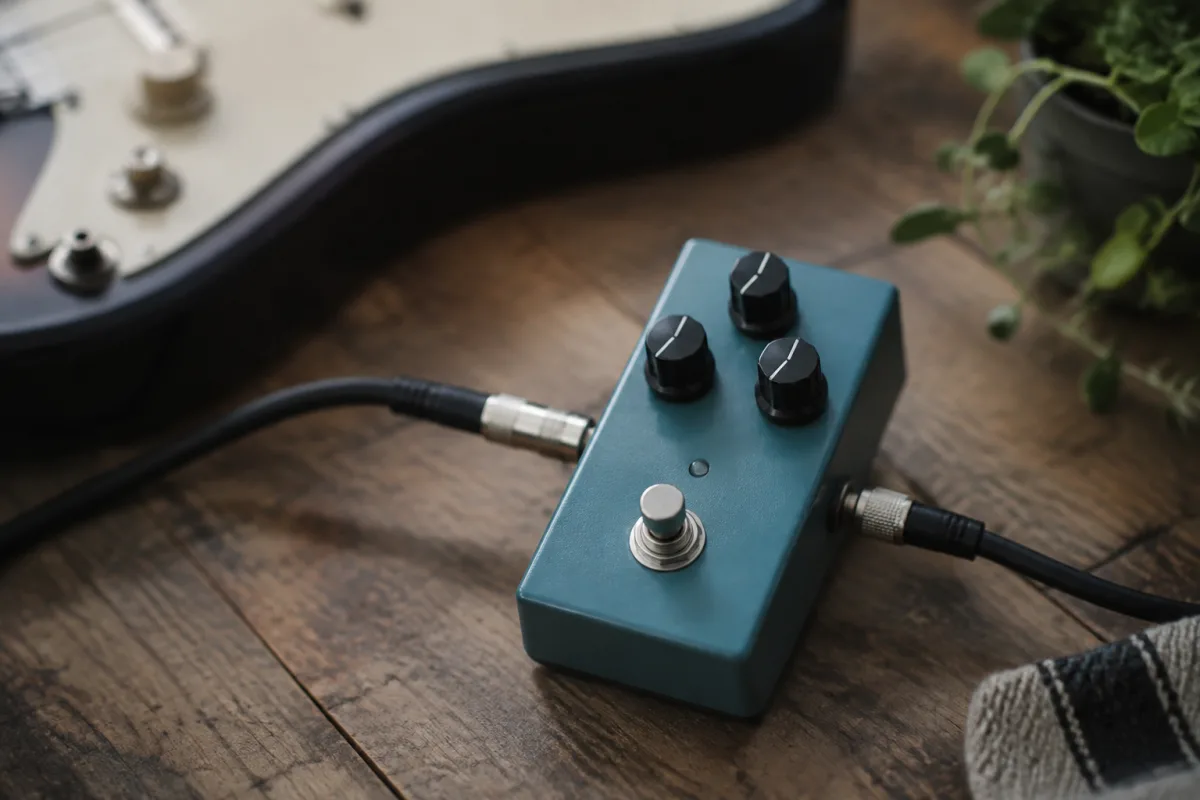
Delay effects transform guitar playing from atmospheric enhancement to creative possibility, and TC Electronic delay pedals rank among the most sophisticated and beginner-friendly options available. Understanding how TC Electronic delay works, what makes their approach unique, and how to integrate delay into your playing expands your sonic palette dramatically. This beginner's guide strips away the mystery to show you how TC Electronic delay can become an essential part of your musical expression without overwhelming complexity.
Understanding What Delay Actually Does
Delay effects record your guitar signal briefly, then replay it after a specified time interval—creating echoes that vary from subtle rhythmic layering to dramatic, repeating sequences. TC Electronic delay implements this concept with exceptional precision and musical intelligence that distinguishes their pedals from budget alternatives.
Basic delay parameters include time (how long before the echo repeats), feedback (how many repeats occur), and mix (how much delayed signal blends with your original tone). Mastering these three fundamental controls unlocks most creative delay possibilities. TC Electronic delay pedals offer sophisticated versions of these basics, allowing beginner-friendly simplicity whilst supporting advanced sound design.
Delay differs fundamentally from reverb—another common effect confusing beginners. Reverb simulates acoustic space; delay creates rhythmic echoes. Understanding this distinction helps you recognise when delay genuinely serves your musical ideas versus when other effects might work better.
Why Beginners Choose TC Electronic Delay
TC Electronic earned their reputation through decades of professional and budget product lines delivering quality without compromise. Their delay pedals famously combine sophisticated algorithms with straightforward operation—expert musicians praise their sound, whilst beginners find them intuitive and musically inspiring.
Budget delay pedals often introduce digital artifacts, noise, or timing instability. TC Electronic delay pedals maintain clarity and timing precision at every price point, ensuring your delay sounds musical and enhances your playing rather than degrading your tone.
Another compelling reason involves TC Electronic's algorithmic transparency. You understand exactly what your TC Electronic delay does and why—no mysterious parameters obscuring the effect's actual function. This clarity accelerates learning and builds genuine mastery rather than random knob-twisting.
Entry-Level TC Electronic Delay Options
TC Electronic offers delay pedals at multiple price points, each serving different needs. The Plethora X5 and Plethora Nexus represent flagship desktop units offering comprehensive TC Electronic delay algorithms alongside hundreds of other effects—overkill for beginners but supremely capable if you're committing to effects-rich playing.
The Plethora Floor and Plethora Floor Pro provide pedalboard-friendly form factors with professional TC Electronic delay quality. These larger units sacrifice portability but offer intuitive interface and touch screen control simplifying effect management for modern players.
Budget-conscious beginners should consider TC Electronic's compact M1 and M100 models, representing excellent value for entry-level digital delay exploration. These units deliver genuine TC Electronic quality without premium pricing or overwhelming feature sets.
Understanding TC Electronic Delay Sound Character
TC Electronic delay pedals are renowned for their warm, natural-sounding echoes—they enhance your tone without sounding obviously digital or artificial. This character suits everything from subtle ambient textures to bold, repeating sequences depending on parameter selection.
The spring delay algorithm mimics classic tape echo characteristics—warm, slightly degraded repeats that sound organic and musical. Digital delay produces pristine, clear repeats perfect for rhythmic, precise applications. TC Electronic delay pedals offer both approaches, supporting whatever tone character your music demands.
TonePrint technology allows personalisation of TC Electronic delay algorithms through advanced parameters. Beginners needn't exploit these capabilities immediately; default presets sound excellent. As your understanding develops, TonePrint provides creative depth unmatched by competitor products.
First Steps With TC Electronic Delay
Setting up your TC Electronic delay correctly determines your initial experience dramatically. Connect the pedal after your amp's effects send (in the effects loop) or after other modulation effects but before distortion. Proper signal chain placement transforms your delay from muddy and confusing to clear and musical.
Start with simple, obvious delay settings: moderate time values (around 400-600ms), light feedback (2-4 repeats), and conservative mix levels (30-50%). This setup provides clear delay perception without overwhelming your original signal. Practice playing whilst listening carefully to how delay interacts with your notes.
Experiment with tempo matching. Set your TC Electronic delay time to match your playing's tempo—this synchronisation creates musically coherent rhythmic layering. Many TC Electronic delay pedals include tap tempo functionality allowing real-time adjustment without menu diving.
Try different musical contexts. Delay excels in atmospheric passages, adds rhythmic density to strummed sections, and creates spacious lead tones. Understanding which applications suit delay best requires experimentation and ear training.
Common Beginner Mistakes With TC Electronic Delay
Excessive mix levels muddy your tone by overpowering the original signal with delayed echoes. Most beginners set mix too high, discovering their playing sounds washed out and unclear. Start conservatively—you can always increase mix after understanding how delay affects your tone.
Wrong signal chain placement creates muddiness or confusion. Placing TC Electronic delay before distortion typically generates undesirable results; placing it after distortion in the amp's effects loop produces clarity and separation. Learning proper signal chain strategy accelerates progress dramatically.
Impatience with parameter exploration frustrates many beginners. Delay mastery requires time spent understanding how different settings affect your playing. Expecting immediately impressive results and moving on leads to missed creative possibilities.
Many beginners neglect to use TC Electronic delay's manual or tutorial resources. These effects are genuinely powerful—spending 30 minutes learning basic parameter functions dramatically improves your results compared to random experimentation.
Beyond Basic Delay: Creative Possibilities
Once comfortable with fundamental delay operation, TC Electronic pedals open creative doors that budget alternatives simply cannot reach. Stacking multiple delay algorithms creates complex textures. Modulating delay time creates swirling, evolving ambience. Extreme feedback settings generate self-oscillating drones perfect for experimental exploration.
Tempo synchronisation to your DAW or external sequencers transforms TC Electronic delay into rhythmic production tools. Delay times locking to musical subdivisions enable groove-aware texture generation impossible with static time values.
Recording loops using your TC Electronic delay and a looper pedal creates layered compositions building in real-time. This live production approach inspires endless creative possibilities.
Maintenance and Care
TC Electronic delay pedals require minimal maintenance—essentially just occasional cleaning and protecting from moisture. Store in a case or pedalboard mount protecting from falls and impact damage. The solid digital architecture tolerates temperature fluctuations far better than analogue effects.
Firmware updates occasionally add features and improve algorithms. Check TC Electronic's website periodically for updates compatible with your specific model.
Your TC Electronic Delay Journey Begins
Adding TC Electronic delay to your signal chain represents a meaningful investment in your sound and musical possibilities. These pedals grow with your skills—preset basics serve beginners perfectly, whilst advanced parameter exploration challenges experienced players indefinitely.
For comprehensive information about different TC Electronic delay models, advanced sound design techniques, and professional applications, visit our complete guide to TC Electronic delay pedals.


Comments