


Strymon Guitar Effects article
Strymon Guitar Effects for Beginners: A Complete Guide
A beginner's guide to Strymon guitar effects. Discover which pedals suit beginners, how to start simply, and build your effects knowledge step by step.
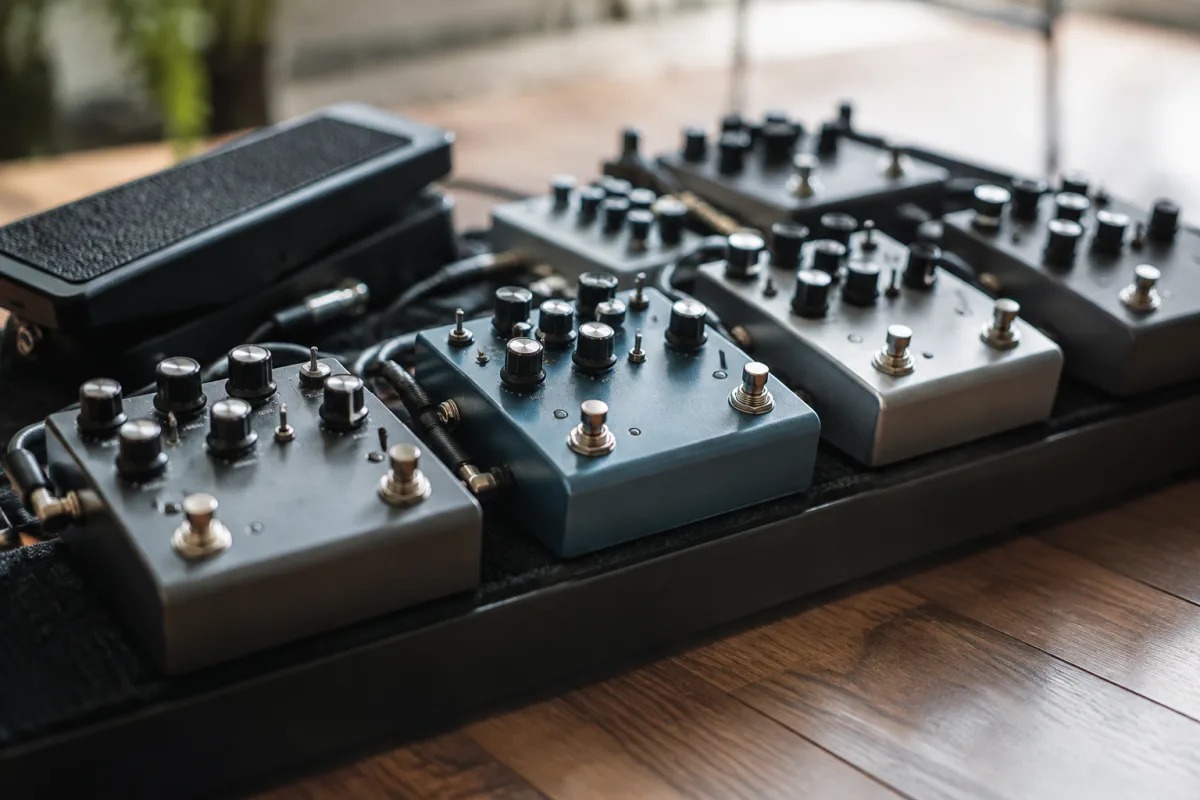
Strymon is legendary among guitarists for building pedals that sound spectacular, inspire creativity, and remain intuitive enough for beginners to use immediately without becoming overwhelmed. If you're considering your first serious guitar effects pedal and feel intimidated by digital options, Strymon pedals offer an encouraging entry point: professional quality tone with approachable controls and visual interfaces that teach you as you play. This guide walks you through what makes Strymon effects special, what different pedals do, and how to start with one without confusion or buyer's remorse.
What Strymon Actually Is (And Why Beginners Should Know)
Strymon is an American effects company founded by guitarists frustrated with digital effects that sounded sterile or demanded PhD-level programming to use musically. Their philosophy: professional sound quality shouldn't require an instruction manual the size of a textbook. Strymon pedals use digital processing (algorithms) to create effects like reverbs, delays, and modulation, but they're designed for immediate usability. Plug in, turn a knob, hear the change. No menu diving required for basic sounds.
For beginners, this means you can explore effects confidently. Strymon pedals sound expensive because they are—but they invest that cost in sound quality and user experience, not unnecessary features.
The Strymon Effect Types: Understanding What Each Does
| Pedal Type | What It Does | Example Models | Beginner Suitability |
|---|---|---|---|
| Reverb | Creates space/ambience—simulates playing in different room sizes | BigSky, Room | Highly suitable. Reverb adds character immediately and teaches ear development. |
| Delay | Repeats notes with adjustable timing—echoes that create texture | Timeline, Volante | Very suitable. Delay is intuitive; beginners grasp it quickly. |
| Modulation (Chorus/Flanger/Phaser) | Modulates your tone—creates movement and width in sound | Mobius | Good for beginners. Requires slightly more ear training but remains approachable. |
| Combination / Multifx | Multiple effects in one pedal—reverb, delay, modulation combined | Iridium, Sunset | Excellent for beginners. One pedal covers multiple sounds. |
Why Strymon Pedals Are Beginner-Friendly (Even Though They're Expensive)
Visual feedback: Strymon pedals have screens or clever visual designs that show you exactly what's happening. Turn the Tone knob on a reverb, and you immediately see and hear the change. This visual-sonic feedback teaches your ear rapidly.
Limited controls, unlimited possibility: Instead of 50 parameters hidden in menus, Strymon pedals expose four to eight primary controls on the top. This simplicity encourages experimentation. You'll quickly understand reverb depth, decay time, and tone colour without consulting a manual constantly.
Sound quality matters: Cheap digital effects sound cold and sterile. Strymon pedals sound warm and musical even at default settings. This quality means you'll be inspired to play, not discouraged by thin tone.
Longevity and resale value: Strymon pedals hold value better than budget alternatives. If you outgrow a pedal, reselling it recovers most of your investment. This reduces financial risk for beginners experimenting.
Common Beginner Mistakes With Strymon Guitar Effects
- Buying too many different pedal types simultaneously: A reverb pedal, delay pedal, and modulation pedal at once creates overwhelming choice paralysis. Start with one Strymon pedal. Master it. Add others later.
- Assuming "professional grade" means "complicated": Strymon's quality is professional; usability is beginner-friendly. Don't assume the expensive price tag means steep learning curve. It doesn't.
- Setting effects too loud: Strymon effects shine when subtle. A beginner's instinct is to crank reverb to 100% and expect magic. In reality, 20–40% reverb depth sounds better than 100%. Start conservative.
- Ignoring the manual's suggested settings: Strymon includes factory presets and suggestions. Rather than starting from zero, load a suggested reverb or delay and modify from there. The learning curve shortens dramatically.
- Buying a pedal that doesn't match your musical style: If you play minimalist singer-songwriter music, massive reverbs feel gimmicky. If you play shoegaze or ambient, subtle delay might underwhelm. Know your musical context before buying.
- Failing to budget for power supply and cables: Strymon pedals need proper power (usually USB or AC adaptor) and decent patch cables. Budget an extra £30–50 for these essentials. Cheap cables introduce noise.
Your First Steps: How to Start With a Strymon Pedal
- Choose your first pedal carefully: Start with reverb (Room) or delay (Timeline). Both are intuitive and applicable to every musical style. Avoid combination pedals initially—single-purpose pedals teach effect fundamentals faster.
- Unbox and power correctly: Use the recommended power supply (not a cheap wall adapter). Stable power prevents digital artifacts and ensures the pedal sounds its best.
- Load a factory preset: Don't start from scratch. Select a preset matching your musical style and play with it for an hour.
- Tweak one knob at a time: Change a single control (reverb depth, for example), play your favourite riff, hear the difference. Repeat with other controls. This methodical approach teaches cause-and-effect faster than random tweaking.
- Play with other musicians: Solo practise with effects teaches technique. Playing with others teaches how your effects sit in a mix. Both are essential.
Choosing Your First Strymon Pedal: Honest Recommendations
Best for absolute beginners: The Room (reverb, £299). Reverb is universally applicable and teaches ear development immediately. Every song benefits from reverb. Learning one excellent reverb pedal prepares you to appreciate delay and modulation later.
Best for delay-focused players: The Timeline (delay, £449). Timeline offers delays from subtle echo to ambient soundscapes. Beginners grasp delay intuitively because the effect is obvious—you hear the repeated notes.
Best for players wanting simplicity with maximum versatility: The Iridium (combination modulation/reverb/delay, £599). One pedal, three effect types, interface designed for quick sound discovery. Ideal for beginners who want variety without complexity.
Best for players committed to long-term investment: The BigSky (reverb, £599) or Sunset (combination, £699). These offer deeper editing and more possibilities. Worth buying if you'll keep the pedal for years and want growing room musically.
Understanding Strymon's Price Points
Strymon pedals cost more than budget alternatives because the sound quality is genuinely superior, the build quality is professional-grade, and the interface is carefully designed. A £100 reverb pedal will have a cheap digital quality; a £299 Strymon Room sounds warm and organic. That price difference reflects real sonic improvement and durability investment.
For most beginners, starting with a single mid-range Strymon pedal (Room, Timeline, Mobius—£299–499) makes financial sense. As your ear develops and your skills improve, adding a second Strymon pedal expands possibilities without introducing learning curve shock.
Integration Into Your Setup
Strymon pedals connect simply: guitar → Strymon pedal → amplifier. No special wiring required. If you later add multiple pedals, pedalboards keep everything tidy. For now, a single Strymon connects as easily as any effect pedal.
Power considerations: Strymon pedals require stable, isolated power. Use a quality power supply (not a daisy-chain adapter sharing current with other pedals). This ensures the pedal's digital processing remains clean and noise-free.
Building Confidence and Exploration
Strymon pedals reward experimentation. Spend time turning knobs slowly, listening carefully, and recording your explorations. Over two to three weeks, you'll develop intuition about effect depth, tone colouration, and mix balance. By month two, you'll be using your Strymon pedal like you've played with effects for years.
The beauty of Strymon is that beginner-friendly doesn't mean beginner-limited. Professional guitarists use Strymon pedals because the sound quality and interface serve everyone from curious beginners to jaded veterans.
For comprehensive technical specifications, advanced editing options, and how Strymon effects fit into larger pedalboard systems, consult our complete guide to Strymon guitar effects. This beginner guide covers confidence and first steps. The complete guide explores advanced territory.
Your Journey Begins
Buying your first Strymon pedal is an investment in inspiration and sound quality. You're not just buying an effect; you're buying an instrument that teaches your ear and expands your creative palette. Start with one pedal, master it, and build from there. Within weeks, you'll wonder how you ever played without effects. Within months, Strymon will feel like a natural extension of your playing voice.



Comments