
Powered Monitors article
The Complete Guide to Powered Monitors
Powered monitors are integrated speaker systems combining amplifier and speaker in one compact unit—essential for live performers, rehearsal studios and home recording setups.
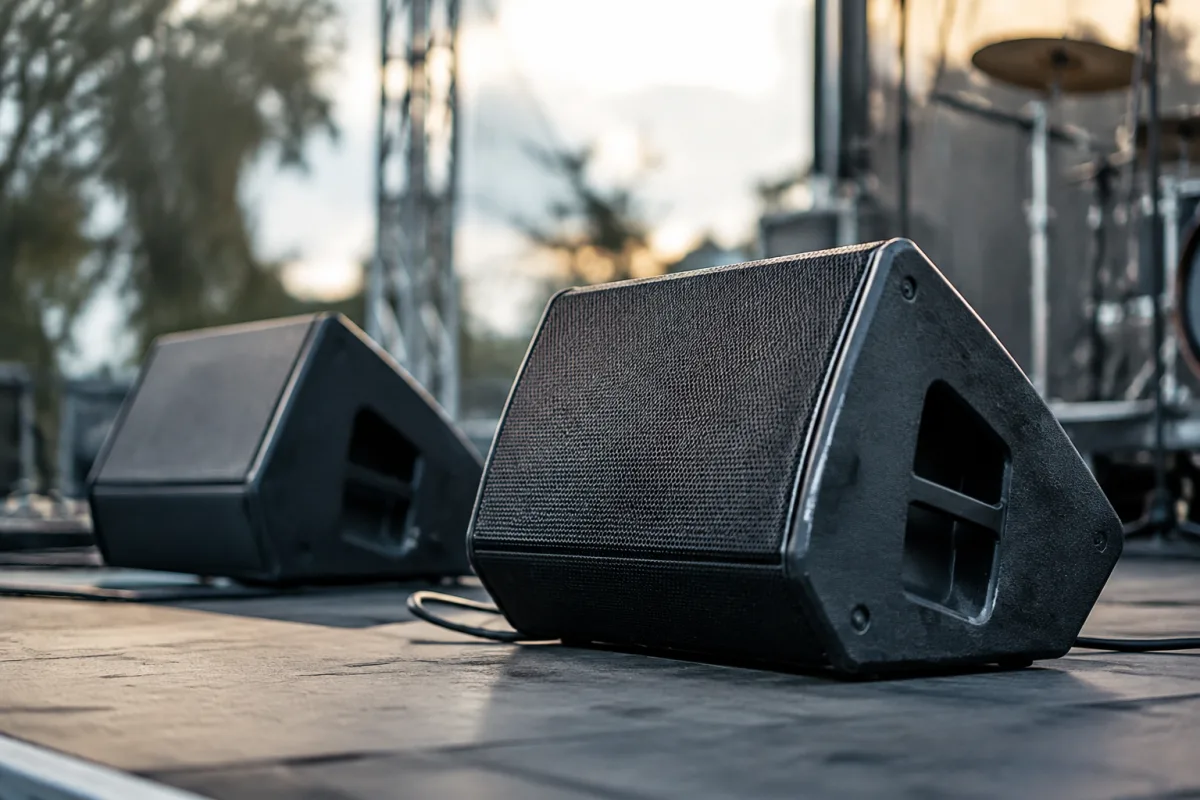
Powered monitors are essential tools for musicians, sound engineers and live performers who need reliable, portable sound reinforcement without the complexity of separate amplifiers and speaker cabinets. Whether you're setting up a small rehearsal space, streaming from home or delivering a live performance on a modest stage, powered monitors deliver professional audio quality in a compact package. Unlike passive monitors that require an external amplifier, powered monitors integrate the amplifier directly into the speaker cabinet, making them simpler to set up and far more convenient for touring musicians.
What Are Powered Monitors?
A powered monitor is a speaker system that combines an audio speaker with an integrated amplifier in a single enclosure. The term "monitor" traditionally refers to speakers used by performers to hear themselves during live performances, though modern powered monitors serve many purposes beyond stage monitoring. The integrated amplifier processes audio signals from a mixer, audio interface or instrument directly, eliminating the need for a separate power amp in your signal chain.
Powered monitors are built differently from passive speakers. A passive speaker requires an external amplifier to be connected before sound can be produced, meaning you need at least three components: a mixer, a power amplifier and a speaker cabinet. A powered monitor condenses this into two components—the mixer and the speaker itself—because the amplifier is built in. This design makes powered monitors particularly popular for small venues, rehearsal studios and home recording setups where space and simplicity matter.
Key Advantages of Powered Monitors
The popularity of powered monitors comes down to several practical benefits:
- Simplicity and ease of setup: Plug an audio cable from your mixer directly into the powered monitor, connect the power lead, and you're ready. No need to calculate amplifier wattage, impedance matching or hunt for additional equipment.
- Space efficiency: Powered monitors occupy significantly less floor space than a separate amplifier and speaker cabinet combination, making them ideal for small studios, bedrooms and rehearsal rooms with limited square footage.
- Portability: A single compact unit is far easier to transport to rehearsals, gigs or recording sessions than lugging separate amp and cabinet. Many powered monitors weigh between 10 and 30 kg, manageable for one person to carry.
- Cost-effectiveness: Buying one integrated unit is typically cheaper than purchasing a quality power amplifier and speaker cabinet separately, making powered monitors an affordable entry point for semi-professional setups.
- Optimised tuning: Manufacturers design powered monitors with the amplifier specifically calibrated for that speaker cabinet, ensuring the frequency response and dynamics are optimally matched.
- Built-in features: Many modern powered monitors include EQ controls, adjustable input levels and sometimes even Bluetooth connectivity, eliminating the need for additional outboard gear.
Common Applications for Powered Monitors
Powered monitors are versatile tools used across several musical and audio contexts. In live performance, they are often placed near performers on stage so musicians can hear themselves or the backing track whilst the main audience hears a separate mix from front-of-house speakers. A guitarist, vocalist or drummer might have a powered monitor pointed at them to get a personal mix during the show.
In recording studios and home setups, powered monitors serve as studio monitors—the reference speakers that sit on your desk or equipment rack. You listen through them whilst mixing, so accurate frequency response and minimal colouration is essential. Unlike PA speakers which emphasise bass and treble for audience impact, studio monitor powered speakers are tuned to reveal a truthful, flat response so you hear mixes as they truly are.
Powered monitors also appear in rehearsal spaces where bands need reliable amplification without investing in large PA systems. A small ensemble practising in a garage, community hall or rehearsal studio might use one or two powered monitors to amplify drums, bass and vocals without overwhelming the space or requiring complex setup procedures.
Choosing the Right Size and Wattage
Powered monitors come in various sizes, typically ranging from compact 5-inch speaker models producing 50–100 watts up to large 15-inch cabinets generating 500+ watts. The right choice depends on your specific application.
For personal monitoring on stage or home use, a compact 8-inch or 10-inch powered monitor with 100–250 watts is usually sufficient. These units sound punchy and clear whilst remaining portable. If you're amplifying a small venue, rehearsal room or providing multiple personal mixes for a band, you might need 300–500 watts across one or two larger units. Very small bedroom studios or intimate home listening might call for a compact 5-inch nearfield monitor.
Avoid the temptation to buy underpowered speakers and drive them to distortion trying to achieve volume. A well-matched powered monitor with adequate wattage will sound clean, clear and dynamic across its full operating range. Undersized speakers strained to produce volume tend to compress and lose detail, which is particularly problematic when using a powered monitor for mixing, where accuracy is paramount.
Impedance, Connectivity and Features
Most modern powered monitors connect via balanced XLR or quarter-inch TRS (Tip-Ring-Sleeve) connectors, which carry audio without noise interference over longer cable runs. Some compact models include unbalanced RCA connectors for simplified setups, and an increasing number now feature Bluetooth wireless connectivity for streaming from tablets or phones.
Input impedance and sensitivity ratings determine how loud the speaker plays for a given input level. A higher sensitivity rating (measured in decibels, or dB) means the speaker will play louder from the same input signal. This matters if you're running a very quiet source or driving the monitor from a long cable run where signal loss occurs.
Many powered monitors include a frequency response adjustment, often called "presence peak" or "high-frequency shelving," allowing you to tailor the speaker's response to your ear and your room. Some models offer low-frequency extension controls, useful if you want to emphasise bass in a small space or reduce boom in a room with too much low-end build-up.
Positioning and Room Placement
Where you place a powered monitor dramatically affects how it sounds and functions. For stage monitoring, position the monitor so each performer can clearly hear their mix without the speaker pointing directly at the main microphone, which would feed back. Angle it toward the performer's ears rather than their mouth.
In a studio, position powered monitors at ear level and roughly symmetrically on either side of your listening position, angled slightly toward your ears to create a balanced stereo image. Avoid placing them in corners or against walls, which can amplify bass frequencies and create an inaccurate sense of low-end depth. The centre of the room or at least a foot or two away from walls gives a more truthful representation of your mix.
Keep powered monitors away from sources of vibration and interference—never place one directly on a wooden table without isolation pads, as the table can resonate and colour the sound. Proper isolation mounts reduce vibration transmission and help the speaker sit cleanly in your acoustic environment.
Powered Monitors vs. Passive Speakers and Full PA Systems
Understanding how powered monitors fit into the broader landscape of audio gear helps clarify when to use them. Passive speakers require an external amplifier; they are often used in high-end studio environments or large venues where the amplifier and speaker can be chosen and optimised separately. Powered monitors integrate the amplifier, making them simpler but less customisable.
For modest applications—rehearsal studios, small venues up to 100–200 people, home studios and personal monitoring—powered monitors are the practical choice. A full PA system with separate amplifiers, multiple speakers and complex routing is overkill and unnecessary expense. Powered monitors strike the balance between capability and simplicity.
However, if you need to cover a large hall or outdoor space, or if you require multiple zones with independent mixes, a full PA system with separate amplifiers and passive cabinets offers more flexibility and scalability. For most working musicians and smaller setups, powered monitors are the sweet spot.
Budget Considerations and Quality Tiers
Powered monitor prices range broadly. A budget model from a mainstream brand might cost £150–300, offering basic functionality and acceptable sound quality for home use or small rehearsals. Mid-range monitors (£300–800) deliver noticeably better frequency response, more powerful amplification and higher build quality, making them suitable for gigging musicians and serious home studios. Professional-grade powered monitors (£800–2,500+) offer studio-quality accuracy, premium components and advanced features for mixing and mastering work.
The best value often lies in the mid-range tier. Budget models sometimes cut corners on amplifier design or speaker construction, leading to audible limitations. Professional models add capabilities that may exceed what you need. A mid-range powered monitor from a reputable manufacturer typically delivers excellent sound quality and reliability without unnecessary cost.
Maintenance and Longevity
Powered monitors are generally reliable when treated with reasonable care. Keep them away from excessive heat, moisture and physical shock. Dust accumulation on the speaker cone reduces efficiency and can cause rattles; occasionally wipe the speaker mesh gently with a soft, dry cloth. Never operate a powered monitor with a disconnected or damaged speaker cable, as this can damage the amplifier's output stage.
Most powered monitors last many years with basic care. The amplifier circuitry is solid-state and rarely fails if not overdriven excessively. The speaker components—the driver and tweeter—do age eventually, but a properly maintained powered monitor should perform well for 5–10 years or more in regular use.
Conclusion
Powered monitors represent the practical, no-fuss solution for musicians and audio professionals who need reliable sound amplification in a compact form. Whether you're setting up a rehearsal space, mixing in a home studio, delivering a live performance or running an intimate venue, a quality powered monitor offers simplicity, portability and professional sound in a single integrated unit. By understanding your specific needs, room environment and budget, you can select a powered monitor that becomes an indispensable part of your audio toolkit for years to come.



Comments