


Power Supply 9v article
The Complete Guide to Power Supply 9V
A quality 9V power supply is essential for reliable pedalboard operation. Explore specifications, types and how to select the perfect supply for your effects rig.
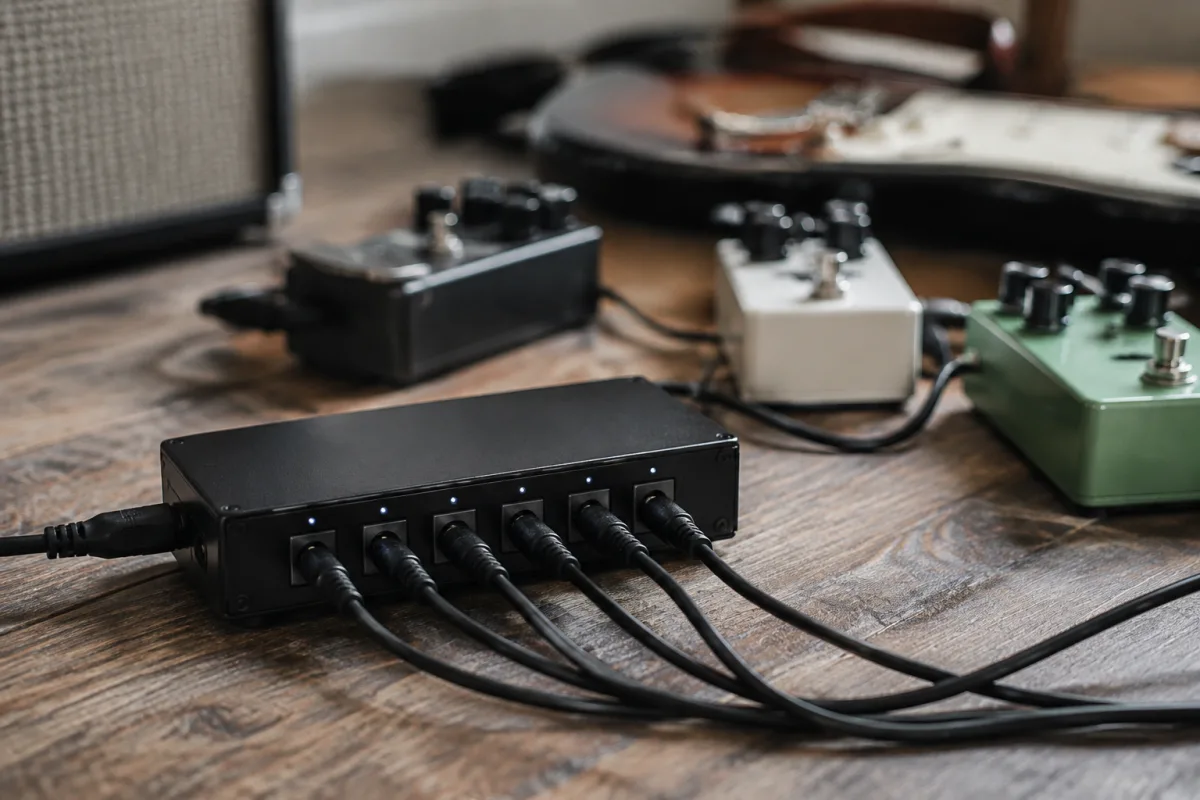
A quality 9V power supply is essential for any guitarist serious about effects pedals, yet surprisingly overlooked in discussions of pedalboard fundamentals. The humble 9V power supply represents the difference between reliable, hum-free tone and frustrating audio gremlins that plague your rig during critical performances. Whether you're running a handful of pedals or a complex pedalboard, understanding power supply characteristics and selecting the right model ensures your effects always perform flawlessly.
Understanding 9V Power Supplies
A 9V power supply is a compact device that converts mains electricity into clean, regulated 9-volt direct current (DC), powering effects pedals without batteries. The standard 9V connector on guitar effects pedals has become the industry norm, making a dedicated power supply far preferable to constantly replacing batteries in multiple pedals during performances.
Professional 9V power supplies do far more than simply convert voltage. Quality models incorporate filtering, isolation and regulation circuitry that eliminate electrical noise — the hum and buzz that can plague pedals powered by inferior supplies. A proper 9V power supply ensures your effects sound pristine and behave predictably throughout your performance.
Key Specifications and Features
When evaluating 9V power supplies, several technical specifications directly affect performance and reliability:
- Total amperage: Expressed in milliamps (mA), total available power determines how many pedals you can power simultaneously. A 1000mA supply typically powers 8–12 average pedals; larger rigs demand 2000mA or more.
- Number of outputs: More outputs mean fewer daisy-chain adapters needed, reducing noise and voltage drop across multiple pedals. Dedicated multi-output supplies eliminate daisy-chaining altogether.
- Isolation: Isolated outputs provide each pedal with completely independent voltage, virtually eliminating the hum and noise that daisy-chained supplies often introduce.
- Voltage regulation: Precision regulation maintains stable voltage regardless of power demands, ensuring pedals behave consistently as you switch effects on and off during performance.
- Compact design: Smaller power supplies reduce pedalboard footprint and overall rig weight — critical considerations for touring musicians.
- Multiple voltage options: Some supplies offer 12V or 18V outputs alongside 9V, allowing a single supply to power vintage pedals and specialty equipment requiring different voltages.
Types of 9V Power Supplies
9V power supplies fall into several broad categories serving different needs and budgets:
- Compact single-output supplies: Simple, affordable models powering 1–3 pedals via daisy-chaining, suitable for minimalist rigs.
- Multi-output non-isolated supplies: Mid-range options providing 4–8 outputs on a single bus, adequate for medium rigs but potentially introducing hum with certain pedal combinations.
- Isolated multi-output supplies: Premium models providing complete galvanic isolation between outputs, virtually eliminating noise and hum regardless of pedal combinations.
- Integrated pedalboard supplies: Supplies built into pedalboard enclosures, eliminating cable clutter and providing seamless integration with your rig.
- Portable and touring supplies: Rugged, compact models designed for the road, combining multi-output capacity with durability and minimal size.
Managing Amperage and Load
Understanding amperage requirements prevents frustrating performance failures. Each pedal's manual specifies its current draw in milliamps. Modern digital pedals often demand 100–500mA, whilst vintage analogue pedals may draw only 10–50mA. Calculate your total pedalboard draw by summing individual pedal requirements, then select a power supply with rated amperage exceeding your total demand by 20–30% to ensure headroom and longevity.
Undersized supplies cause voltage sag — a drop in voltage as demand increases — resulting in sluggish response, pitch shifts and premature failure. Oversized supplies cost slightly more but run cooler, last longer and handle future pedalboard expansion without replacement.
Choosing the Right 9V Power Supply
Your ideal 9V power supply depends on pedalboard size, expected hum sensitivity and portability requirements:
- Minimalist pedals: A compact single-output supply suffices for 1–3 pedals, providing economy and minimal pedalboard footprint.
- Medium rigs: Multi-output non-isolated supplies handle 4–8 pedals affordably, though certain pedal combinations may introduce hum.
- Large or complex pedalboards: Isolated supplies eliminate hum regardless of pedal combinations, essential for demanding setups with noise-sensitive pedals or mixing digital and analogue effects.
- Portable touring rigs: Compact, rugged supplies balance functionality with transportability and road reliability.
- Budget constraints: Affordable daisy-chained supplies work acceptably for many rigs; invest in isolation only if you encounter hum issues.
- Future expansion: Select a supply exceeding your current needs by 20–30%, eliminating replacement during pedalboard growth.
Installation and Troubleshooting
Installing a 9V power supply requires only connecting cables between the supply outputs and your pedal inputs. Use quality, shielded 9V cables rather than flimsy budget variants, which can introduce noise and signal degradation. Ensure the supply sits on the pedalboard or in a nearby accessible location rather than distant from your pedals, minimising long cable runs that increase noise.
If hum appears after adding new pedals, suspect voltage sag from insufficient amperage. Add an additional isolated output or upgrade to a larger supply. Intermittent cutting out suggests failing power connections — inspect cables and connectors for damage or looseness.
Maintenance and Longevity
A quality 9V power supply requires minimal maintenance but occasional inspection ensures reliability. Periodically check all cable connections remain tight and undamaged. Store the supply in dry conditions away from moisture and extreme temperatures. Most supplies feature replaceable fuses — keep spares in your gig bag in case of electrical fault. With proper care, a quality power supply lasts for years of reliable service.
Conclusion
Choosing and implementing a quality 9V power supply represents one of the most important decisions in pedalboard design, directly affecting tone, reliability and performance consistency. By understanding amperage requirements, supply types and isolation benefits, you can select a power supply perfectly suited to your pedalboard's current and future needs. Whether you're running a minimalist two-pedal setup or a sprawling effects matrix, the right 9V power supply ensures your tone remains pristine from rehearsal through sold-out performance.


Comments