
Power Chords for Guitar article
The Complete Guide to Power Chords For Guitar
Power chords for guitar form rock and metal's foundation. Discover fingering, technique, and how to play them musically.
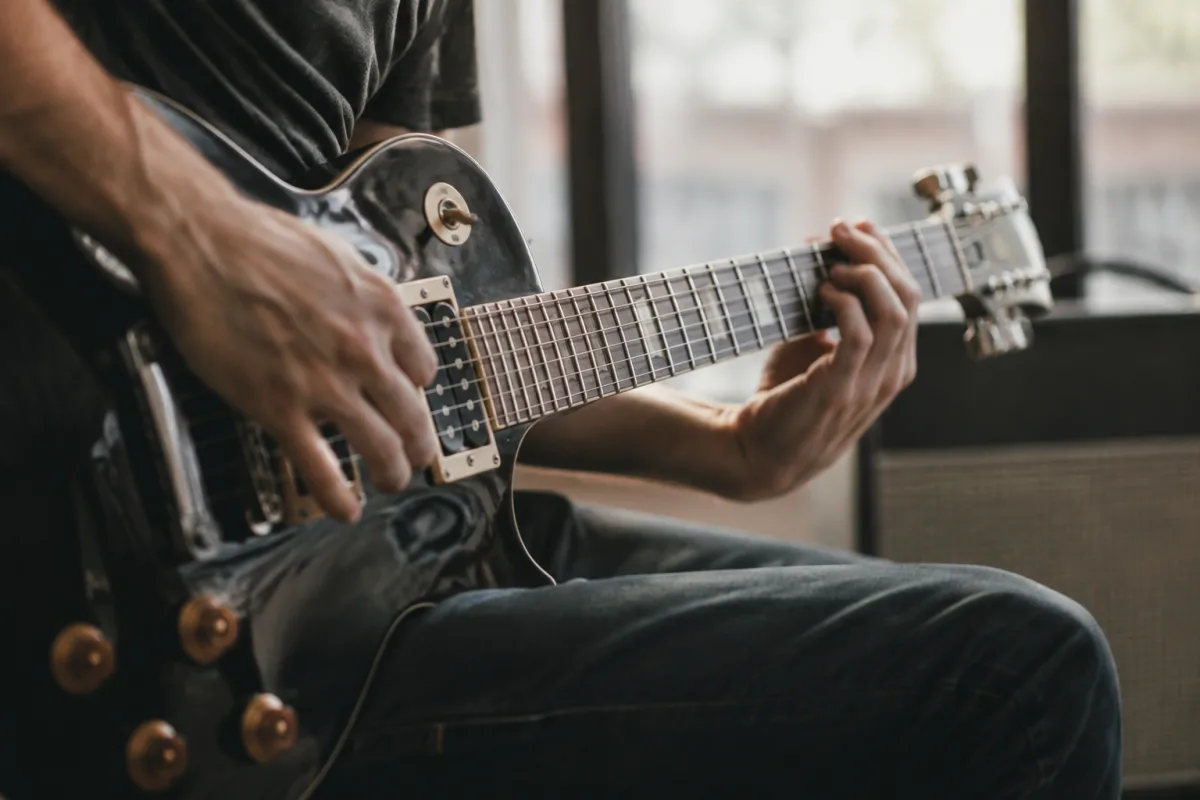
Power chords for guitar stand as one of rock and metal's most essential building blocks, delivering maximum impact with minimum complexity. Comprising just two notes — a root and a fifth — power chords for guitar transcend traditional harmony, creating a sound that's simultaneously sparse and devastating. Whether you're exploring rock fundamentals, diving into metal, or seeking punk's raw energy, mastering power chords transforms your playing from novice to genuinely musical. This guide covers everything you need to know about power chords for guitar: how they work, why they matter, proper fingering technique, and how to deploy them musically across different genres.
What Are Power Chords and Why They Matter
Power chords for guitar represent radical simplification of harmonic tradition. Traditional major and minor triads contain three notes — root, third, and fifth. Power chords for guitar eliminate the third entirely, leaving root and fifth. This absence of the third makes power chords technically ambiguous: they contain no harmonic information that distinguishes major from minor quality. A power chord sounds neither happy nor sad — it simply sounds powerful.
This sonic neutrality proves revolutionary for rock and metal. When played cleanly, power chords sound lean and bright. Through distortion and overdrive, power chords for guitar develop explosive aggression impossible with traditional triads. The combination of harmonic ambiguity and distortion-friendly characteristics makes power chords for guitar absolutely foundational to rock and metal genres.
Power chords appear throughout popular music beyond rock. Punk emerged with power chords for guitar as its primary harmonic vocabulary. Modern metal, from thrash to extreme genres, builds entire compositions around power chords. Alternative rock, grunge, and industrial music all rely on power chords for guitar's distinctive character. Even hip-hop and electronic producers frequently sample and loop power chords because their raw character fits contemporary production aesthetics.
Fingering and Physical Technique
Power chords for guitar employ straightforward fingering patterns, making them accessible to beginners whilst offering sophisticated deployment possibilities for advanced players. The standard approach uses index finger on the root note, middle finger one fret higher on an adjacent string, creating the fifth above the root.
For example, on the low E string, fretting the first fret with your index finger creates an F root. Moving your middle finger to the third fret of the A string creates a C, which is an F's perfect fifth. Muting the D, G, and B strings (either with fingers or palm damping) and avoiding the high E completes a clean F5 power chord.
This two-finger approach characterises power chords for guitar — economy of motion combined with clear, punchy tone. Once you establish this pattern on one string pair, moving the entire shape up or down the fretboard transposes the power chord. Most players develop muscle memory allowing rapid, intuitive power chord transitions.
Palm muting represents the critical technique separating amateurs from competent power chord players. Resting the heel of your pick hand against the strings whilst picking produces the tight, percussive attack that defines modern rock power chords for guitar. This technique combines with distortion to create the iconic metal and rock sound.
Moving Power Chords Across the Fretboard
Power chords for guitar transpose through simple geometric movement. Once you've internalised the fingering shape, moving the pattern allows playing any root note. A beginner typically learns to play common power chords along the low E and A strings, then gradually discovers how the pattern extends across all string pairs.
Advanced power chords for guitar involve barring the index finger across both strings whilst moving the middle finger to play the fifth. This approach suits rapid riff work where precise movement matters more than relaxation. Different technique choices optimise for different musical contexts.
String skipping expands power chord possibilities. Rather than playing fifth exclusively on an adjacent string, experienced players skip strings, creating broader voicings. These variations maintain fundamental power chord character whilst offering sonic texture variations. Experimenting with different string combinations transforms power chords for guitar into sophisticated harmonic tools.
Picking Technique and Rhythm Integration
Picking approach fundamentally influences power chords for guitar tone. Downstrokes produce maximum attack and aggression; alternating up-and-down picking creates rhythmic variation and cleaner fast passages. Most rock and metal power chord riffs combine these approaches — downstrokes on main beats for weight, alternating strokes on faster passages.
Power chords for guitar shine through rhythmic precision. A well-executed power chord riff demonstrates timing discipline and musical understanding. Conversely, sloppy rhythm drowns even excellent tone in amateurism. Beginning players should prioritise rhythm accuracy over flashy speed when developing power chord technique.
Dynamics matter significantly. Power chords for guitar struck hard deliver aggression; played gently, they sound delicate. Varying dynamics within single pieces creates musical interest and emotional communication. This dynamic range often surprises players expecting power chords for guitar to be one-dimensional.
Power Chords in Different Tunings and Drop Tuning
Standard tuning (E-A-D-G-B-E) works perfectly for power chords for guitar. However, many metal players employ drop tuning — lowering the low E string to D or below — expanding the lowest possible power chord note. Drop D tuning (D-A-D-G-B-E) proves particularly popular, allowing open-string power chords on the D-A pair without fretting.
Drop C, drop B, and even lower tunings appear in extreme metal, where open-string power chords create maximally heavy tones. The lower fundamental frequency combines with power chord's harmonic simplicity creating unprecedented heaviness. These extreme tunings require heavier-gauge strings and careful instrument setup to maintain playability.
Half-step down tuning remains popular for rock and metal, lowering the entire guitar's pitch by one semitone. This subtle shift creates slightly darker tone many players prefer without extreme tuning complications. Most experienced players maintain multiple guitars in different tunings, switching between instruments rather than constantly retuning.
Developing Musical Taste and Context Awareness
Power chords for guitar can become clichéd through careless repetition. Competent players develop awareness of when power chords work musically and when alternatives might better serve compositional goals. Understanding when power chords for guitar serve songs versus when they obscure musical possibilities develops gradually through listening, experimentation, and critical self-assessment.
Studying how professional musicians deploy power chords accelerates learning. Listen to Metallica's riffing approach versus Pixies' texture choices versus Dead Kennedys' punk aggression — each uses power chords for guitar distinctly. Recognising these differences trains your ear and expands your vocabulary beyond mechanical facility.
Recording yourself and listening critically reveals playing quality you can't hear in real-time. Tone evaluation, rhythm precision, pick articulation — these subtle factors separate adequate from excellent power chord work. Commitment to iterative self-improvement through recording and critical listening defines progression from beginning to advanced players.
Conclusion
Power chords for guitar represent far more than beginner-level harmony — they're sophisticated tools deployed across genres from punk to progressive metal. Mastering their fingering, rhythm integration, and dynamic deployment unlocks musical possibilities that intimidate beginners. The combination of technical accessibility and sonic power makes power chords for guitar essential vocabulary for aspiring rock and metal musicians. From your first tentative finger shapes through professional touring performances, power chords for guitar remain central to rock and metal identity. Understanding their harmonic nature, developing physical facility, and exploring creative deployment transforms power chords for guitar from simple building blocks into genuinely expressive musical voice capable of communicating raw power, delicate nuance, and everything between. Start simple, practice rhythmically, listen critically, and gradually expand your power chord vocabulary — and unlock one of rock's most essential and enduring techniques.



Comments